
Best AI Tools for GCs: Historic New England Renovations
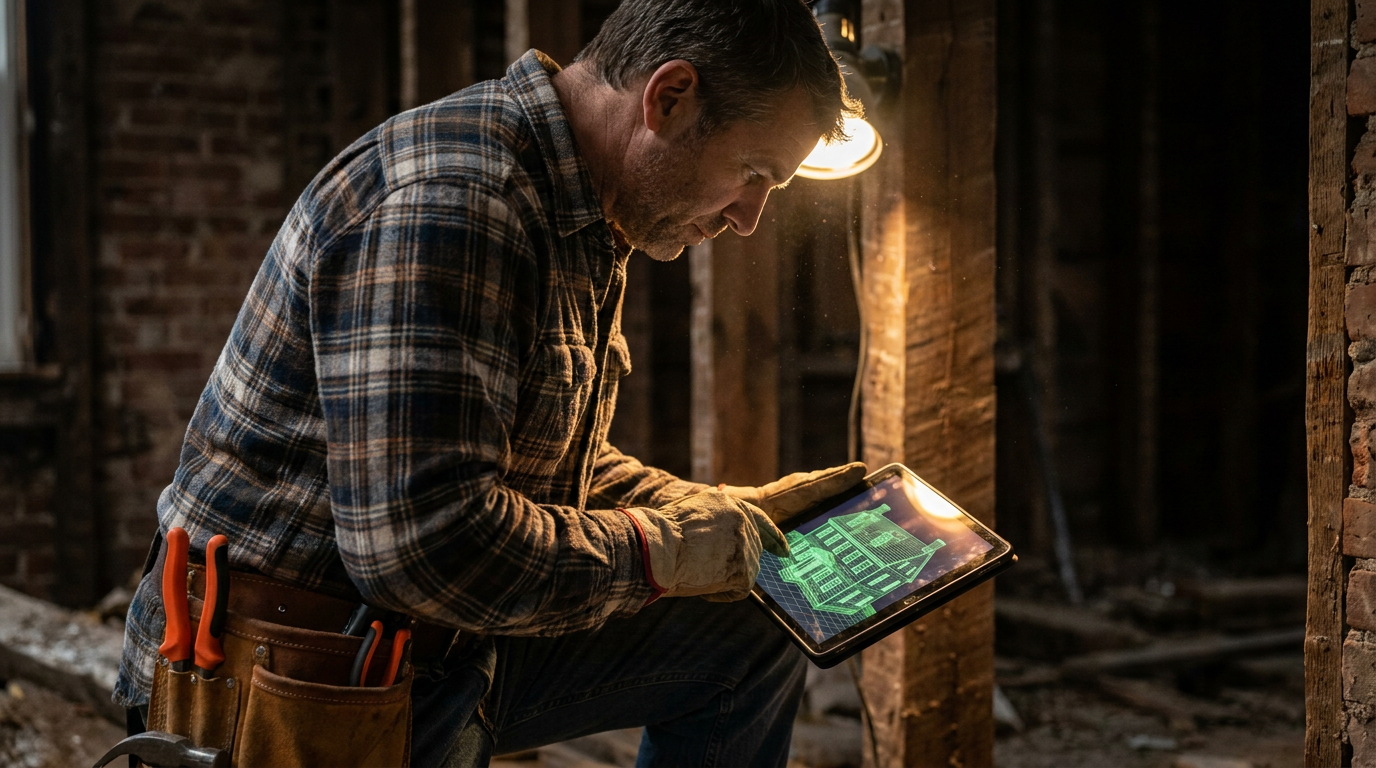
The best AI tools for historical building renovation in New England help GCs with material analysis, compliance, and project management. Tools like Canvas for 3D scanning, ChatGPT-4o for research, and specialized software for historical image analysis streamline complex projects, ensuring accuracy while respecting a building’s heritage.
Built to Last, Now Smarter
Working on a historic New England home is a different game. You’re not just a builder; you’re part historian, part detective. These old bones—the Cape Cods, Saltboxes, and Victorians from Portsmouth to Providence—have stories. They also have rules. Lots of them. From local historic district commissions to state preservation offices, the paperwork can be as challenging as the restoration itself.
For a long time, the only tools for this job were experience, a good eye, and a lot of patience. Now, artificial intelligence (AI) is another tool for your belt. It’s not here to replace your skills. It’s here to make the tough parts of the job—the research, the documentation, the planning—faster and more accurate.
Why Use AI on a 200-Year-Old House?
It sounds strange, using cutting-edge tech on something built by hand centuries ago. But the challenges of historic renovation are exactly where AI can help a good GC work smarter.
- Navigating the Rules: Every town in New England has its own ideas about preservation. AI can quickly search and summarize regulations from the Boston Landmarks Commission or the New Hampshire Division of Historical Resources. It can find rules on window replacements, mortar composition, or acceptable paint colors in minutes, not hours.
- Matching Old Materials: How do you find a modern match for horsehair plaster or old-growth Eastern white pine? You can train an AI with images to identify wood species, brick bonds, or stone types. It can then search for suppliers or specialists who can replicate them.
- Seeing Through Walls (Almost): Unforeseen conditions are the enemy of any budget. While AI can't give you x-ray vision, 3D scanning tools create incredibly detailed models of a building's current state. This helps you spot sagging joists, out-of-plumb walls, and other issues before demo begins.
- Documenting Everything: Historic projects require meticulous documentation for approvals and for the homeowner. AI can help you generate reports, label photos, and keep a clean, searchable record of the entire project. This is a game-changer for ops and client communication.
The Right AI Tools for Your Truck
You don’t need a computer science degree to use these tools. Most are as easy to use as the apps already on your phone or tablet.
Reality Capture and 3D Modeling
Forget the tape measure and notepad for as-builts. Apps like Canvas, Polycam, and Matterport use the LiDAR scanner in a modern iPhone or iPad to create a detailed 3D model of a space in minutes. You walk through the house, and the app builds a digital twin.
This gives you precise measurements for everything. You can use it to create accurate floor plans for subs, plan MEP runs without opening walls, and show clients exactly what you’re dealing with. The files can be exported to CAD software for your architect or designer.
Research and Compliance
This is where large language models (LLMs) like ChatGPT, Google Gemini, and Claude earn their keep. Think of them as a research assistant who never gets tired. You can feed them PDFs of local building codes or preservation standards and ask specific questions.
Instead of reading a 150-page document, you can ask, “Summarize the requirements for replacing windows in a Federal-style home in Salem, MA.” This is a powerful way to get to the information you need, fast.
Act as a historical preservation consultant for a General Contractor. I am renovating a First Period colonial home (circa 1700) in Essex, Massachusetts. Based on publicly available guidelines from the Essex Historical Commission and Massachusetts Historical Commission, summarize the top 5 rules I must follow for exterior window replacement. Focus on materials, muntin profiles, glass type, and overall appearance. Provide your answer as a simple bulleted list.
Material Identification and Sourcing
Newer AI models can analyze images. Take a clear, well-lit photo of a piece of trim, a brick, or a floorboard. Upload it to an AI like ChatGPT-4o or Gemini and ask it to identify the material.
This is not a perfect science yet. You are still the expert. But it can give you a huge head start. It might identify that strange-looking floorboard as American chestnut, a tree that has been mostly gone for a century. With that information, you can start searching for reclaimed sources.
I've uploaded a photo of a wooden beam from a barn in Vermont, built around 1850. Analyze the image to identify the probable wood species. Pay attention to the grain pattern, color, and any visible saw marks. Provide your top 2-3 likely species and explain your reasoning. Also, suggest keywords I can use to find a reclaimed wood supplier for this type of material.
Putting It All Together: A Boston Brownstone Job
Let's walk through a job. You land a gut renovation of a brownstone in the South End. The client wants modern amenities but needs to follow the district's strict historical guidelines.
- Day 1: You walk the site with your iPad and use Canvas to scan the entire building. Within an hour, you have a 3D model. You see the floors are sagging 3 inches more than you thought. You adjust your framing estimate on the spot.
- Day 2: The architect needs to know the original mortar composition for repointing the facade. You take photos of the existing mortar and use an AI tool to get a preliminary analysis. It suggests a lime-based mortar, common for the 1880s. You use this info to guide your conversation with the masonry sub.
- Week 2: You need to submit your plan for restoring the original interior plaster moldings. You use ChatGPT to help you write a formal Request for Information (RFI) to send to three specialty plastering subs.
Draft a detailed Scope of Work (SOW) for a subcontractor. The job is to restore and replicate historic plaster crown molding in a c. 1885 brownstone in Boston, MA. The SOW must include: protection of existing historic floors and woodwork, careful removal of damaged sections, creation of molds from intact sections, installation of new plaster castings using traditional materials (lime plaster), and a final finish ready for paint. Specify that all work must comply with Boston Landmarks Commission standards.
AI Won't Swing the Hammer
Let's be clear. AI is a tool. It’s a powerful one, but it doesn't replace craftsmanship. It can't feel the difference between old-growth heart pine and new-growth fir. It can't build a relationship with a building inspector or calm down an anxious client.
Your experience, your hands, and your brain are still the most important tools on the job site. AI just handles some of the tedious work, freeing you up to focus on the craft. It helps you build better, faster, and with fewer headaches. For a GC working on irreplaceable historic buildings, that’s worth a lot.
Frequently asked questions
37 copy-paste prompts that save tradespeople 5+ hours a week. Plus one short email every Friday — no fluff.
More for general contractors

AI for General Contractors: A Builder's Playbook
AI for General Contractors comes down to using AI to do the slow stuff — quoting, paperwork, marketing, and customer follow-up — so you can stay on the too
How to Use AI for Construction Project Management
How to Use AI for Construction Project Management comes down to using AI to do the slow stuff — quoting, paperwork, marketing, and customer follow-up — so