
Earthquake-Ready Pipes: AI Tools for California Plumbers
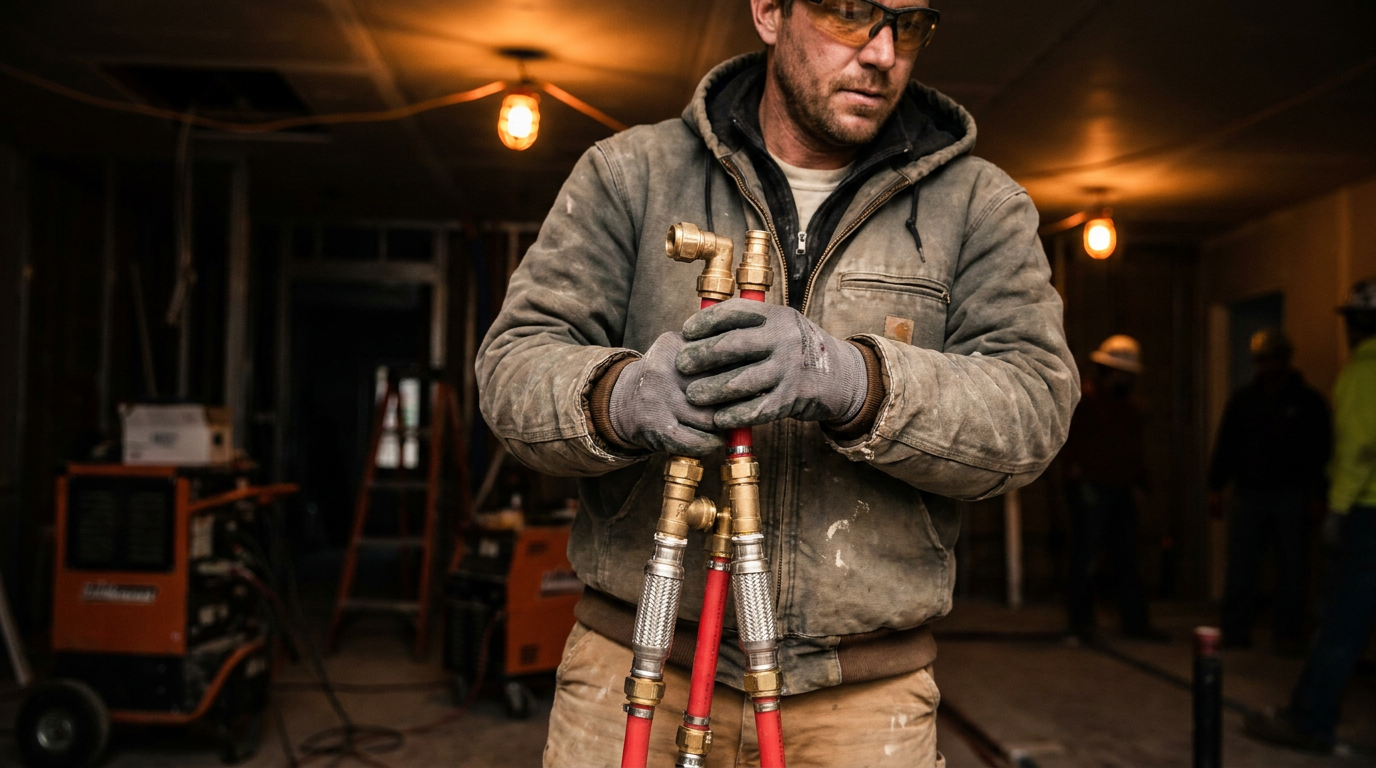
AI tools for plumbing in California's seismic zones help you analyze risks, select flexible materials, and ensure code compliance. These tools process geological data and building codes to recommend pipe types, joint systems, and bracing strategies that withstand ground movement, making your installations safer and more durable.
Earthquake-Ready Pipes: AI Tools for California Plumbers
In California, plumbing isn't just about water flow. It's about resilience. Every joint you sweat and every pipe you hang has to account for the ground moving. For decades, that meant relying on experience and a well-worn copy of the codebook. Now, there's a new tool in your box: Artificial Intelligence.
AI helps you work smarter, not just harder. It takes the guesswork out of seismic prep by analyzing data faster than any human can. Think of it as a digital foreman that has memorized every geological survey and every line of the California Plumbing Code (CPC). It won't replace your skills, but it will make them more powerful.
This guide breaks down how you can use AI tools today to build plumbing systems that are ready for the shake.
Why Seismic Zones Change the Game
Plumbing in a seismic zone is a different beast. The ground doesn't just shake; it shifts, shears, and sometimes liquefies. This puts incredible stress on rigid plumbing systems.
Here’s what you’re up against:
- Shear Stress: When the foundation of a building moves one way and the ground moves another, pipes caught in the middle can be sliced clean through.
- Compression and Tension: The ground pulling apart or squeezing together can rupture pipe walls and destroy fittings.
- Differential Movement: Different parts of a building can move independently, putting immense strain on long, rigid pipe runs that cross from one section to another.
California's codes are strict for a reason. A single gas line break can be catastrophic. A major water line failure can cause massive property damage and leave people without essential services when they need them most.
Your job is to build systems that can move without breaking. AI is the tool that helps you predict where, why, and how much things will move, so you can plan accordingly.
AI in Your Truck: More Than a Gadget
When we say AI, we're not talking about robots soldering pipes. We're talking about smart software. These tools are accessible right from your phone or laptop.
- AI Assistants: Tools like ChatGPT, Claude, or Google Gemini can act as powerful research assistants. You can ask them complex questions about code, materials, and installation techniques.
- Predictive Modeling Software: More advanced platforms use AI to simulate how a building and its systems will react to an earthquake. This is common in large commercial projects.
- Data Analysis Tools: AI can process huge datasets, like USGS seismic hazard maps, local soil reports, and building plans, to pinpoint specific risks on your job site.
Using these tools helps you make better decisions, from the bidding process all the way to final inspection.
Risk Assessment and Site Analysis with AI
Before you even lay out your tools, AI can help you understand the ground beneath your feet. Instead of just knowing you're in a seismic zone, you can know the specific risks for that exact address.
An AI assistant can analyze public data from the U.S. Geological Survey (USGS) and local soil reports. It can tell you about:
- Liquefaction potential
- Proximity to known fault lines
- Historical seismic activity
- The site's Seismic Design Category (SDC)
This information allows you to move from a generic seismic plan to a site-specific one. You can explain the risks to the client or GC with hard data, justifying the need for better materials and methods. This is a critical step in quoting a job accurately and responsibly.
I am a plumber planning an installation for a new two-story residential building in [City, California, ZIP Code]. The soil report indicates [e.g., 'sandy loam with high liquefaction potential']. Using USGS seismic hazard data for this location and California Plumbing Code (CPC) requirements, identify the top 3 seismic risks for the plumbing system (both supply and DWV). Provide a checklist of recommended preventative measures, including specific pipe materials and joint types.
Smarter Material and Joint Selection
Once you know the risks, AI can help you choose the right gear for the job. Your experience tells you that flexibility is key, but AI can compare hundreds of options in seconds to find the optimal solution.
You can ask an AI to compare materials based on specific performance criteria:
- Flexibility: How well does PEX-A handle torsion compared to Type L copper?
- Durability: What is the expected lifespan of a braided stainless steel connector versus a corrugated one in a high-vibration environment?
- Code Compliance: Which flexible gas connectors are approved under the current CPC for use in a Seismic Design Category E zone?
AI can act as a massive, searchable database of manufacturer specs and engineering tests. It ensures you're not just picking a good material, but the best material for the specific stresses it will face.
For a water heater installation in a Seismic Design Category D zone in California, compare braided stainless steel flexible connectors versus corrugated stainless steel tubing (CSST). Analyze them based on durability, resistance to shear stress, lifespan, and cost. Which is better for accommodating multi-directional movement during a seismic event? Provide a recommendation based on CPC guidelines.
Code Compliance and Documentation, Simplified
The California Plumbing Code is a dense document. Seismic provisions, in particular, are spread across different chapters and are updated regularly. It's tough to keep it all straight.
AI can be your compliance officer. You can feed it your installation plan, and it can cross-reference it with the latest CPC requirements. It can flag potential issues like:
- Missing seismic shut-off valves on gas lines.
- Improper bracing for DWV stacks.
- Lack of flexible connectors on water heaters, boilers, and other appliances.
This process saves you from costly rework and failed inspections. Furthermore, AI can help you generate documentation that proves your work is compliant. You can create a report that outlines the risks you identified and the specific, code-approved measures you took to address them. This is invaluable for liability and for showing the client the quality of your work.
I'm retrofitting the copper supply lines in a 1980s commercial building in [City, California]. My plan is to use Type L copper with flexible connectors at all equipment and where pipes cross seismic joints. Review this plan against the current California Plumbing Code (CPC), specifically Chapter 3, Section 314 'Earthquake Protection.' List any potential compliance issues and suggest specific approved hardware, like seismic gas shutoff valves or pipe bracing requirements I might be overlooking.
The Future is Resilient
Working in California's seismic zones is a high-stakes job. Your work protects property and lives. Integrating AI into your workflow doesn't change that. It just gives you a more powerful tool to do the job right.
By using AI for risk assessment, material selection, and code compliance, you can build plumbing systems that are not just functional, but genuinely resilient. You can walk away from a job confident that your work is built to withstand the worst, backed by data, and ready for whatever the ground throws at it.
Frequently asked questions
37 copy-paste prompts that save tradespeople 5+ hours a week. Plus one short email every Friday — no fluff.
More for plumbers
AI for Plumbers: The Practical Field Guide
AI for Plumbers comes down to using AI to do the slow stuff — quoting, paperwork, marketing, and customer follow-up — so you can stay on the tools. Below i

25 ChatGPT Prompts for Your Plumbing Business
25 ChatGPT Prompts for Your Plumbing Business comes down to using AI to do the slow stuff — quoting, paperwork, marketing, and customer follow-up — so you

AI Plumbing Diagnosis Apps: What Actually Works
AI Plumbing Diagnosis Apps comes down to using AI to do the slow stuff — quoting, paperwork, marketing, and customer follow-up — so you can stay on the too