
Can AI Track Job Progress from Photos?
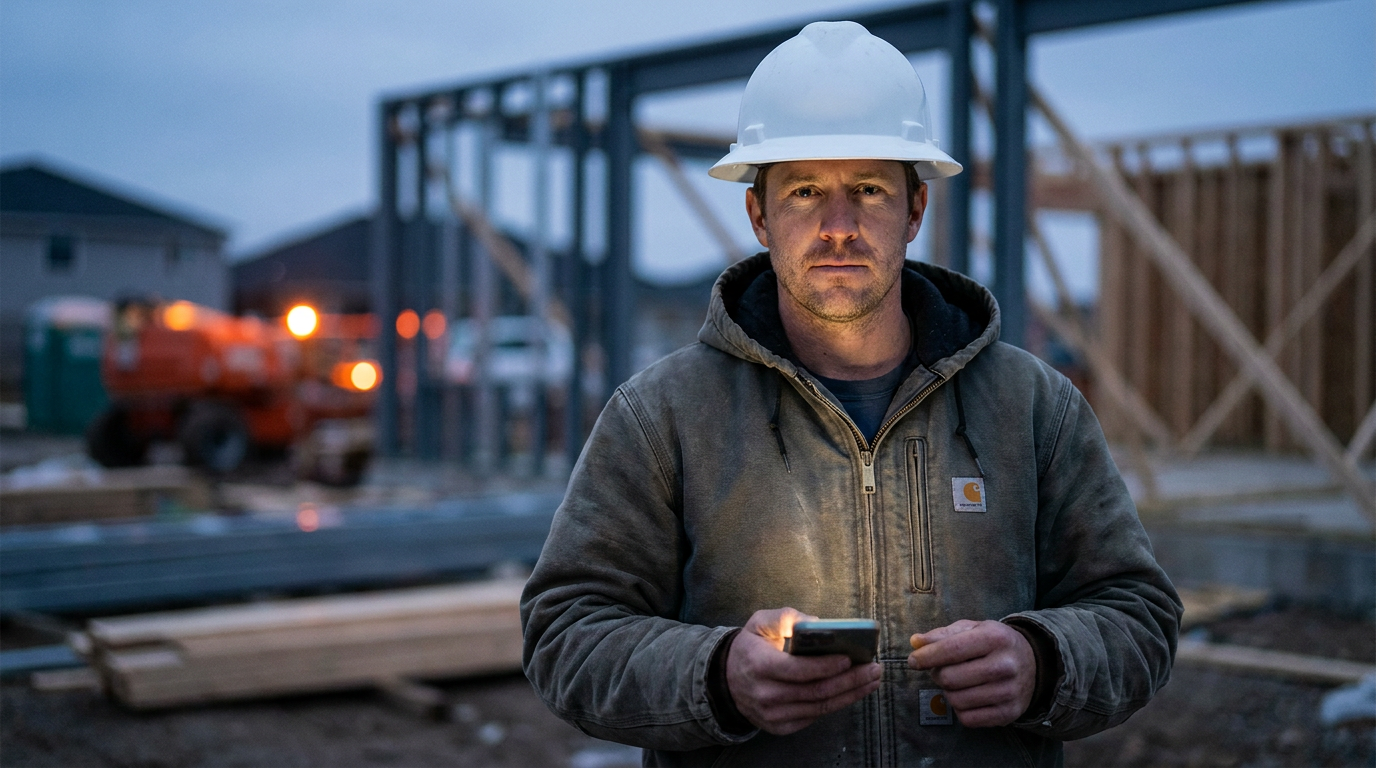
Yes, AI can track job progress from photos. Using technology called computer vision, AI systems analyze images to identify changes, verify completed tasks, and measure material installation. This helps contractors monitor sites remotely, create reports, and keep clients updated without needing constant site visits.
You can’t be everywhere at once. With three jobs running across town, you spend half your day in the truck just checking on things. Did the drywall crew finish taping? Did the plumber get the rough-in done? You burn gas and time just to get a five-minute update.
What if you could get that update from your phone? We’re not talking about your foreman sending a blurry, thumb-covered picture. We’re talking about using artificial intelligence to actually understand what’s happening on site from a few simple photos. It sounds like science fiction, but it’s here now.
How AI Sees Your Jobsite
When you show an AI a photo, it doesn't just see pixels. It uses a technology called computer vision to identify objects, patterns, and changes. Think of it as a super-powered game of 'spot the difference.'
Here’s what it looks for:
- Object Detection: The AI can identify specific items in a photo. It can tell the difference between a pile of lumber, a stack of drywall, a toilet, and a window. It can spot tools, materials, and safety equipment.
- Change Detection: This is the real magic. By comparing a photo from today with one from yesterday, the AI can create a list of what’s new. It can see that a wall has been framed, a trench has been dug, or cabinets have been installed.
- Percent Complete: More advanced systems can be trained to estimate how much of a task is done. By analyzing how much siding is on a wall or how many fixtures are installed, it can give you a percentage. This is great for progress billing.
This isn't about replacing your crew's eyeballs. It's about giving you a tool to manage your time better. It’s about turning simple photo documentation into real, actionable data for better jobsite management.
Real-World Ways to Use AI for Progress Tracking
This isn't just theory. Contractors are using this today to make their lives easier and their businesses more profitable.
- Automated Daily Reports: Instead of your foreman typing out a long report, they can just snap a few photos from designated spots. An AI can analyze the images and generate a bulleted list of completed work. It's faster for them and clearer for you.
- Subcontractor Verification: Tired of chasing subs for updates? Tell them to send photos when they finish a milestone. Use an AI to verify the work is done before you approve a payment. It keeps everyone honest and on schedule.
- Client Updates: Homeowners want to see progress. Instead of you trying to describe what happened over the phone, you can use an AI to create a simple, visual report. It can even draft the email for you, turning photos into a professional client update in seconds.
- Quality Control: You can train an AI to look for specific details. Is the rebar spaced correctly? Are the right fasteners being used on the sheathing? By feeding it examples of right and wrong, the AI can learn to flag potential issues for you to review, catching mistakes before they get buried.
Prompts You Can Use Today
You don't need a fancy, expensive software suite to start. You can use general AI tools that accept image uploads, like GPT-4o or Google's Gemini. Just give them clear instructions.
I'm a general contractor. Here are two photos of a bathroom framing job. Photo 1 was taken yesterday morning, Photo 2 was taken this afternoon. Analyze both images and provide a bulleted list of all visible changes and work completed between the two photos. Focus on framing, plumbing, and any new material staging.
You are a project manager's assistant. Based on the attached photos from the jobsite today, write a brief, professional email update for the client, Mr. Jones. Highlight the key progress made on his deck build (e.g., 'footings are poured,' 'deck framing is 50% complete'). Keep the tone positive and concise, and mention that things are on schedule.
What's the Catch? The Limits of AI Photo Tracking
AI is a powerful tool, but it’s not a magic wand. You need to understand its limits to use it effectively.
First, photo quality is everything. A dark, blurry, or poorly angled photo is useless. The AI can't analyze what it can't see. You need to establish a routine for taking photos: same spots, same time of day, good lighting. Consistency is key.
Second, it's not a substitute for expertise. An AI might see that drywall is hung, but it can't tell you if the crew used the right screw pattern. It can spot a missing hard hat, but it can’t feel the tension in a crew or solve a personality conflict. Your experience as a contractor is still the most valuable asset on the job.
Finally, there's a difference between general AI tools and specialized construction software. Companies like Procore, Buildertrend, and OpenSpace have powerful AI features built-in. They are designed specifically for this work and integrate with your project management. They also cost a lot more. Using a general AI is a great, low-cost way to start and see if the workflow is right for you.
This technology is here to help you get out of the truck and focus on the bigger picture. It gives you the oversight you need without the windshield time you hate. Start small, test it out, and see how much time you can get back in your day.
Frequently asked questions
37 copy-paste prompts that save tradespeople 5+ hours a week. Plus one short email every Friday — no fluff.
More for jobsite ai
How Plumbers Use ChatGPT on the Jobsite (5 Ways)
How Plumbers Use ChatGPT on the Jobsite (5 Ways) comes down to using AI to do the slow stuff — quoting, paperwork, marketing, and customer follow-up — so y

How to Use ChatGPT on the Jobsite (Practical Guide)
How to Use ChatGPT on the Jobsite (Practical Guide) comes down to using AI to do the slow stuff — quoting, paperwork, marketing, and customer follow-up — s

AI Voice Notes to Job Report in 60 Seconds
AI Voice Notes to Job Report in 60 Seconds comes down to using AI to do the slow stuff — quoting, paperwork, marketing, and customer follow-up — so you can