AI Translation for Your Spanish-Speaking Crew: A Guide
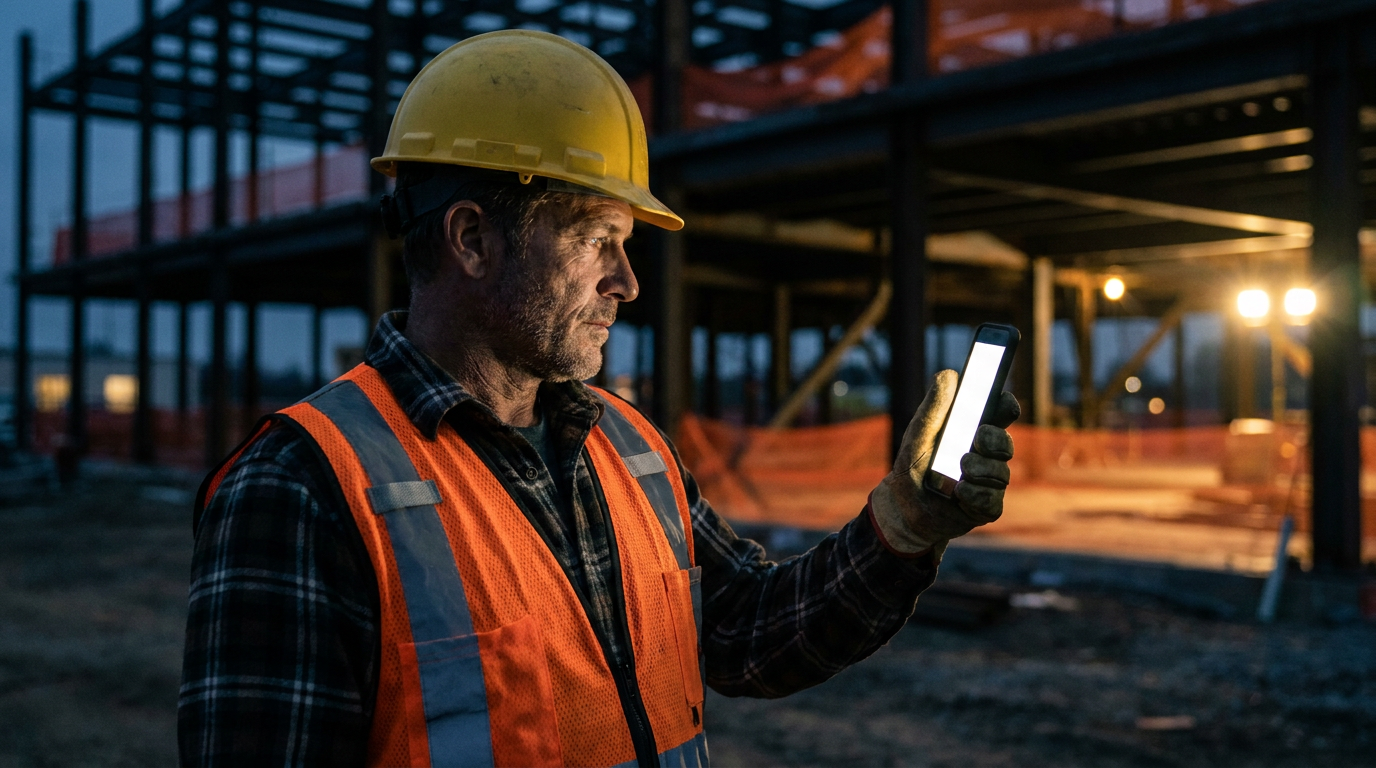
Yes, AI can translate instructions for a Spanish-speaking crew, often in real-time. Modern AI tools and apps on your phone can handle spoken and written language, making it easier to communicate safety protocols, task details, and daily plans. Just be aware of the need for accuracy with technical terms.
Can AI Really Translate for My Crew?
Clear communication on a jobsite isn't just about efficiency. It's about safety. When your crew speaks a different language, even simple tasks can become a game of telephone, and that’s dangerous. With a large part of the U.S. construction workforce being native Spanish speakers, foremen and GCs are constantly looking for better ways to bridge the language gap.
AI translation tools on your smartphone promise a solution. They claim to offer real-time, in-your-pocket translation. But does it actually work on a noisy, messy, and fast-paced jobsite? The short answer is yes, but you have to use it right. It's a powerful tool, but it's not a magic replacement for a bilingual foreman.
Think of AI as another tool on your belt. Like any tool, you need to know its strengths and its limits before you rely on it for something important.
How AI Translation Works on the Jobsite
When we talk about AI translation, we're mostly talking about apps on your phone. You don't need fancy, expensive hardware. The same phone you use to check the weather or call a supplier can become your translator.
Here’s how it usually works:
- Voice-to-Voice: You speak into your phone in English. The app translates it and speaks the instruction aloud in Spanish. Your crew member can then reply in Spanish, and the app translates it back to you. This is great for one-on-one conversations.
- Text Translation: You can type out instructions, safety checklists, or daily plans and have the AI translate the entire document. You can then print it or text it to your crew.
- Camera Translation: This is useful for signs, tool labels, or printed manuals. You just point your phone’s camera at the English text, and the app overlays the Spanish translation on your screen.
Most of these features are available in free apps like Google Translate and Microsoft Translator. They are powerful and getting smarter all the time. But smart doesn't always mean perfect, especially when it comes to the specific language of the trades.
The Good: Where AI Translation Shines
AI is a solid B+ student for most day-to-day jobsite communication. It excels in a few key areas:
- Speed and Access: The biggest win is speed. You can clear up a simple question in seconds instead of trying to find someone who can translate. Almost everyone has a smartphone, so the tool is already in their pocket.
- Basic Instructions: For non-critical tasks, AI is a workhorse. Things like "Let's break for lunch at noon," "We need more 2x4s over here," or "Clean up this area before you leave" are easy for AI to handle.
- Written Materials: AI is excellent for translating written documents. Think about your daily safety briefing checklist, new tool instructions, or a change order. You can translate it once and distribute it to the whole crew, ensuring everyone gets the exact same message.
- Building Goodwill: Just the act of trying to communicate in your crew's language goes a long way. Using a translation app shows respect and a commitment to clear, safe communication. It's a bridge to better jobsite operations.
The Bad: Where You Need to Be Careful
Relying on AI without understanding its weaknesses can be more dangerous than not using it at all. Here’s where you need to keep your guard up.
- Trade Jargon: This is AI's biggest failure. It doesn't understand the difference between a "pancake box" in electrical and a pancake in a kitchen. It might translate trade-specific terms literally, creating confusion. Words like Romex, PEX, or terms for specific tools might not translate at all.
- Safety-Critical Commands: Never, ever rely solely on an app for a life-or-death instruction. Commands like "Watch out!" or "Stop, the power is on!" need to be instant and 100% understood. AI can have a slight delay or misinterpret the urgency. Use it to explain the why behind a safety rule in a calm setting, not to shout a warning in a crisis.
- Nuance and Tone: AI is literal. It misses tone, sarcasm, and regional slang. It can make a simple question sound like a demand or miss the friendly tone you're trying to use.
- Connectivity: Most apps need an internet or cell connection to work at their best. On a new construction site or in a concrete basement, you might not have a signal. Some apps have offline modes, but you have to download the language packs ahead of time.
Prompts to Get You Started
You can use AI to prepare your translations ahead of time. This is much more reliable than trying to do it on the fly. Here are a few prompts you can copy and paste into a tool like ChatGPT.
Act as a professional translator for a construction site. Translate the following safety briefing from English to simple, clear, neutral Spanish suitable for a construction crew. Prioritize safety and clarity over literal translation. The briefing is: 'Good morning, team. Today we're working on the second floor framing. Everyone must wear hard hats and safety glasses at all times. The scaffolding has been inspected and is safe, but stay off the top rail. Watch out for falling debris near the east wall. We will take our first break at 10 AM. Any questions?'
Create a bilingual glossary of 15 common terms for a residential plumbing crew. Provide the English term, the most common Spanish translation used on a US jobsite, and a simple phonetic pronunciation guide for the Spanish term. The terms are: Pipe wrench, PVC pipe, copper pipe, solder, flux, tape measure, level, drain snake, water heater, shut-off valve, P-trap, faucet, toilet flange, hacksaw, safety glasses.
Translate these step-by-step instructions for installing a GFCI outlet into clear, concise Spanish for an apprentice electrician. Use simple language and common electrical terms. The instructions are: '1. Turn off the power at the breaker panel. 2. Verify the power is off using a voltage tester. 3. Unscrew and remove the old outlet from the wall box. 4. Connect the black (hot) wire to the brass 'LINE' screw, the white (neutral) wire to the silver 'LINE' screw, and the bare copper (ground) wire to the green screw. 5. Carefully push the new GFCI outlet back into the box and secure it with screws. 6. Turn the power back on and test the outlet.'
The Bottom Line
AI translation is a valuable tool for any jobsite with a multilingual crew. It breaks down barriers, improves daily efficiency, and can make the site safer when used correctly.
But it is not a replacement for a human. It's an assistant. The best approach is a combination of methods:
- Use AI to translate written materials and non-critical instructions.
- Use it to create bilingual glossaries of your specific trade terms, and have a bilingual speaker verify them.
- For safety-critical information, always use clear, universal hand signals and get verbal confirmation that your crew understands.
- Use AI to help you learn a few key phrases in Spanish yourself. A simple "buenos días" (good morning) or "buen trabajo" (good work) can make a big difference.
Treat AI translation like you would any new power tool. Learn how to use it, respect its power, and understand its limitations. It won't solve all your communication problems, but it's a great place to start.
Frequently asked questions
37 copy-paste prompts that save tradespeople 5+ hours a week. Plus one short email every Friday — no fluff.
More for jobsite ai
How Plumbers Use ChatGPT on the Jobsite (5 Ways)
How Plumbers Use ChatGPT on the Jobsite (5 Ways) comes down to using AI to do the slow stuff — quoting, paperwork, marketing, and customer follow-up — so y
How to Use ChatGPT on the Jobsite (Practical Guide)
How to Use ChatGPT on the Jobsite (Practical Guide) comes down to using AI to do the slow stuff — quoting, paperwork, marketing, and customer follow-up — s
AI Voice Notes to Job Report in 60 Seconds
AI Voice Notes to Job Report in 60 Seconds comes down to using AI to do the slow stuff — quoting, paperwork, marketing, and customer follow-up — so you can