Beyond the Trench Box: AI for Trench Safety Monitoring
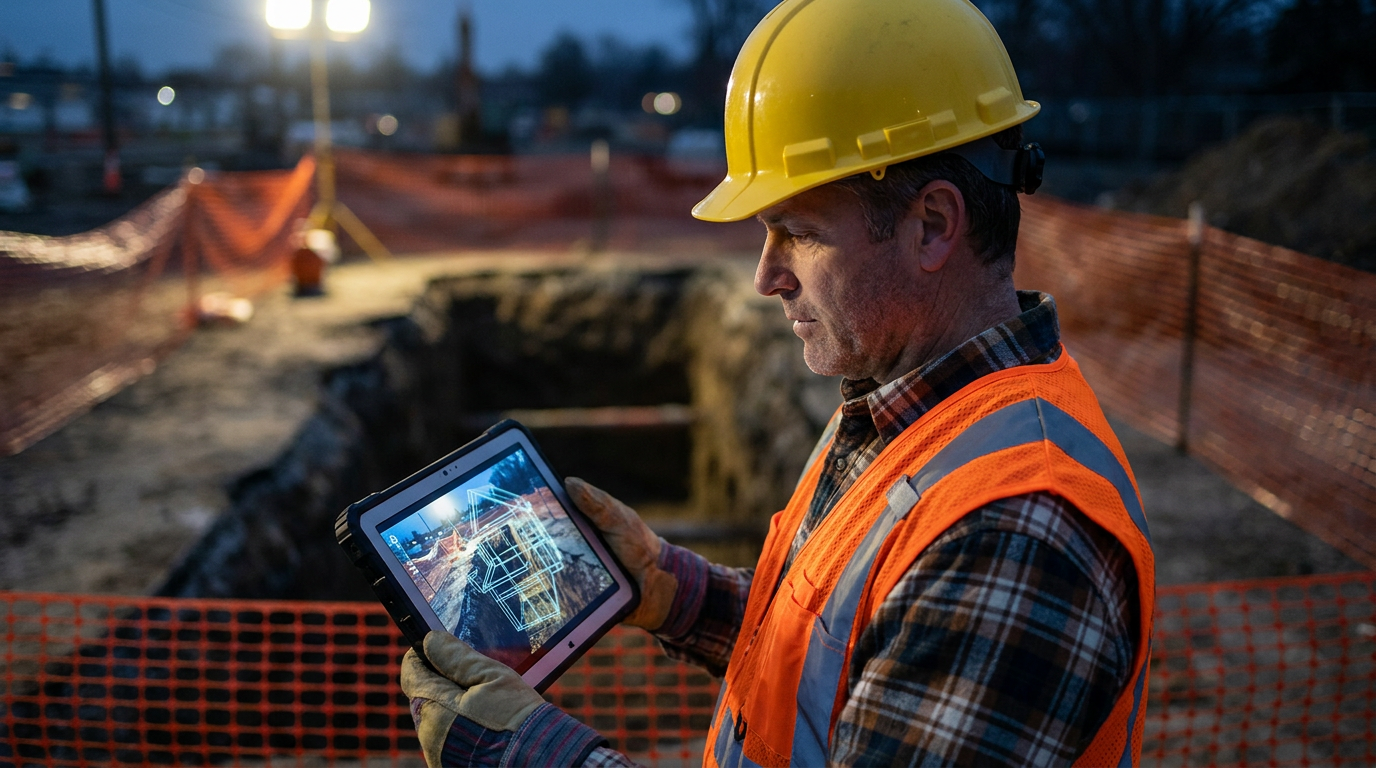
AI for trench safety monitoring uses cameras and computer vision to constantly watch a trench or excavation. The system is trained to spot dangers like soil giving way, people getting too close to the edge, or equipment left in a bad spot. It sends real-time alerts to the site supervisor, preventing accidents.
The Dirt is Dangerous
Let's get straight to it. Trenches are one of the most dangerous places on any jobsite. A cubic yard of dirt can weigh as much as a small car, and a collapse happens in seconds. The Occupational Safety and Health Administration (OSHA) knows this. That's why their rules are strict. But even with trench boxes, shoring, and daily inspections, people still get hurt or killed. In 2022, at least 39 U.S. workers died in trench collapses, more than double the previous five-year average.
We need another layer of protection. A spotter who never blinks, never gets distracted, and sees things the human eye might miss. That's where AI comes in.
What is AI Trench Safety Monitoring?
Forget about sci-fi robots. AI for trench safety monitoring is practical tech you can use today. It's a system of smart cameras and software designed to be your eyes on the excavation 24/7.
Here’s how it works:
- Cameras are set up around the trench. They can be on poles, mounted on equipment, or even on drones.
- The AI software watches the video feed in real time. It’s not just recording; it's analyzing.
- The system looks for specific hazards it has been trained to recognize.
- If it spots a problem, it sends an instant alert to a foreman's phone or a central dashboard.
This isn't just a fancy security camera. It's a proactive safety tool. It uses computer vision, a type of AI that lets computers understand and interpret images and videos just like a person would, but faster and with more focus.
What the AI Actually Looks For
A human spotter is great, but they can only be in one place at a time. An AI system can monitor the entire perimeter and inside of the trench at once. It's constantly scanning for things like:
- Soil Movement: The AI can detect subtle changes in the trench wall, like sloughing (small cave-ins), tension cracks, or bulging. These are early warning signs of a major collapse.
- Unsafe Proximity: It can identify when people or machinery get too close to the unprotected edge of the trench.
- Spoil Pile Placement: The system ensures that excavated dirt and other materials are kept at least two feet from the edge, per OSHA regulations.
- Missing PPE: Some systems can be trained to recognize if a worker in or near the trench is missing a hard hat or other required personal protective equipment.
- Water Intrusion: The AI can spot water seeping into the trench, which can dramatically weaken the soil and increase the risk of collapse.
- Objects on the Edge: Tools, equipment, or debris left near the edge can fall on workers below. The AI flags these as hazards.
When a hazard is detected, the alert isn't just a loud beep. It can be a specific message like, "PERSON DETECTED WITHIN 2 FEET OF NORTH TRENCH EDGE" sent directly to the competent person on site.
Prompts To Put AI to Work for You
You don't have to own an AI monitoring system to start thinking about how AI can improve your safety plans. Use these prompts with your favorite AI assistant to get started.
Act as a construction site safety manager. Create a 'Toolbox Talk' script for a morning safety briefing. The topic is "New AI Trench Monitoring System." The audience is a crew of 15 excavating contractors and pipe layers. Explain what the system is, what it looks for (like soil movement and people too close to the edge), and emphasize that it is a tool to help them, not to spy on them. Keep the tone direct, professional, and under 300 words.
I am a project manager for a mid-sized civil construction company. Draft a business case memo to the company owner arguing for a pilot program to test an AI trench safety monitoring system on our next big project. Include sections for: Problem (high risk of trench collapse, OSHA fines), Solution (how AI monitoring works), and Return on Investment (ROI). For ROI, focus on avoiding project shutdowns, lowering insurance premiums, preventing injuries, and enhancing our company's reputation as a safety leader. Use data points like the potential for a $15,625 OSHA fine per serious violation.
Is It Worth the Money?
New tech always comes with a price tag. AI trench safety systems are a real investment. But you have to weigh the cost against the alternative. A single trench collapse can be catastrophic.
Think about the costs of an incident:
- Human Cost: A serious injury or fatality is devastating for the worker, their family, and your entire crew.
- Financial Cost: OSHA fines for trenching violations are steep. A single "willful" violation can cost over $150,000. Then add legal fees, workers' comp, and potential lawsuits.
- Project Delays: An incident will shut down your site for days, weeks, or even longer while an investigation happens. That means missed deadlines and angry clients.
- Insurance: Your premiums will skyrocket after a major safety incident.
- Reputation: Word gets around. A company known for unsafe sites has a hard time bidding for good jobs and hiring skilled workers.
Compared to all that, the cost of an AI monitoring system starts to look a lot more reasonable. It’s a tool that pays for itself if it prevents just one major incident. This technology is a core part of building a modern, safe jobsite.
The Future is Now
AI for trench safety isn't a replacement for a well-trained competent person or proper shoring. It's a force multiplier. It gives your safety team superpowers, allowing them to see more and react faster.
This technology is here to stay. As it gets more affordable and easier to use, it will become a standard piece of equipment, just like a laser level or a trench box. The companies that adopt it first will have a major advantage in safety, efficiency, and reputation. Don't wait for a tragedy to make you take it seriously.
Frequently asked questions
37 copy-paste prompts that save tradespeople 5+ hours a week. Plus one short email every Friday — no fluff.
More for jobsite ai
How Plumbers Use ChatGPT on the Jobsite (5 Ways)
How Plumbers Use ChatGPT on the Jobsite (5 Ways) comes down to using AI to do the slow stuff — quoting, paperwork, marketing, and customer follow-up — so y

How to Use ChatGPT on the Jobsite (Practical Guide)
How to Use ChatGPT on the Jobsite (Practical Guide) comes down to using AI to do the slow stuff — quoting, paperwork, marketing, and customer follow-up — s
AI Voice Notes to Job Report in 60 Seconds
AI Voice Notes to Job Report in 60 Seconds comes down to using AI to do the slow stuff — quoting, paperwork, marketing, and customer follow-up — so you can