AI vs. Manual Takeoffs: Which Is More Accurate?
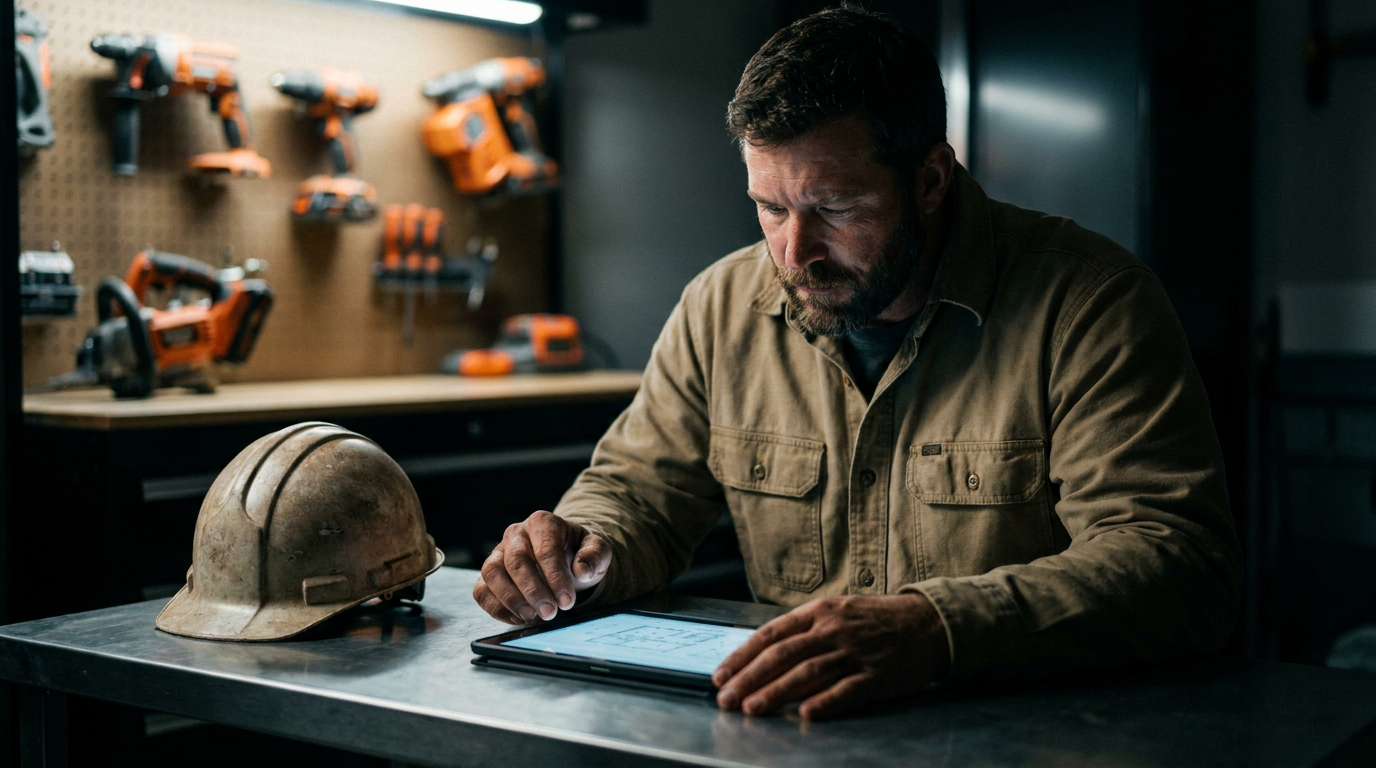
Yes, AI estimating is generally more accurate than manual takeoff. AI software eliminates human math errors, counts materials consistently, and processes complex blueprints in seconds. While a skilled estimator is still vital, AI provides a more precise foundation, reducing the risk of costly mistakes and missed items in your bids.
AI vs. Manual Takeoffs: The Accuracy Showdown
For years, the game was simple. You’d get a set of plans, roll them out on a tailgate or a dusty table, and get to work with your scale, highlighters, and a notepad. That manual takeoff process is how jobs have been won for generations. But it’s slow, and one missed detail can wreck your profit.
Now, AI estimating tools are changing the game. They promise to do the same work in minutes, not days. But the big question is, can you trust a machine with your bid? Is AI estimating more accurate than a seasoned pro?
The short answer is yes, but it’s not that simple. Let's cut through the hype and look at the real-world facts.
What We Mean By 'Manual Takeoff'
A manual takeoff is the classic method of estimating a job. It involves a person, usually an experienced estimator, poring over physical or digital blueprints. They use rulers, scales, and sometimes specialized styluses to measure lengths, count items, and calculate areas.
The Good:
- Total Control: You see and touch every part of the estimate. You know exactly where the numbers came from.
- No Upfront Cost: You already have the tools: a scale, a calculator, and your brain.
- Handles Bad Plans: A good estimator can often interpret weird drawings or make educated guesses where plans are vague.
The Bad:
- It's Slow: A complex residential or commercial job can take days to estimate manually. That's time you're not spending on other parts of your business.
- Human Error: Everyone makes mistakes. You get tired, you get interrupted, you misread a number, or you just plain miss a page of plans. A simple math error can turn a profitable job into a loser.
- Inconsistent: The way you measure on a Monday morning might be slightly different than on a Friday afternoon. Two different estimators will almost certainly come up with two slightly different counts.
How AI Estimating Works
AI estimating software flips the script. Instead of you hunting for data, the software does it for you. You upload a digital PDF of the blueprints to the platform. The AI then scans the entire document.
Using machine learning, it recognizes symbols, lines, and text. It identifies walls, doors, windows, outlets, pipes, and light fixtures. It automatically counts them, measures their lengths, and calculates their areas or volumes. The results are presented in a clean, organized list that you can export to your quoting software.
The Good:
- Blazing Speed: Takeoffs that take days manually are done in minutes. This means you can bid on more jobs, increasing your chances of winning work.
- Unbeatable Precision: An AI doesn't get tired or distracted. It will count every single outlet 100 times and get the same number every time. It eliminates simple calculation errors.
- Consistency: Every estimate is done the same way, every time. This creates a reliable baseline for all your bids.
The Bad:
- 'Garbage In, Garbage Out': AI is only as good as the plans you feed it. If the blueprints are low-quality, blurry, or have a ton of handwritten notes, the AI can get confused. It can’t replace a human’s ability to interpret a messy drawing.
- Cost: These tools aren't free. They typically involve a monthly or annual subscription.
- The Learning Curve: While most tools are user-friendly, you still need to learn how to use the software and, more importantly, how to review its work. You can't just press a button and trust it blindly.
The Verdict on Accuracy
When it comes to pure counting and calculation, AI wins. It's not even a fair fight. A study by the Project Management Institute has shown that human error is a factor in a majority of project failures, and estimating is where that risk often begins.
AI removes the risk of common human mistakes:
- Missed Items: Forgetting to count fixtures on one page.
- Math Errors: Incorrectly adding up a long list of materials.
- Fatigue Mistakes: Making a simple error at the end of a long day.
However, accuracy isn't just about counting. It's about interpretation. An experienced estimator can look at a set of plans and spot a design flaw, a conflict between the electrical and plumbing layouts, or a detail that just doesn't make sense. An AI can't do that. It doesn't have field experience.
This is why the best approach isn't AI or manual. It's AI and manual.
Use AI for what it's best at: the tedious, repetitive work of counting and measuring. It gives you a super-accurate, super-fast first draft of your takeoff. Then, use your human expertise—or that of your best estimator—to review, refine, and add the context that only a pro can provide. Check our guide on jobsite management for more on efficiency.
This hybrid approach gives you the best of both worlds: the speed and precision of a machine, plus the wisdom and judgment of an experienced tradesperson. It's how you create winning bids that protect your profit margin.
Prompts to Get You Started
Ready to see how AI can fit into your business? Use these prompts with your favorite AI assistant to think through the process.
Act as a construction operations consultant. I run a [Your Trade, e.g., electrical contracting] business. I am considering adopting an AI estimating tool to speed up my bidding process. Create a checklist of the top 10 most important features I should look for when comparing different software options. Focus on features that directly impact accuracy and efficiency for a small to medium-sized trade business.
My construction company is switching from manual takeoffs to a new AI estimating software. Draft a clear, confident email to my team of 5 estimators. Announce the change, explain the key benefits (speed, accuracy, bidding on more jobs), and reassure them that this tool is meant to help them, not replace them. Set a positive tone for the upcoming training.
Final Thoughts
Is AI estimating more accurate? For the raw task of counting and measuring, absolutely. It's a powerful tool for your ops toolbox.
But an estimate is more than a list of materials. It's a promise to your customer and the foundation of your project's profitability. Don't ever completely outsource your brain. Use AI to do the heavy lifting, then use your experience to check the work and make the smart decisions. That’s how you build a stronger, more profitable business.
Frequently asked questions
37 copy-paste prompts that save tradespeople 5+ hours a week. Plus one short email every Friday — no fluff.
More for quoting & estimating
How to Write an Electrical Estimate with AI in 10 Minutes
How to Write an Electrical Estimate with AI in 10 Minutes comes down to using AI to do the slow stuff — quoting, paperwork, marketing, and customer follow-
AI-Generated Electrical Proposal Template (Free)
AI-Generated Electrical Proposal Template (Free) comes down to using AI to do the slow stuff — quoting, paperwork, marketing, and customer follow-up — so y

How to Quote a Plumbing Job With AI (Step-by-Step)
How to Quote a Plumbing Job With AI (Step-by-Step) comes down to using AI to do the slow stuff — quoting, paperwork, marketing, and customer follow-up — so