Modeling Water Pressure with AI in Multi-Story Buildings
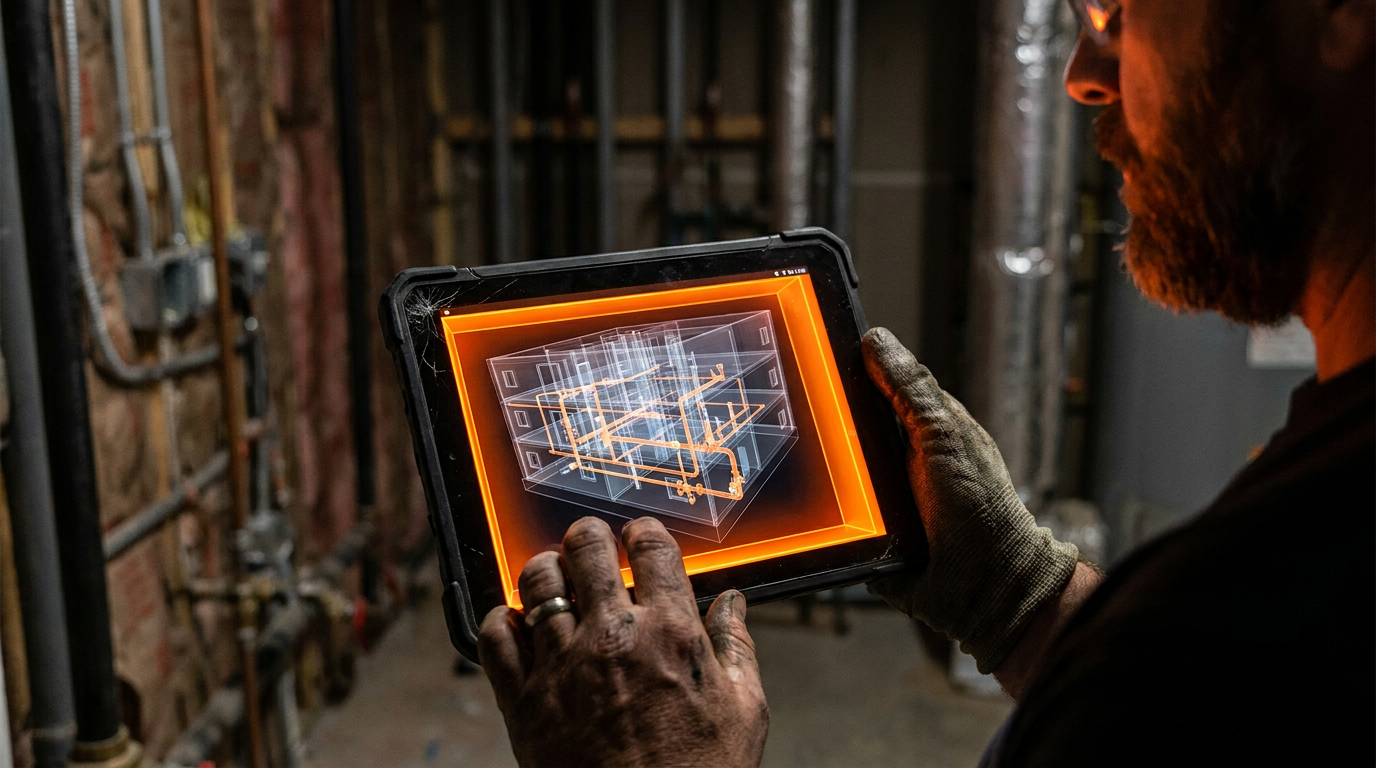
Plumbers can use AI to model water pressure in multi-story buildings by feeding it data like pipe diameter, building height, pump specs, and fixture flow rates. The AI builds a digital twin of the plumbing system, simulating pressure at any point to predict and diagnose issues before cutting into walls.
Fixing Weak Showers on the 10th Floor
We’ve all been there. A frantic call from a tenant or building manager about weak showers on the top floors of a high-rise. You check the booster pump, you look at the pressure-reducing valves, and you start making educated guesses. Maybe a riser is partially clogged. Maybe the pump is undersized for recent renovations. It’s a tough problem that can cost a lot of time and money to diagnose through trial and error.
But what if you could see inside the walls without a demo saw? What if you could test a solution before you ordered a single part? That’s where AI comes in. This isn't science fiction. It’s a practical tool that’s changing how we solve complex plumbing challenges, especially when it comes to water pressure in tall buildings.
The Physics of the Problem
Before we get into the AI part, let's get back to basics. Water is heavy. For every 2.31 feet you push it uphill, you lose 1 pound per square inch (PSI) of pressure just fighting gravity. This is called static head loss. In a 20-story building, you could lose over 85 PSI by the time water reaches the top floor, and that's before anyone even turns on a faucet.
Then you have friction loss. As water moves through pipes, elbows, and valves, it drags against the surfaces, losing more pressure. The faster the water moves, or the smaller the pipe, the more friction you get.
Traditionally, we solve this with:
- Booster Pumps: To add pressure back into the system.
- Larger Pipes: To reduce friction, especially in main risers.
- Zoned Systems: Creating different pressure zones with their own pumps and regulators so you don't blow out fixtures on the first floor while trying to serve the penthouse.
This works, but it often relies on experience and rules of thumb. In a complex or older building, guesswork can lead to expensive mistakes.
How AI Builds a Digital Twin
Using AI to model water pressure means you create a “digital twin” of the building’s plumbing. It’s a complete computer simulation that behaves just like the real thing. You don't need to be a coder to do this. You just need to know how to ask the right questions and provide the right data.
You feed the AI information like:
- Building Plans: The height of the building and the layout of the pipes.
- Pipe Specs: The material (copper, PEX, steel), diameter, and age of the pipes.
- Pump Information: The manufacturer's pump curve, which shows how much pressure it produces at different flow rates.
- Fixture Data: The expected flow rate (GPM) of showers, toilets, and sinks.
- Municipal Supply: The pressure of the water coming into the building from the city main.
The AI takes all this data and runs thousands of calculations. It simulates the pressure at every single point in the system, from the basement to the top-floor showerhead. It can show you exactly where pressure drops off and why.
Act as a master plumber and hydraulic engineer. I need to create a simplified water pressure model for a 15-story residential building. The building is 150 feet tall. The municipal water main provides 75 PSI at the basement level. The main riser is 4-inch Type L copper. Each floor has 4 apartments. Assume a peak demand scenario where 25% of fixtures are in use simultaneously. List the key data points you would need to build a full simulation and estimate the static pressure loss at the top floor.
Practical Uses on the Job
This isn't just a fancy computer game. A digital model gives you powerful ways to work smarter.
New Construction Design
Before the first shovel hits the ground, you can use an AI model to validate the architect's plumbing design. Will the specified pipes and pumps actually deliver adequate pressure during peak hours? The model can flag undersized risers or an improperly placed booster pump, saving you from a major callback down the road.
Retrofit and Repair Diagnostics
This is where it gets powerful for existing buildings. You have that 10th-floor problem. Instead of guessing, you feed the building's data into the model. The model might show that the pressure should be fine, pointing you toward a blockage or a failing valve. Or, it might show the original system was always borderline and the new low-flow fixtures just don't have enough pressure to work well. You can diagnose the root cause with far more certainty. This isn't about replacing your experience; it's about adding to your set of professional tools to get the job done right the first time.
I'm troubleshooting low water pressure in a 12-story condo built in 1985. Pressure is weak above the 8th floor. The main riser is 3-inch galvanized steel. A single booster pump in the basement is set to 120 PSI. The city main is 60 PSI. Based on this, what are the top 3 most likely causes for the pressure drop? For each cause, explain what additional data would help you confirm it using a hydraulic model.
Optimizing Pumps and Energy Use
Booster pumps use a lot of electricity. Running a pump that's too big, or running it at the wrong pressure, wastes money for the building owner. An AI model can simulate different pump options to find the most efficient one for the job. It can also help you justify the cost of a modern variable-speed pump by showing the client the exact energy savings over time.
I'm choosing a booster pump system for a new 20-story office building. Compare the long-term operational costs and system reliability of two options:
1. A single, large fixed-speed booster pump in the basement.
2. A duplex system of smaller, variable frequency drive (VFD) pumps staged, with one in the basement and one on the 10th floor.
Explain the pros and cons of each in terms of energy use, maintenance, and redundancy.
Getting Started
You don't need a degree in data science. You can start by using conversational AI tools, like the ones you see in the prompt blocks, to organize your thoughts and run basic calculations. Ask it to calculate static head loss. Ask it to list potential causes for a pressure drop. Use it as a super-powered calculator and brainstorming partner.
As you get more comfortable, you can look at more specialized software. Many modern BIM (Building Information Modeling) and CAD programs are starting to integrate these kinds of simulation tools. The key is to see AI not as a magic box, but as another tool in your truck. It takes your expertise and experience and gives it a major upgrade, letting you solve tougher problems faster and with more confidence. The result is fewer callbacks, happier clients, and a better bottom line.
Frequently asked questions
37 copy-paste prompts that save tradespeople 5+ hours a week. Plus one short email every Friday — no fluff.
More for plumbers
AI for Plumbers: The Practical Field Guide
AI for Plumbers comes down to using AI to do the slow stuff — quoting, paperwork, marketing, and customer follow-up — so you can stay on the tools. Below i
25 ChatGPT Prompts for Your Plumbing Business
25 ChatGPT Prompts for Your Plumbing Business comes down to using AI to do the slow stuff — quoting, paperwork, marketing, and customer follow-up — so you

AI Plumbing Diagnosis Apps: What Actually Works
AI Plumbing Diagnosis Apps comes down to using AI to do the slow stuff — quoting, paperwork, marketing, and customer follow-up — so you can stay on the too