AI for Water Quality Testing: A Plumber's Field Guide
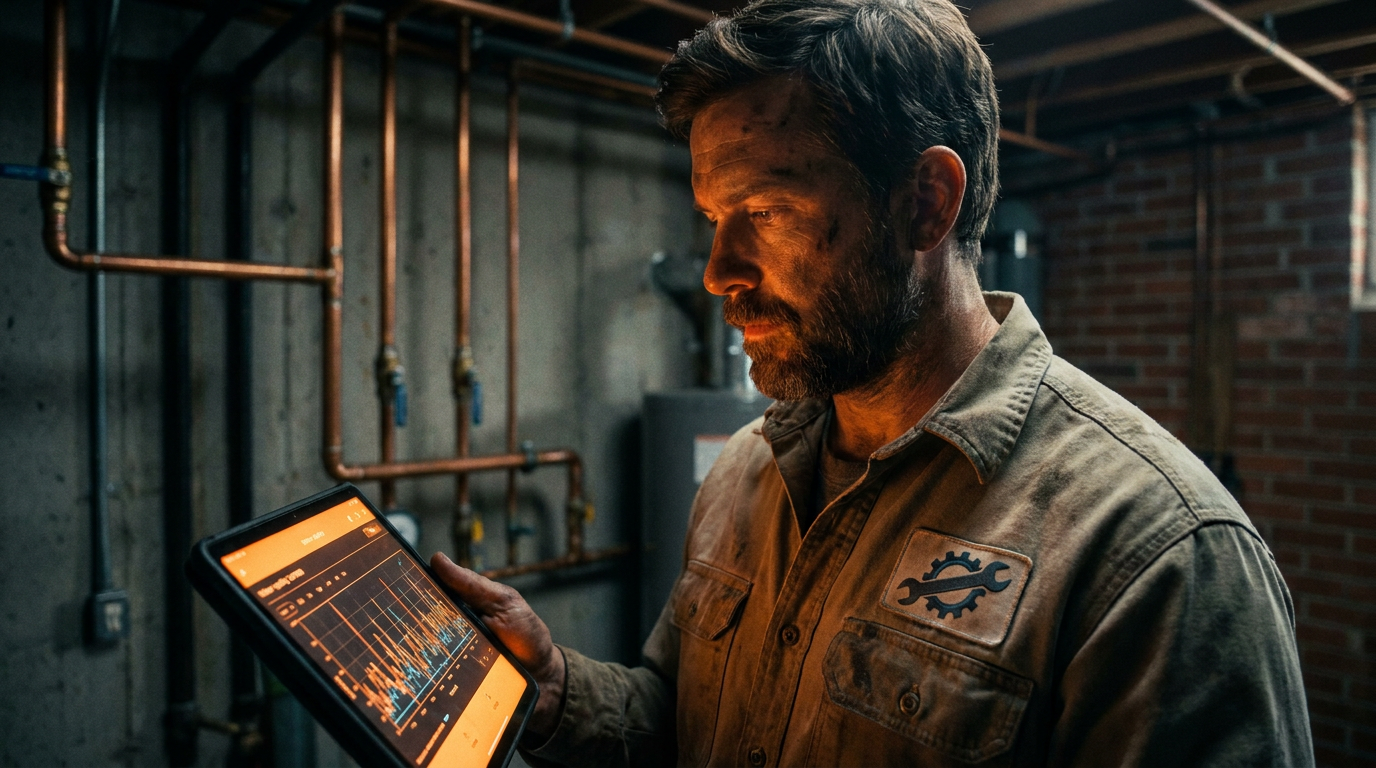
AI for home water quality testing helps plumbers by analyzing data from smart sensors and digital test kits faster and more accurately than manual methods. This technology identifies contaminants, predicts trends like pipe corrosion, and generates easy-to-understand reports for homeowners, saving you time and adding value to your service.
Your job is to solve water problems. But sometimes, the hardest part is figuring out what the problem actually is. Water testing can be slow. You're trying to match colors on a strip, read tiny numbers on a digital meter, or wait days for a lab report. All while the customer is looking over your shoulder.
There’s a better way. Artificial intelligence, or AI, is no longer just for tech companies. It's a powerful tool that can fit right in your toolbox. Using AI for home water quality testing helps you get faster answers, find problems before they get serious, and explain the situation to homeowners in a way they'll understand. This guide shows you how.
What is AI Water Testing, Really?
Forget about robots taking your job. Think of AI as a super-smart assistant that's great at spotting patterns in data. You're already collecting data every time you test water. AI just helps you make sense of it faster and more accurately.
Here’s how it works:
- Finds Patterns: AI can look at a set of test results for pH, hardness, chlorine, and lead. It compares these numbers to thousands of other data points, including local water utility reports and EPA guidelines. It can then flag combinations that suggest a specific problem, like pipe corrosion versus contaminated well water.
- Reads Images: Some AI apps use your phone's camera to read a traditional test strip. This removes the guesswork of matching colors by eye, giving you a more reliable digital reading instantly.
- Predicts the Future: By tracking small changes in water quality over time, AI can predict future issues. A slow, steady increase in copper levels might not set off alarms today, but an AI can flag it as a sign of developing pipe failure. This is called predictive maintenance.
It’s not about replacing your skills. It’s about adding a layer of data to your experience. You’re still the one who knows how the pipes are run in that house. The AI just gives you better information to make the right call.
Tools of the Trade: AI in Your Toolbox
You don't need a degree in computer science to start using AI. The tools are designed for field use and are becoming more common.
- AI-Powered Digital Testers: These look like standard digital water testers, but they connect to an app on your phone or tablet. The device takes the readings, and the app's AI does the heavy lifting. It analyzes the results, cross-references them with public data from sources like the U.S. Geological Survey, and gives you a report on the spot.
- Test Strip Scanner Apps: These are a great entry point. You dip a standard test strip, lay it on a flat surface, and the app scans it with your phone's camera. The AI analyzes the colors and gives you a precise digital readout, saving you from squinting and guessing.
- Data Management Platforms: For businesses looking to go all-in, these platforms act as a central hub. They store a customer's water quality history, pull in data from local municipal water reports, and integrate readings from your field testers. This gives you a complete picture of a property's water health. It helps you build a stronger case when you need to create a quote for a major filtration system.
Analyze the following water test results from a residential well in central Ohio and provide a summary for a plumber. Identify the top 3 concerns, their likely causes, and suggest 2-3 specific water treatment solutions to discuss with the homeowner.

Results:
- pH: 6.2
- Iron: 1.5 mg/L
- Hardness: 250 mg/L (as CaCO3)
- Nitrates: 8 mg/L
- Total Coliform: Present
Putting AI to Work on the Jobsite
Knowing about the tools is one thing. Using them to make your day easier and more profitable is another.
Faster, More Accurate Diagnosis
Instead of just telling a customer they have "hard water," you can show them a report. It might say, "Your water hardness is 220 mg/L, which is 30% higher than the average for your neighborhood. The high iron content is likely causing the rust stains in your sinks."
This level of detail does two things:
- It pinpoints the problem for you, so you know whether to recommend a water softener, an iron filter, or both.
- It builds trust with the customer. You're not just selling them equipment; you're solving a specific, proven problem.
Predictive Maintenance Saves Money
Catching a problem early is always better. AI can help you offer proactive services. Imagine testing a client's water and the AI flags a small but steady increase in lead levels over the past two years. It's still below the EPA action level, but the trend is clear.
You can now go to that homeowner with data. You can explain that their older service lines are likely beginning to break down. This gives them the option to replace the lines on their own schedule, not as an emergency when the levels become dangerous. That's a high-value service that sets you apart from the competition.
My customer is complaining about hard water spots on dishes and dry skin. My test shows water hardness is 18 Grains Per Gallon (GPG). Write a simple, 100-word explanation I can text or email to them. Explain what GPG means in simple terms and why a water softener is the right solution for their specific problem. Keep the tone professional but easy to understand.
The Bottom Line: Does This Make You More Money?
Technology is only useful if it improves your business. Here’s how AI for water testing directly impacts your wallet.
- Upselling with Data: It’s easier to sell a $5,000 whole-home filtration system when you have a detailed report showing exactly what's in the water and how the system will fix it. The AI report is your silent salesman.
- Saving Time and Labor: Every minute you spend manually logging data or driving a sample to a lab is a minute you're not earning. Instant analysis on-site means you can diagnose, quote, and potentially complete the job in a single visit.
- Building a Reputation: Plumbers who use modern tools and provide clear, data-backed answers are seen as experts. This leads to better reviews, more referrals, and the ability to charge a premium for your services.
This isn't about replacing good, old-fashioned plumbing knowledge. It's about adding a powerful tool to your belt that helps you work smarter, not harder. Start small with a test strip app and see how it feels to have data on your side.
My customer's water test shows high levels of chlorine (4 ppm) and hardness (15 GPG). They want to improve their drinking water taste and protect their appliances. Compare a whole-house carbon filtration system with a traditional salt-based water softener. Explain the pros and cons of each for their specific situation, and recommend a combined approach if appropriate.
Frequently asked questions
37 copy-paste prompts that save tradespeople 5+ hours a week. Plus one short email every Friday — no fluff.
More for plumbers
AI for Plumbers: The Practical Field Guide
AI for Plumbers comes down to using AI to do the slow stuff — quoting, paperwork, marketing, and customer follow-up — so you can stay on the tools. Below i

25 ChatGPT Prompts for Your Plumbing Business
25 ChatGPT Prompts for Your Plumbing Business comes down to using AI to do the slow stuff — quoting, paperwork, marketing, and customer follow-up — so you

AI Plumbing Diagnosis Apps: What Actually Works
AI Plumbing Diagnosis Apps comes down to using AI to do the slow stuff — quoting, paperwork, marketing, and customer follow-up — so you can stay on the too