
Ditch the Lawn: AI for Water-Wise Texas Yards
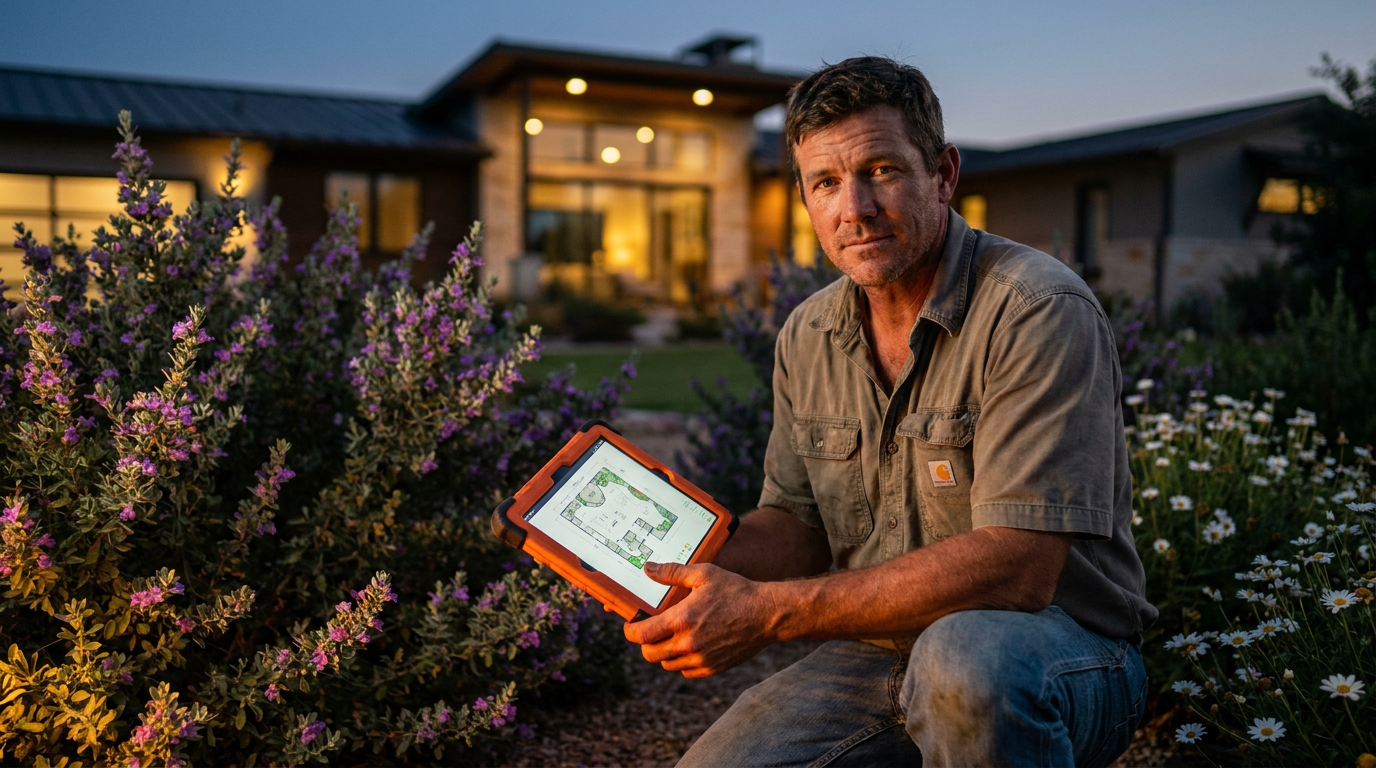
AI tools help landscapers find water-wise lawn alternatives in Texas by analyzing local climate data, soil types, and native plant databases. This allows you to quickly generate drought-tolerant landscape designs, suggest specific plants like Texas Sage or Buffalo Grass, and create realistic visualizations for clients.
The Texas Lawn is a Thirsty Problem
That green St. Augustine lawn is as Texan as brisket, but it comes at a cost. During a hot summer, a traditional lawn can demand over 25,000 gallons of water. With many Texas towns facing water restrictions and utility bills climbing, clients are looking for a better way. They want yards that look good, save money, and don't guzzle water.
This is not a trend. This is the new reality for any serious landscaping business in the state. Homeowners are tired of pouring money and water into a lawn that just gets scorched every August. They are ready for something different, and the contractor who can offer smart, beautiful, water-wise alternatives is the one who will win the job.
Your New AI Design Assistant
Forget spending hours flipping through plant books or searching forums. Artificial intelligence is the most powerful tool to hit your belt in years. Think of it as a design assistant that has memorized every native plant, soil type, and sun pattern in Texas. It helps you work faster and deliver better plans to your clients.
Using AI, you can:
- Brainstorm Ideas: Move beyond the basic rock garden. Ask an AI for concepts like a Blackland Prairie restoration, a Hill Country meadowscape, or a modern Chihuahuan Desert design.
- Select the Right Plants: Get a list of plants perfectly suited for a client’s specific location, from the clay soil of Dallas to the sandy loam of Houston. Specify sun exposure, desired color, and maintenance level.
- Create Layouts: Describe a space and ask the AI to generate a descriptive layout. It can suggest where to place taller plants for privacy, groundcovers for open areas, and hardscape elements for structure.
- Communicate with Clients: AI can help you write a clear, persuasive pitch that explains the benefits of a lawn alternative, including estimated water savings and long-term value.
This isn't about letting a robot do your job. It's about using a powerful tool to make your expertise even more valuable.
Act as a Texas-based master gardener. I have a client in zip code 78745 (Austin, TX) with heavy clay soil. The area gets 8+ hours of direct afternoon sun. The client wants to replace a 500 sq ft section of their St. Augustine lawn with a low-water, low-maintenance garden that attracts pollinators. Provide a plant list of 5-7 native or well-adapted perennials and 2 groundcovers. For each plant, include its mature size and bloom season. The client wants a natural, prairie-style look with color from spring through fall.
From Prompt to Plan: A Real-World Workflow
Putting AI to work is straightforward. Here’s how a typical project might look.
Client Meeting: You meet with the homeowner. They're tired of their high water bill in Plano. They want something that looks good but needs less care. You take measurements and photos, noting sun exposure and soil conditions.
AI Brainstorming: Back in the truck, you pull out your phone or tablet. You use the prompt above, adjusted for Plano's Blackland Prairie region. The AI gives you a list of plants like Purple Coneflower, Black-eyed Susan, Gayfeather, and a native groundcover like Frogfruit.
Concept Refinement: The AI gave you a great plant list. Now, you use your professional knowledge. You know a local nursery has a great stock of a specific Salvia cultivar that would work perfectly. You sketch a quick layout, clustering plants in groups of three and five for a natural look and adding a dry creek bed for drainage and visual interest.
Client Pitch: You need to sell the vision. You ask the AI to help you write a simple, powerful summary for the client.
Write a short, persuasive paragraph for a homeowner in Plano, Texas. Explain the benefits of converting their thirsty lawn to a native plant garden. Focus on three key points: drastic water savings, increased curb appeal with year-round interest, and creating a habitat for local birds and butterflies. Use a confident and professional tone. Mention that the new landscape will be an asset that increases their property value.
- Final Bid: You combine the AI-assisted plant list, your professional design, and the persuasive summary into your formal quote. The client sees a thoughtful, customized plan that directly addresses their problems. You win the job.
Top Plants for a Water-Wise Texas Yard
While AI can generate endless lists, some plants are all-stars for a reason. Here are a few reliable choices that work across large parts of Texas:
- Texas Sage (Leucophyllum frutescens): A tough, silver-leafed shrub that explodes in purple flowers after a rain. Needs full sun and zero pampering.
- Red Yucca (Hesperaloe parviflora): Not a true yucca, but its tall, coral-red flower spikes are a magnet for hummingbirds. Evergreen and extremely drought-tolerant.
- Blackfoot Daisy (Melampodium leucanthum): A low-mounding perennial that covers itself in honey-scented white daisies from spring to fall. Thrives in rocky, dry soil.
- Buffalo Grass (Bouteloua dactyloides): A true native Texas turf grass. It requires significantly less water and mowing than St. Augustine or Bermuda. It's not for a high-traffic soccer field, but it creates a beautiful, soft, prairie-like lawn.
- Flame Acanthus (Anisacanthus quadrifidus var. wrightii): A shrubby perennial that produces fiery orange-red tubular flowers all summer, attracting hummingbirds and butterflies.
- Frogfruit (Phyla nodiflora): A tough, fast-spreading native groundcover that can handle some foot traffic. It has small white flowers and is a host plant for several butterfly species.
Always double-check plant choices with your local Texas A&M AgriLife Extension office to confirm they are suitable for your specific county.
It’s Your Expertise, Amplified
Switching from traditional lawns to water-wise landscapes is a huge opportunity for Texas landscapers. Clients need expert guidance to make the change. By using AI as your research and design partner, you can provide that guidance faster and more effectively than your competition.
You bring the hands-on skill, the local knowledge, and the client relationship. AI brings the data. Together, it's an unbeatable combination that will help you build a more profitable and sustainable business.
Frequently asked questions
37 copy-paste prompts that save tradespeople 5+ hours a week. Plus one short email every Friday — no fluff.
More for landscaping
AI for Landscaping Business Owners: Real ROI
AI for Landscaping Business Owners comes down to using AI to do the slow stuff — quoting, paperwork, marketing, and customer follow-up — so you can stay on

ChatGPT Prompts for Lawn Care Business (20 Tested)
ChatGPT Prompts for Lawn Care Business (20 Tested) comes down to using AI to do the slow stuff — quoting, paperwork, marketing, and customer follow-up — so