Florida Roofer's AI Guide to Wind Uplift Calculations
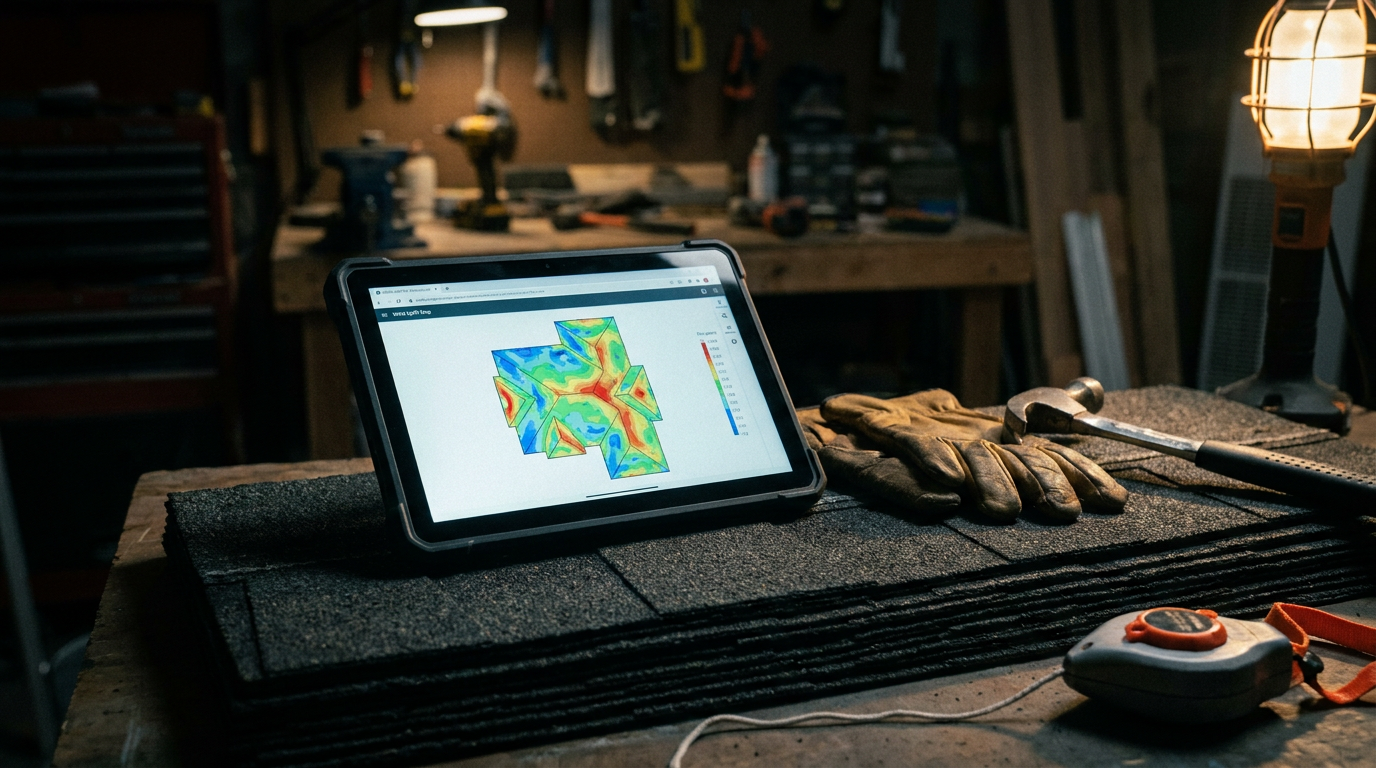
AI wind uplift calculation tools help Florida roofers by automating complex calculations required by the Florida Building Code. These tools analyze project data, location, and building specs to quickly generate accurate uplift pressures, ensuring compliance, saving time on permitting, and reducing the risk of errors.
Florida's Wind Doesn't Play Around
If you're a roofer in Florida, you know the drill. Hurricanes aren't a surprise; they're a business condition. The Florida Building Code (FBC) is one of the toughest in the nation for a reason. And a huge piece of that code is wind uplift. Getting it wrong means failed inspections, costly rework, and a reputation hit you can't afford.
For years, this meant wrestling with ASCE 7 charts, tables, and manual calculations. It's slow, tedious work where one wrong number can derail a whole project. Now, artificial intelligence is changing the game. AI-powered tools are taking the grunt work out of wind uplift, making it faster, more accurate, and easier to prove your work is up to code.
Why Wind Uplift is a Big Deal in Florida
After Hurricane Andrew tore through South Florida in 1992, the state got serious about building codes. The result was the FBC and the High-Velocity Hurricane Zone (HVHZ) requirements for Miami-Dade and Broward counties. These rules are all about keeping roofs on buildings when a major storm hits.
Wind uplift is the force that tries to pull a roof off a building. As wind flows over a roof, it creates negative pressure, essentially a suction effect. The FBC, which references the ASCE 7 standard (currently ASCE 7-16 or 7-22 depending on local adoption), provides the framework for calculating these forces. The calculations depend on several factors:
- Building Location: Wind speeds vary across the state.
- Building Height and Shape: Taller buildings and complex roof shapes face different pressures.
- Risk Category: A hospital has higher safety requirements than a shed.
- Roof Zones: The corners and edges of a roof experience much higher uplift forces than the field (the middle).
Getting this wrong has serious consequences. A failed inspection means your project is on hold. If the roof fails during a storm because of improper calculations and installation, the liability falls on you.
The Old Way vs. The AI Way
Let's be honest, the old way sucks. It involves poring over wind speed maps, finding the right tables in the massive ASCE 7 manual, and doing math for each roof zone. It's easy to make a mistake, transpose a number, or misinterpret a chart. This process can take hours, and it's time you're not spending selling jobs or managing your crew.
AI tools flip the script. Instead of you hunting down the data, the AI does it for you. You input the project address and building details, and the software does the rest:
- It pinpoints the location and automatically pulls the correct design wind speed from the FBC maps.
- It processes the building geometry you provide.
- It applies the complex ASCE 7 formulas in seconds.
- It generates a professional report showing the required uplift pressures for the field, perimeter, and corner zones. This is the document you submit with your permit application.
What used to take hours of painstaking work can now be done in minutes, with a much lower risk of human error.
Act as a senior roofing engineer specializing in the Florida Building Code and ASCE 7-22. I will provide you with project details for a residential roof replacement in Florida. Your task is to guide me step-by-step through the wind uplift calculation process, asking for the necessary information at each stage. Start by asking for the building's exact address, its risk category, and the basic roof geometry (shape, pitch, and mean roof height).
Finding the Right AI Tool
Not all software is created equal. When you're looking for an AI tool to handle your wind uplift calculations, you need to know what to look for. This isn't just about fancy features; it's about whether the tool does the job right and makes your life easier.
Here are the key things to check:
- FBC and ASCE 7 Compliance: This is non-negotiable. The tool must use the correct, current version of the ASCE 7 standard as required by the FBC. Ask the provider how they keep their software updated with code changes.
- Integration: Does the tool work with your other software? The best options often integrate with your CRM or roofing estimating software. This saves you from entering the same data over and over.
- Report Generation: The final output should be a clean, clear, and professional PDF report that you can submit for permitting. It needs to show all the inputs and calculated uplift pressures for each zone.
- User Interface: The software should be easy to use, whether you're in the office or on a laptop in your truck. A complicated program you can't figure out is useless.
I'm a Florida roofer looking for an AI-powered software to handle my wind uplift calculations. Create a comparison table for me. The columns should be: Feature, Importance for a Florida Roofer, and Questions to Ask the Vendor. Include features like 'Direct FBC/ASCE 7-22 Integration,' 'Automated Report Generation for Permitting,' 'Integration with Estimating Software,' and 'User-Friendly Interface for Field Use.'
Putting AI to Work on a Real Florida Job
Imagine you're quoting a roof replacement for a one-story home in Naples, Florida (Collier County). It's a standard hip roof.
- Input the Data: You open your AI tool and enter the property address. The software immediately identifies the location's risk category and the design wind speed required by the FBC for that area.
- Define the Building: You input the building's dimensions and mean roof height. You specify that it's a hip roof.
- Run the Calculation: You hit 'calculate'. The AI applies the ASCE 7 formulas, automatically segmenting the roof into its different zones (corners, perimeter, and field). Hip roofs have smaller corner and perimeter zones than gable roofs, and the AI knows this.
- Get the Report: Within a minute, you have a downloadable report. It shows a diagram of the roof with the zones clearly marked. It lists the minimum design pressures in pounds per square foot (psf) for each zone. For example, it might show -25 psf for the field, -35 psf for the perimeter, and -50 psf for the corners.
Now you have exactly what you need. You can use this report to create your fastener schedule, ensuring you use the right number and type of fasteners in each zone. You can attach the report to your permit application, showing the building inspector you've done your due diligence. And you can use it to explain the process to the homeowner, building trust and showing your professionalism.
I have an AI-generated wind uplift calculation report for a client's roof replacement. The report is technical. Write a simple, one-paragraph explanation for the homeowner. Explain what wind uplift is, why this calculation is required by Florida law for their safety, and confirm that the new roof system we're proposing meets or exceeds these strict standards. Keep the tone professional and reassuring. The project is in zip code 33948.
A Tool, Not a Replacement
AI is a powerful asset for any Florida roofer. It streamlines a critical and time-consuming part of the job. It helps you stay compliant, reduce errors, and get your permits approved faster. It's one of the best new tools you can add to your digital toolbelt.
But remember, it's just that: a tool. It doesn't replace your experience, your knowledge of roofing systems, or your skill on the job. The AI provides the numbers; you provide the craftsmanship. By combining your expertise with the power of AI, you can build better, safer roofs and a stronger business.
Frequently asked questions
37 copy-paste prompts that save tradespeople 5+ hours a week. Plus one short email every Friday — no fluff.
More for roofing

AI for Roofing Contractors: The Complete Guide
AI for Roofing Contractors comes down to using AI to do the slow stuff — quoting, paperwork, marketing, and customer follow-up — so you can stay on the too
AI Roof Measurement From a Photo: Apps That Work
AI Roof Measurement From a Photo comes down to using AI to do the slow stuff — quoting, paperwork, marketing, and customer follow-up — so you can stay on t