
Arizona Electricians: AI for Solar Panel Layouts
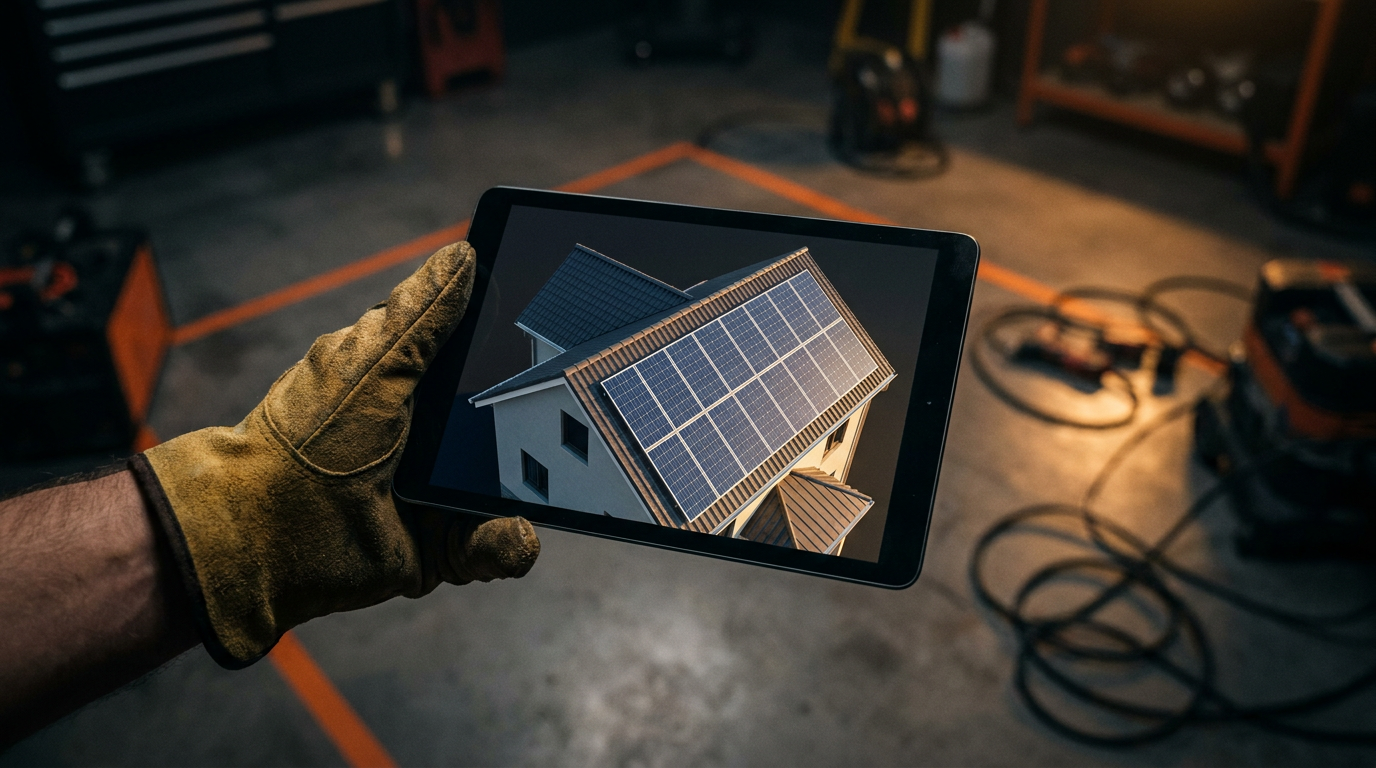
AI for solar panel layout design helps Arizona electricians create optimal plans by analyzing roof geometry, shading, and local weather data. This tech speeds up the design process, increases energy production for clients, and makes your bids more competitive by showing precise, data-backed performance estimates for the Arizona climate.
Arizona Electricians: Use AI to Optimize Solar Panel Layouts for Max Output
In Arizona, the sun isn’t just a part of the landscape; it’s a power source. For electricians in the solar game, designing a system that squeezes every last kilowatt-hour out of that sun is the name of the game. Old-school methods get you close, but they don't cut it anymore. Competition is stiff, and customers are smarter than ever.
This is where Artificial Intelligence (AI) comes in. It’s not a robot here to take your job. It's a tool for your digital toolbelt, one that can make your designs better, your bids faster, and your business more profitable. Using AI for solar panel layout design isn't about the future; it's about staying ahead right now.
Why AI Beats Old-School Solar Design
For years, solar design meant using sun path charts, a compass, and your best guess to avoid shadows from trees or chimneys. It worked, but it was slow and left money on the table—or rather, wattage on the roof. You could do a decent job, but it was hard to prove your layout was the absolute best.
AI changes the equation. It takes the guesswork out of the process. Modern AI platforms use a ton of data to build the perfect solar array for any specific roof in Arizona. Here’s what it looks at:
- 3D Roof Modeling: AI can use satellite imagery, drone footage, or even LiDAR data to create a precise 3D model of a customer's house. It knows every pitch, every dormer, every vent pipe.
- Shade Analysis: The software simulates the sun's path for every hour of every day of the year. It tracks shadows from trees, neighboring buildings, and even the roof's own structure. This isn't a general guess; it's a specific-to-the-address analysis.
- Arizona Climate Data: The best tools factor in local weather patterns. They know about the intense summer heat in Phoenix, which can reduce panel efficiency. They can account for the dust that accumulates and the unique light conditions during monsoon season.
- Component Matching: AI can run thousands of simulations in seconds, testing different panel and inverter combinations to find the highest-performing setup for that specific home and budget.
Doing this by hand would take days. AI does it in minutes. The result is a plan that isn't just good, it's mathematically proven to be the best for that location.
Get Going with AI for Solar Layouts
Jumping into AI-powered design isn't as hard as you might think. You don't need a computer science degree. Most of these tools are built for contractors, not coders. They are software-as-a-service (SaaS) platforms like Aurora Solar or HelioScope, which are industry standards.
The typical process is straightforward:
- Enter an Address: The software pulls up high-resolution aerial imagery of the property.
- Define the Roof: You trace the roof planes, and the AI helps build the 3D model. You'll mark obstructions like vents and skylights.
- Run the Simulation: Choose your preferred panels and inverters. The AI then runs its analysis to find the optimal placement, avoiding shade and maximizing sun exposure based on Arizona's sun path.
- Review the Output: The tool generates a complete report. This includes a 3D model of the final layout, a detailed shade report, and a precise estimate of the system's monthly and annual energy production. It can even generate a bill of materials for your quoting process.
This process lets you show a homeowner exactly how a system will look on their roof and what it will produce before you even drill the first hole.
Prompts to Get You Started
Even without a dedicated solar design platform, you can use general AI assistants to help with analysis and communication. Here are a couple of prompts you can copy and paste.
Analyze a residential solar project in Phoenix, Arizona (zip code 85001). The roof is a 1,500 sq ft south-facing composite shingle roof with a 6/12 pitch. There is a 15-foot palm tree 30 feet southwest of the house. Generate three optimal panel layout options using 400W monocrystalline panels. Prioritize maximum annual kWh production. Consider time-of-use rates from Arizona Public Service (APS). Factor in summer heat degradation. List the pros and cons of each layout.
I've designed a solar panel system for a customer in Tucson, AZ. The AI-optimized layout is projected to produce 18,500 kWh annually, offsetting 95% of their current electricity bill. Write a short, easy-to-understand paragraph for my proposal that explains why this AI-driven design is better than a standard grid layout. Focus on how it maximizes their return on investment by accounting for specific shade and sun-path data for their exact address.
The Payoff: More Power, Faster Bids
Using AI for solar design has real, measurable benefits for your business.
First, you win more jobs. When you can show a customer a detailed 3D rendering and a data-backed report that predicts their energy savings down to the dollar, your proposal stands out. You're not just selling panels; you're selling a guaranteed outcome. This level of professionalism builds trust and closes deals.
Second, you work faster. What used to take hours of manual measurement and calculation now takes minutes. You can create multiple design options during a single sales call. This improves your sales cycle and lets you handle more leads without hiring more staff. Check out our articles on ops for more on efficiency.
Finally, you reduce risk. By accurately modeling everything upfront, you eliminate surprises during installation. No more showing up on site to find an un-spotted vent pipe right where a panel was supposed to go. This means fewer change orders, less wasted material, and happier crews.
What to Look For in a Solar AI Tool
When you're ready to pick a tool, here are the key features to look for:
- Accurate Shade Analysis: Make sure it uses a reputable engine for its calculations.
- Bankable Production Estimates: The tool's energy models should be trusted by banks and financing companies. Look for names like PVWatts.
- Financial Analysis: It should be able to calculate ROI, payback period, and other key financial metrics for the customer.
- Permit-Ready Documents: The best tools can export plan sets and single-line diagrams that are ready for submission to the local authority.
- Component Library: A deep library of panels, inverters, and racking systems is essential.
In the blazing Arizona sun, every bit of efficiency counts. AI is the tool that helps you find that edge, delivering maximum power for your customers and maximum profit for your business. It's time to put it to work.
Frequently asked questions
37 copy-paste prompts that save tradespeople 5+ hours a week. Plus one short email every Friday — no fluff.
More for electricians

AI for Electricians: A Field-Tested Guide
AI for Electricians comes down to using AI to do the slow stuff — quoting, paperwork, marketing, and customer follow-up — so you can stay on the tools. Bel
27 ChatGPT Prompts for Electricians (Copy & Paste)
27 ChatGPT Prompts for Electricians (Copy & Paste) comes down to using AI to do the slow stuff — quoting, paperwork, marketing, and customer follow-up — so

AI Electrical Load Calculator: How It Works & Free Prompt
AI Electrical Load Calculator comes down to using AI to do the slow stuff — quoting, paperwork, marketing, and customer follow-up — so you can stay on the