
Can AI Create an Electrical Panel Schedule For You?
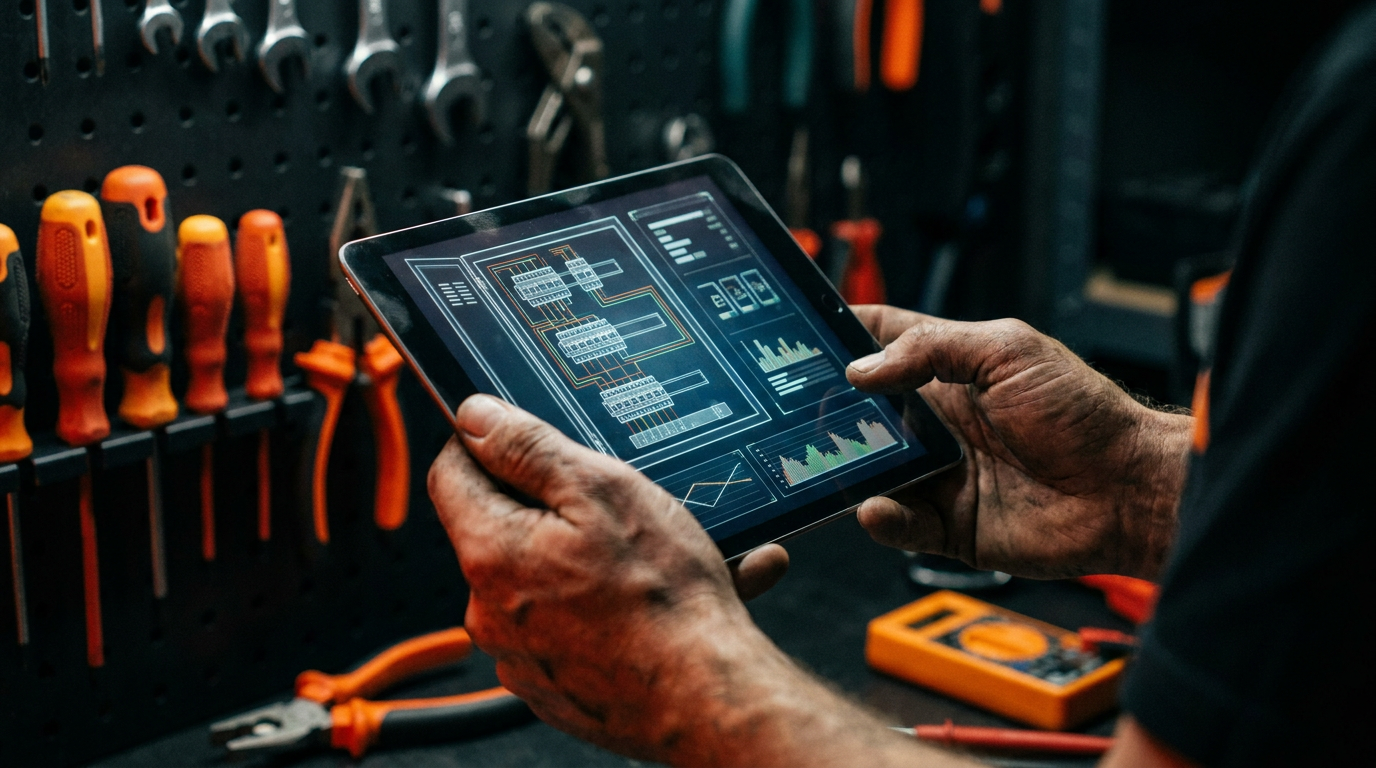
Yes, AI can help create an electrical panel schedule by organizing data and generating layouts based on your inputs. While it cannot replace a licensed electrician's final review, AI tools can drastically speed up the initial drafting process, reduce errors, and format the schedule to meet standard requirements.
Tired of Messy Panel Schedules?
Let’s be honest. Filling out an electrical panel schedule is one of the last things you want to do. It’s tedious work that often happens at the end of a long day. You’re tired, you want to go home, and you’re staring at a blank sticker or a spreadsheet, trying to remember what goes where.
From scribbled notes on a piece of drywall to a rushed list in your phone, getting that information into a clean, legible format is a chore. It’s boring, repetitive, and it’s easy to make small mistakes that can cause big headaches later, like during an inspection.
For years, we've done it the same way. But now there’s a new tool in the box: artificial intelligence. Can you really use AI to create an electrical panel schedule? The short answer is yes, but it’s not as simple as just telling it to do your job for you. Let's dig into what it can actually do, and where you, the professional, still need to be in charge.
What's Wrong With the Old Way?
Creating a panel schedule by hand is a necessary evil. It's the roadmap to the electrical system. But the process is full of potential problems:
- It’s Slow: Writing out 42 circuits, with descriptions for each, takes time. Time you could be spending on the next job or quoting new work.
- It’s Prone to Errors: A simple typo or putting a circuit in the wrong spot can lead to confusion. Illegible handwriting is another common issue that can make servicing the panel a nightmare for the next person.
- It’s Inconsistent: Do you write 'Living Rm Receptacles' or 'Living Room Outlets'? Inconsistent descriptions make a schedule look unprofessional and harder to read.
- It’s Just Plain Annoying: It’s low-skill work that has to be done with high precision. That’s a frustrating combination for any skilled tradesperson.
These small issues can add up. A sloppy panel schedule looks bad to clients and can be a red flag for inspectors. It suggests a lack of attention to detail, even if the rest of the electrical work is perfect.
How AI Can Actually Help
AI isn't going to pull wire for you, and it’s not going to sign off on your permit. Think of it as a very fast, very organized apprentice who is great at paperwork. Here’s how it can help with panel schedules:
- Data Entry and Formatting: This is AI's biggest strength. You can give it a jumbled list of circuits, and it will organize them into a perfectly formatted, two-column schedule in seconds.
- Standardizing Descriptions: You can tell the AI your preferred naming conventions. It will apply them across the entire schedule, ensuring every description is consistent.
- Cleaning Up Messy Notes: Take a picture of your handwritten notes or dictate them into your phone. An AI can transcribe this information and turn it into a clean, digital list you can then use to build the schedule.
- Basic Error Checking: An AI can spot obvious mistakes, like if you accidentally listed circuit 15 twice. It can’t check your actual wiring, but it can check the data you give it for simple inconsistencies.
This isn't about replacing your knowledge. It's about automating the most boring part of the job. You’re still the expert, but now you can get the first draft of your paperwork done in minutes, not hours.
Prompts to Get You Started
Using a general AI tool like ChatGPT, Claude, or Gemini is straightforward. The key is giving it a clear, specific prompt. Here are a couple you can copy and paste.
Act as a master electrician's assistant. Create a standard 42-circuit, two-column electrical panel schedule. Here is the list of circuits, their descriptions, and their breaker sizes. Format the output in a clean table with columns for Circuit #, Description, and Breaker Size. Odd numbers on the left, even numbers on the right.

1. Kitchen Counter Receptacle, 20A
2. Kitchen Counter Receptacle, 20A
3. Dishwasher, 20A
4. Disposal, 15A
5. Microwave, 20A
6. Dining Room Lights, 15A
7. Living Room Receptacles, 15A
8. Master Bedroom Lights, 15A
9. Master Bath GFI, 20A
10. Master Bedroom Receptacles, 15A
11. A/C Condenser, 30A (2-pole)
13. A/C Condenser, 30A (2-pole)
12. Garage Receptacles, 20A
14. Spare, 15A
I have a messy, handwritten list of circuits from an old panel. I need to clean it up and organize it into a professional, two-column panel schedule table. Standardize the descriptions (e.g., change 'br' to 'Bedroom'). Here is the list:

'1. kitchen outlets
2. kitchen other outlets
3. DW
4. Garb disp
5. liv rm outlets
6. mstr br lights
7. mstr bath
8. garage gfi
9,11. dryer 30a
10. spare'
Where You Still Need a Human Touch
This is the most important part. AI is a tool, not a licensed professional. Relying on it blindly is dangerous and irresponsible. Your name and your license are on the line.
- Liability: The AI is not liable for anything. If there is an error that leads to a failed inspection, a fire, or an injury, that is 100% on you. You are the one signing off on the work.
- Code Compliance: An AI can search the NEC, but it doesn't truly understand it. It doesn't know local amendments or the specific context of your installation. Never trust an AI to make a code-compliance decision. That is what your training and experience are for. For more on the responsibilities of a professional electrician, you have to trust your own judgment.
- Final Verification: You must always check the AI’s work. Walk the job, look at the breakers, and compare the final schedule to the real-world installation. The AI-generated schedule is a draft, not the final product.
- Complex Scenarios: AI struggles with non-standard situations, sub-panels, tandem breakers, or complex commercial jobs. It's best used for straightforward residential or light commercial panels where the inputs are simple.
The Bottom Line
AI can be a powerful new tool in your digital toolbelt. It can take a tedious, time-consuming task and make it faster and easier. It can free up your time to focus on the skilled work that actually makes you money.
But it is not a replacement for your brain, your experience, or your professional judgment. Use it to speed up your workflow on the jobsite. Let it handle the first draft. But the final review, the final sign-off, and the ultimate responsibility will always belong to you. And that’s how it should be.
Frequently asked questions
37 copy-paste prompts that save tradespeople 5+ hours a week. Plus one short email every Friday — no fluff.
More for electricians
AI for Electricians: A Field-Tested Guide
AI for Electricians comes down to using AI to do the slow stuff — quoting, paperwork, marketing, and customer follow-up — so you can stay on the tools. Bel

27 ChatGPT Prompts for Electricians (Copy & Paste)
27 ChatGPT Prompts for Electricians (Copy & Paste) comes down to using AI to do the slow stuff — quoting, paperwork, marketing, and customer follow-up — so

AI Electrical Load Calculator: How It Works & Free Prompt
AI Electrical Load Calculator comes down to using AI to do the slow stuff — quoting, paperwork, marketing, and customer follow-up — so you can stay on the