Can AI Create a Job Hazard Analysis That Keeps Your Crew Safe?
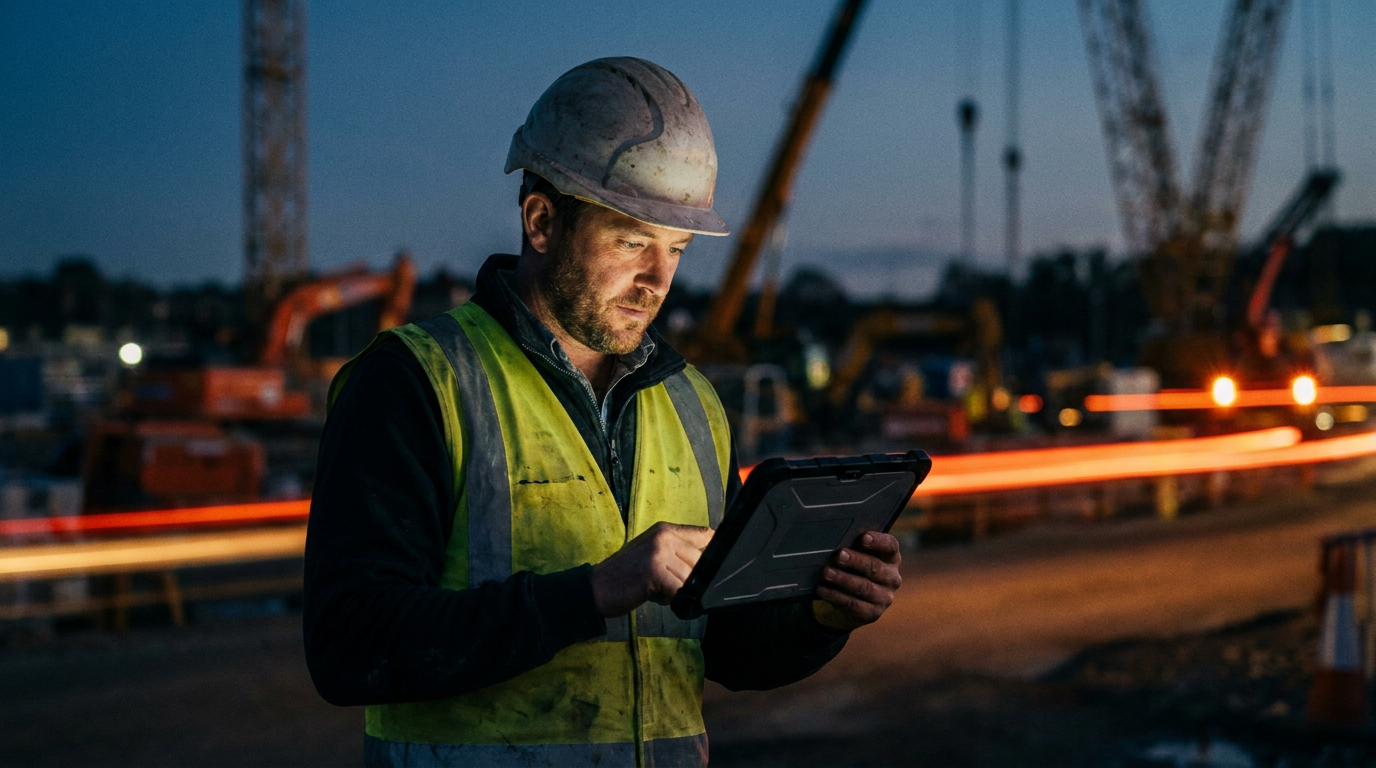
Yes, AI can create a job hazard analysis, but it needs your expert review. Use it as a powerful starting point to identify potential risks, outline steps, and list controls. However, a qualified person must always review, edit, and approve the final JHA to ensure it matches real-world jobsite conditions.
Can AI Write a JHA That Keeps Your Crew Safe (And OSHA Happy)?
The paperwork never ends. Between bids, invoices, and change orders, a Job Hazard Analysis (JHA) can feel like one more box to check. But you know it’s important. A good JHA, also called a Job Safety Analysis (JSA), is the foundation of a safe workday. It’s your plan to get the job done without anyone getting hurt.
Now, artificial intelligence (AI) is on the scene, promising to do everything from writing emails to designing buildings. So, can it handle something as critical as a JHA? The short answer is yes, it can help. But you can't just copy, paste, and call it a day.
Think of AI as a very smart, very fast apprentice. It can do the initial legwork, but it needs a seasoned pro—you—to check its work and make sure it fits the real world. Let's break down how to use this new tool without getting yourself or your crew in trouble.
What's a JHA, Anyway?
Let’s get back to basics. A JHA is a simple but powerful process. You break a job down into steps, identify the potential hazards at each step, and then determine the controls to eliminate or reduce those hazards. It’s a roadmap for staying safe.
A typical JHA has three main parts:
- Tasks: A sequence of basic steps to do the job. For example, for installing a window, the steps might be 'Carry window to opening,' 'Set window in frame,' and 'Secure window.'
- Hazards: What could go wrong at each step? For 'Carry window to opening,' hazards could include tripping, muscle strain from lifting, or dropping the glass.
- Controls: What will you do to prevent those things from happening? Controls could be 'Clear a path before moving,' 'Use a two-person lift,' and 'Wear cut-resistant gloves and safety glasses.'
This document is your proof that you’ve thought through the risks. For OSHA, it shows you're proactive about safety, which is always a good thing.
How AI Can Give You a Head Start
AI models like ChatGPT are trained on a massive amount of information from the internet, including countless safety manuals, OSHA standards, and industry best practices. This means they can quickly generate a draft JHA for almost any common construction task.
Instead of starting with a blank page, you can give the AI a simple command and get a structured document in seconds. It can list common tasks, identify predictable hazards, and suggest standard controls. This saves time on the initial draft and can help you think of hazards you might have overlooked.
Here’s a practical example of a prompt you could use.
Act as a construction safety manager. Create a Job Hazard Analysis (JHA) for replacing asphalt shingles on a two-story residential house with a 6/12 pitch roof. The crew consists of four experienced roofers. The job involves tearing off old shingles and installing new ones. Format the output in a table with three columns: Task, Potential Hazard, and Recommended Controls.
The AI will spit out a detailed table covering things like setting up ladders, tearing off old material, and working at heights. It's a solid first draft that gets you 70% of the way there.
Your Eyes Are the Final Inspection
This is the most important part: AI has never been to your jobsite. It can't see the specific power line near the eaves, the unexpected wasp nest under the fascia, the soft spot in the decking, or the new guy who seems a little shaky on a ladder.
An AI-generated JHA is generic by nature. Your job is to make it specific. You, or another designated competent person, must take the AI's draft and walk the site. You need to add, remove, and change the JHA based on the real-world conditions of that day, with that crew, using that equipment.
OSHA's General Duty Clause requires employers to provide a workplace free from recognized hazards. Relying solely on a generic, unverified AI document will not meet that standard. If an accident happens, 'the AI said it was safe' will not be a valid defense. The responsibility is always yours. Your expertise is what turns a generic document into a life-saving plan. A strong JHA is a key part of building a better jobsite safety culture.
Writing Prompts That Actually Work
Getting a useful draft from an AI depends on giving it a good prompt. The more detail you provide, the better the output will be. Vague prompts get vague answers.
Here’s what to include in your prompt for a better JHA draft:
- The Specific Task: Don't just say 'electrical work.' Say 'replacing a 200-amp electrical panel in a 1970s residential basement.'
- Equipment Used: List the major tools. 'Using a mini-excavator to dig,' 'working on a 24-foot extension ladder,' or 'using powder-actuated tools.'
- Site Conditions: Mention relevant details. 'Working in a tight crawlspace,' 'jobsite is next to a busy road,' or 'forecast calls for high heat and humidity.'
- Crew Experience: 'Crew includes one new apprentice' or 'all workers are certified forklift operators.'
Here's an example of a more detailed prompt.
I am a plumbing contractor. I need a Job Hazard Analysis for my crew of two plumbers to install a new sewer cleanout. This involves digging a 5-foot deep, 10-foot long trench with a mini-excavator in Type C soil. The trench is 3 feet away from the house's foundation. The crew will be cutting into an existing cast iron drain pipe. Create a JHA in a table with columns for Task, Hazard, and Control. Include controls for trench collapse, utility strikes, and exposure to sewage.
This level of detail helps the AI focus on the most relevant hazards and provide more specific, useful controls as a starting point.
Know the Risks Before You Hit 'Generate'
Using AI for safety documents is not without risks. Be aware of the limitations:
- It Can Be Wrong: AI can 'hallucinate,' meaning it makes up facts or provides incorrect information. It might suggest an outdated technique or a control that isn't appropriate.
- It Lacks Context: The AI doesn't know your company's specific safety policies, the local climate, or your state's specific OSHA regulations. Its advice is general, not tailored.
- Liability is Unchanged: You are 100% responsible for the safety of your crew. Using an AI to help draft a document doesn't shift that responsibility. The buck still stops with you.
AI is a tool. Like a new power saw, it can make work faster and more efficient, but it can also cause big problems if used improperly. Treat it with respect, understand its limitations, and never let it replace your own judgment and experience. The final sign-off on any safety plan has to come from a human being who has put their eyes on the job.
Frequently asked questions
37 copy-paste prompts that save tradespeople 5+ hours a week. Plus one short email every Friday — no fluff.
More for jobsite ai
How Plumbers Use ChatGPT on the Jobsite (5 Ways)
How Plumbers Use ChatGPT on the Jobsite (5 Ways) comes down to using AI to do the slow stuff — quoting, paperwork, marketing, and customer follow-up — so y
How to Use ChatGPT on the Jobsite (Practical Guide)
How to Use ChatGPT on the Jobsite (Practical Guide) comes down to using AI to do the slow stuff — quoting, paperwork, marketing, and customer follow-up — s
AI Voice Notes to Job Report in 60 Seconds
AI Voice Notes to Job Report in 60 Seconds comes down to using AI to do the slow stuff — quoting, paperwork, marketing, and customer follow-up — so you can