Can AI Create Your Next MEP Coordination Plan?
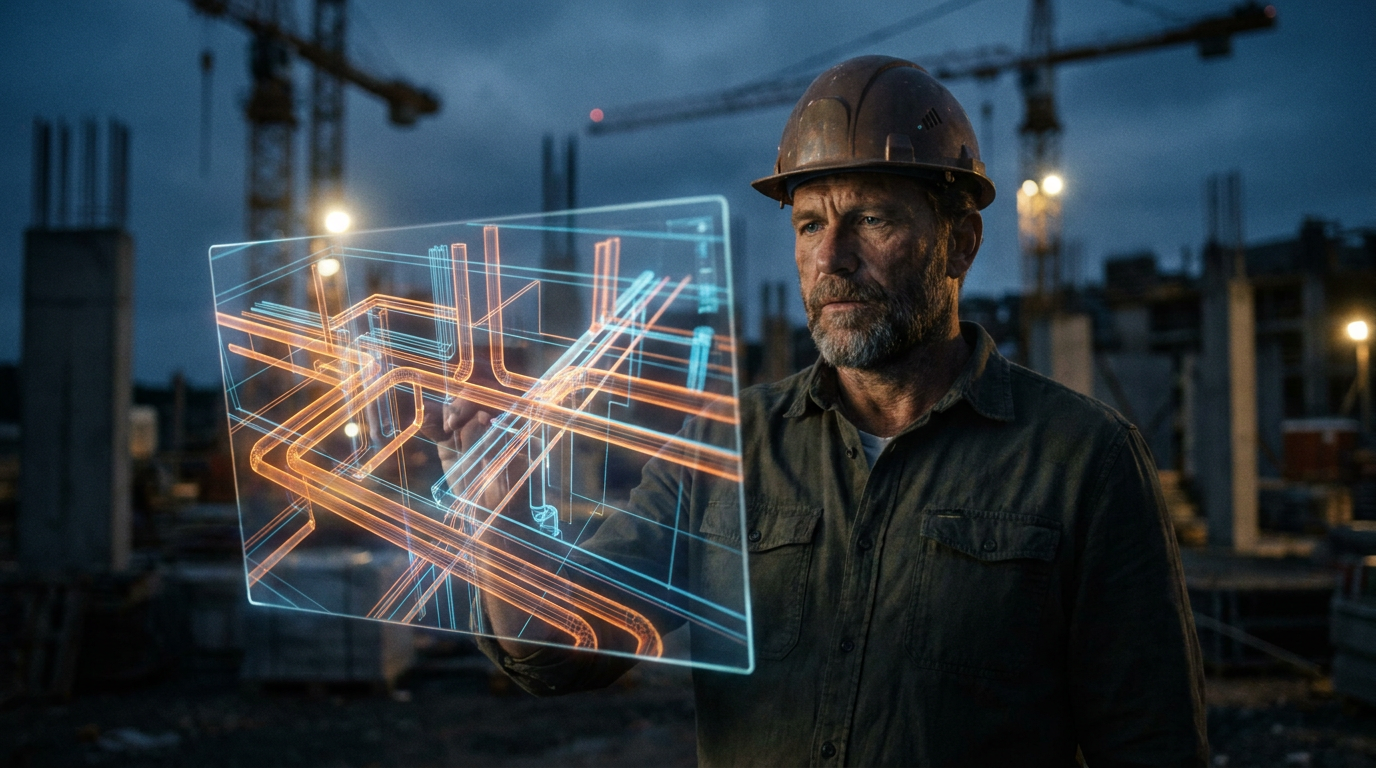
Yes, AI can help create an MEP coordination plan, but it can't handle the whole job alone. AI tools excel at clash detection, data analysis, and suggesting solutions in BIM models. However, they still need a skilled project manager to review, approve, and manage the human side of coordination.
Can AI Handle a Full MEP Coordination Plan?
MEP coordination is one of the biggest headaches on any commercial build. It's a high-stakes game of 3D chess where a single mistake can cause a cascade of change orders, delays, and busted budgets. For years, we've relied on light tables, then 2D CAD, and now BIM models to catch clashes. The big question now is whether we can hand the whole mess over to artificial intelligence.
The short answer is no, not yet. But AI is already a powerful tool that can make the process much faster and more accurate. Think of it less as a replacement for your MEP coordinator and more as a super-powered assistant that never gets tired of staring at models.
AI isn't here to take your job. It's here to take the most tedious parts of it, freeing you up to solve the problems that require a human brain.
What AI Can Do Right Now
AI is already built into many of the software platforms you might be using, like Autodesk Construction Cloud or Trimble Connect. It's moving beyond simple clash detection and into more advanced analysis. Here's what you can actually use it for today.
Automated, Smarter Clash Detection
Traditional clash detection is good at finding "hard clashes" where two objects occupy the same space. A pipe running through a steel beam is an easy find. But what about "soft clashes"?
- Code & Clearance: AI can be trained to recognize code requirements, like the necessary clearance around an electrical panel for service access.
- Constructability: It can flag a pipe that's technically not clashing but is impossible to install because a wrench won't fit.
- Prioritization: Instead of just giving you a list of 1,000 clashes, AI can analyze and group them by severity. It can tell you which 50 clashes will shut down the job versus which 500 are minor issues.
This turns a mountain of data into a prioritized to-do list, which is a huge time-saver in coordination meetings.
Route Optimization
Instead of a designer manually routing every pipe and conduit, AI can suggest the most efficient paths. You give it the start point, the end point, and the rules of the road (e.g., "stay within this ceiling plenum," "don't cross that structural zone").
The AI then generates multiple routing options that avoid clashes and minimize material usage. A human still needs to choose the best option, but the grunt work of trial and error is done by the machine.
Better Sequencing
AI can analyze the entire coordinated model to help plan the order of installation. It understands that you can't install a ceiling grid before the overhead ductwork is in place. This helps build more realistic schedules and prevents one trade from having to tear out their work to make way for another. For more tips on running a tight ship, check out our guide on jobsite management.
Create a detailed agenda for a kickoff MEP coordination meeting for a new 5-story commercial office building project. The agenda should be for a 60-minute meeting. Include specific time slots and discussion points covering introductions, project overview, BIM model review process, clash detection protocol, communication plan, and a schedule for weekly follow-up meetings. The goal is to establish clear roles and expectations for the mechanical, electrical, and plumbing subcontractors from day one.
Where AI Still Falls Short
For all its power, AI is still just a very sophisticated calculator. It lacks the real-world experience and judgment that a seasoned superintendent or PM brings to the table.
The Human Element
AI has no idea that the lead foreman for your electrician and your plumber have a 10-year grudge and can't be in the same room. It doesn't understand the politics of the job site, subcontractor relationships, or the art of negotiation. A successful MEP plan requires buy-in from the people doing the work, and that's a job for a human leader.
Complex Code Interpretation
AI can flag a potential code violation, but it can't interpret gray areas or have a conversation with a local inspector. When a code is ambiguous or a unique site condition requires an alternative solution, you need a person with a license and experience to make the call.
Final Accountability
At the end of the day, the GC is responsible for the coordinated model. You can't blame a software program when a clash makes it into the field. AI provides data and suggestions, but the final stamp of approval must come from a human who is willing to stand behind that decision.
How to Get Started with AI for MEP
Jumping into AI doesn't require a massive new software investment or a team of data scientists. You can start small and build from there.
- Talk to Your Software Rep: Ask your Autodesk, Trimble, or Procore rep what AI features are already in the package you pay for. You might be surprised what's already available.
- Start with One Task: Don't try to automate everything at once. Pick one pain point, like clash detection, and focus on using the AI tools for that on your next project.
- Run it in Parallel: On your first go, run your old manual process alongside the new AI-powered one. Compare the results. Did the AI find clashes your team missed? Was it faster? This builds trust in the system.
- Train Your Team: These tools are only as good as the people using them. Invest a little time in training your project engineers and coordinators on how to interpret the AI's output.
I have a clash detection report from our BIM software for the 3rd-floor MEP systems. The report lists 127 clashes. Analyze this summary data: "75 clashes between HVAC ductwork and structural beams, 32 clashes between electrical conduits and plumbing lines, 20 clashes involving fire suppression systems and cable trays." Write a concise, bullet-point summary for a project update email. Prioritize the clashes by severity and frequency. Suggest which trade teams need to collaborate first to resolve the most critical issues.
The Future Is a Co-Pilot, Not an Autopilot
The role of AI will only grow. In the near future, we'll see more "generative design," where AI doesn't just check a human's work but generates dozens of complete, clash-free MEP design options from scratch. It will get better at predicting not just clashes, but also potential labor shortages or supply chain delays based on the MEP plan.
But the need for skilled trade professionals and sharp project managers will never go away. The future isn't about replacing people with machines. It's about giving your best people better tools to do their jobs.
An AI can analyze a million data points to find the optimal pipe route. But it takes a human to walk the site, talk to the foreman, and solve the problems that never show up in a model. The goal is to let the AI handle the data so you can handle the people.
Act as a construction technology consultant. Our GC firm specializes in mid-size commercial projects. We currently use standard BIM software but want to integrate AI more effectively into our MEP coordination process. Based on our current workflow (manual clash review, weekly coordination meetings), suggest three specific types of AI-powered software or features we should investigate. For each suggestion, explain what it does and how it would solve a specific pain point in our current process, like reducing meeting times or catching errors earlier.
Frequently asked questions
37 copy-paste prompts that save tradespeople 5+ hours a week. Plus one short email every Friday — no fluff.
More for general contractors
AI for General Contractors: A Builder's Playbook
AI for General Contractors comes down to using AI to do the slow stuff — quoting, paperwork, marketing, and customer follow-up — so you can stay on the too
How to Use AI for Construction Project Management
How to Use AI for Construction Project Management comes down to using AI to do the slow stuff — quoting, paperwork, marketing, and customer follow-up — so