Can AI Design a Battery Energy Storage System?
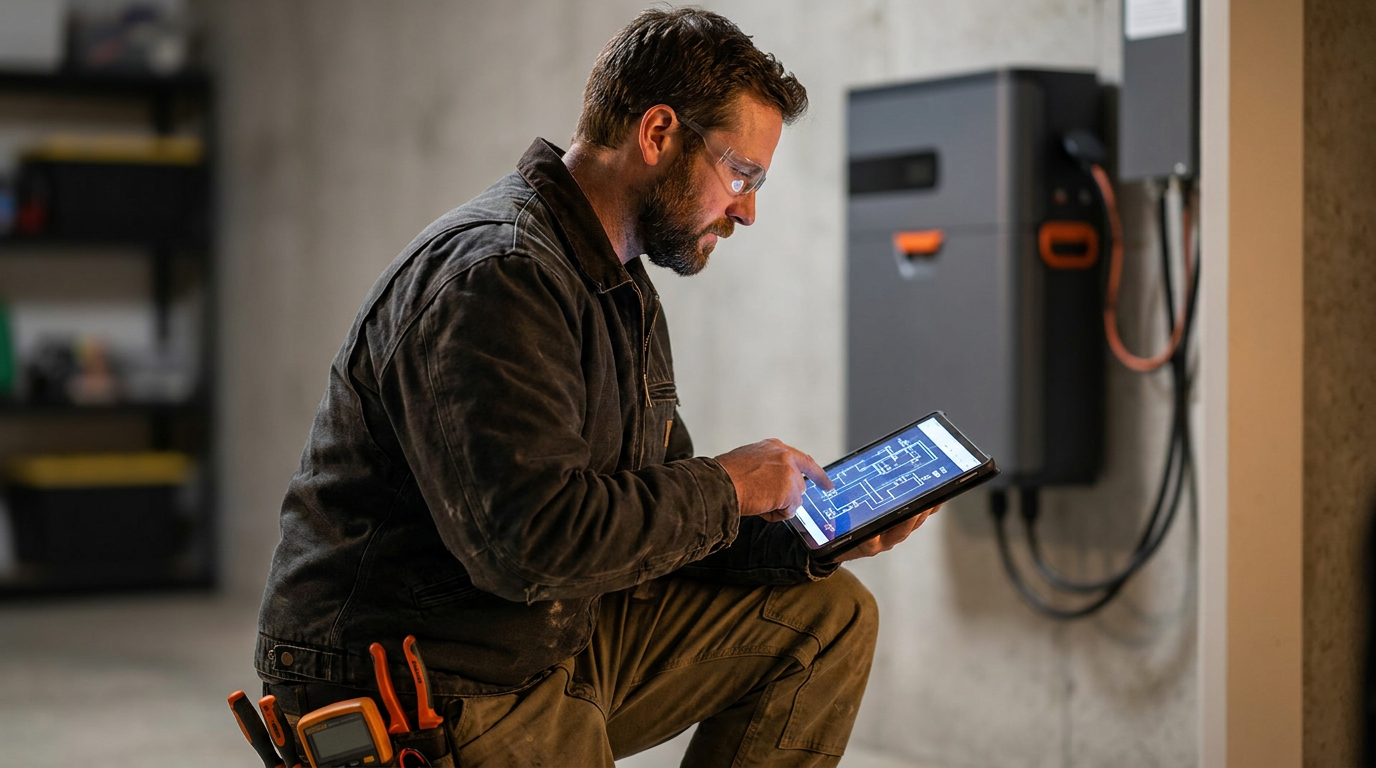
Yes, AI can help design a battery energy storage system, but it can’t replace a licensed electrician. AI tools are great for running load calculations, analyzing energy usage patterns, and suggesting components. However, a human expert is still needed to ensure safety, code compliance, and proper installation.
Can AI Help Me Design a Home Battery Backup System?
The demand for home battery backups is exploding. Homeowners want energy independence, protection from grid outages, and a way to save money on their electric bills. For electricians, this means more business. But it also means more time spent on complex load calculations, system sizing, and paperwork.
So, can AI help carry the load? The short answer is yes. AI is a powerful new tool in your digital toolbelt. It can speed up the tedious parts of designing a Battery Energy Storage System (BESS), but it won't replace your experience or your license. Think of it as a smart apprentice, not a master electrician.
What AI Can Do for BESS Design (and What It Can't)
AI is good at processing huge amounts of data fast. That makes it a natural fit for the planning stages of a BESS installation. But it lives in a computer. It can't step foot on a job site.
Where AI Shines
- Load Calculations: You can feed an AI monthly energy bills and a list of a home's major appliances. It can analyze that data to estimate daily energy consumption and peak demand. This is the foundation of proper system sizing.
- System Sizing: Based on the load calculation and the customer's goals (e.g., whole-home backup vs. critical loads only), AI can recommend an ideal battery capacity (in kWh) and inverter power rating (in kW).
- Component Suggestions: AI can act like a living catalog. It can suggest compatible batteries, inverters, and other components from major manufacturers like Tesla, Enphase, or SolarEdge. It can compare specs and even find equipment that meets specific project constraints.
- Financial Modeling: AI can quickly calculate a project's potential return on investment (ROI). It can factor in local utility rates, time-of-use plans, and federal incentives like the Residential Clean Energy Credit to give customers a clear picture of long-term savings.
Where You're Still the Boss
- Site Assessment: AI has never seen a cramped service panel, a crumbling block wall, or a homeowner who wants a battery where the main water line comes in. Your eyes-on assessment is critical for a safe and practical installation.
- Code Compliance: AI can quote the National Electrical Code (NEC), especially Article 706 for Energy Storage Systems. But it doesn’t know the specific amendments made by your local Authority Having Jurisdiction (AHJ). You are the one responsible for knowing and following the exact rules in your town or county.
- Safety and Liability: An AI can't be licensed, bonded, or insured. The final design, installation, and commissioning are your responsibility. You are the one who guarantees the system is safe for the homeowner and their property.
- Pulling Permits: AI can't fill out your local permit application or talk to the inspector. The hands-on work of navigating the bureaucracy still falls on you.
Putting AI to Work: Real-World Prompts
Using AI is all about asking the right questions. A good prompt gives the AI a role, context, and a clear task. You can use these prompts to get a head start on your next BESS project. Just copy, paste, and edit the details for your specific job.
Act as a BESS design assistant for a licensed electrician. My client wants a battery backup system for their 2,500 sq ft home in Austin, Texas. Their average monthly electricity usage is 1,200 kWh.

Their goal is to back up critical loads during a grid outage. These loads are:
- Refrigerator (5 kWh/day)
- Internet modem/router (0.2 kWh/day)
- A few lights and outlets (1 kWh/day)
- Sump pump (runs intermittently, 2 kW peak)

Based on this, please provide:
1. A recommended battery capacity in kWh to provide 24 hours of backup for these critical loads.
2. A recommended inverter continuous power rating in kW, considering the sump pump's peak draw.
3. A brief, plain-language explanation for the homeowner about why this system size was chosen.
This first prompt helps you nail down the basic system size. Once you have that, you can use AI to start building a parts list.
Based on our previous conversation, we've settled on a BESS with approximately 15 kWh of battery capacity and an 8 kW continuous power inverter.

Now, act as a sourcing specialist. Please provide a list of 3 different combinations of components that would meet these specs. For each combination, list:

1.  Battery Manufacturer and Model
2.  Inverter Manufacturer and Model
3.  Any required proprietary hardware or gateway controllers.

Focus on reputable brands available in the US market like Enphase, Tesla, Qcells, and SolarEdge. Note any key compatibility issues.
The Human Element: Where You're Irreplaceable
AI can give you a great starting point, but it can't do the whole job. The real work begins where the AI's capabilities end. Your expertise is what makes a system work safely and reliably for years to come.
This includes the soft skills, like talking to a customer to figure out what they really want. An AI might design for whole-home backup because the customer said so, but you can have a conversation and realize they'll be perfectly happy just keeping the fridge, internet, and a well pump running. This insight saves the customer money and makes the project simpler, which is a win for everyone. Honing these skills is key to improving your quoting process and landing more jobs.
Most importantly, you are the one who understands the code. You know how to apply NEC 706, from ventilation requirements to disconnect locations. You're the one who will torque every lug to spec and ensure the system is commissioned correctly. The safety of the system rests on your shoulders, not on a piece of software.
The Bottom Line: AI is a Tool, Not a Tradesman
Don't fear AI. Use it. Integrating AI into your workflow can make you a more efficient and competitive electrician. It handles the repetitive, data-heavy tasks that used to eat up hours at your desk.
This frees you up to do what you do best: install systems, solve problems on-site, and build relationships with your customers. The electrician who uses AI to streamline their design process will be able to handle more jobs than the one who doesn't. It's a tool for building your business, not a threat to your job.
Frequently asked questions
37 copy-paste prompts that save tradespeople 5+ hours a week. Plus one short email every Friday — no fluff.
More for electricians
AI for Electricians: A Field-Tested Guide
AI for Electricians comes down to using AI to do the slow stuff — quoting, paperwork, marketing, and customer follow-up — so you can stay on the tools. Bel
27 ChatGPT Prompts for Electricians (Copy & Paste)
27 ChatGPT Prompts for Electricians (Copy & Paste) comes down to using AI to do the slow stuff — quoting, paperwork, marketing, and customer follow-up — so

AI Electrical Load Calculator: How It Works & Free Prompt
AI Electrical Load Calculator comes down to using AI to do the slow stuff — quoting, paperwork, marketing, and customer follow-up — so you can stay on the