
Can AI Help Find Material Defects on the Jobsite?
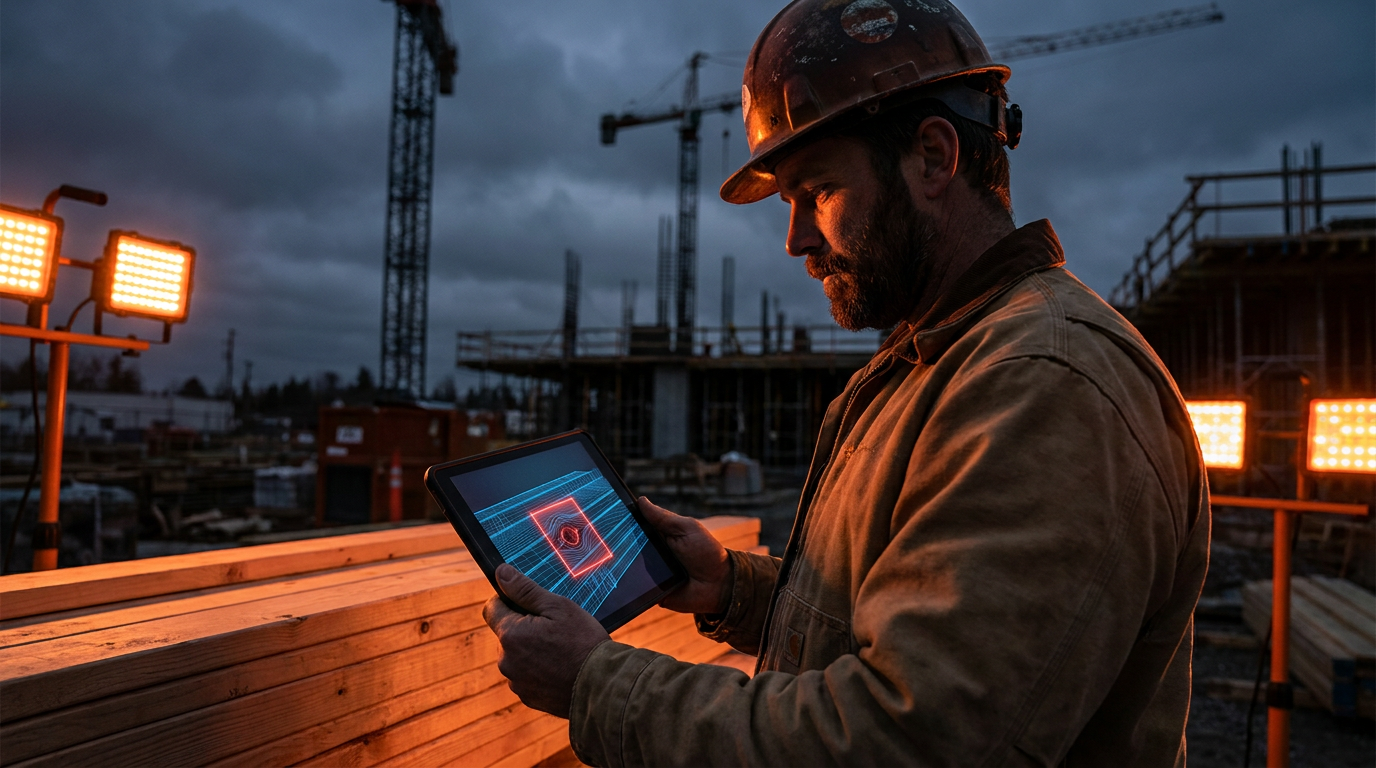
Yes, AI can help you find material defects. Using computer vision, AI systems analyze images or sensor data to spot issues like cracks in concrete, knots in lumber, or flaws in welds. This technology is becoming more accessible, helping GCs catch problems before they become expensive rework.
Can AI Spot Bad Lumber or a Cracked Pipe Before You Install It?
A bad batch of materials can wreck a project. A single cracked pipe hidden behind drywall or a warped joist used in a subfloor can lead to thousands in rework, blown schedules, and an unhappy client. For generations, the only defense was the sharp eye of an experienced foreman. But now, technology is offering a second set of eyes.
Artificial intelligence, specifically a field called computer vision, is no longer just for factories or science fiction movies. It's showing up on construction sites, ready to help you spot problems before they get buried. This isn't about replacing your crew's judgment. It's about giving them a tool to make that judgment faster and more accurate.
What Is AI Defect Detection?
Think of it like this: you can look at a thousand 2x4s and your brain knows what a bad knot or a split looks like. Computer vision works the same way, but on a massive scale. An AI model is 'trained' by showing it tens of thousands of images of both good and bad materials. It learns to identify the patterns, textures, and shapes that signal a defect.
Once trained, this AI can analyze a new image in seconds. It can scan photos or live video from a phone, a drone, or a camera mounted on a hard hat. It then flags potential issues for a human to review. This is the same core technology used in manufacturing plants to inspect microchips, but now it's being adapted for the rough and unpredictable environment of a jobsite.
How It Works on Your Site
Putting this tech to work isn't as complicated as it sounds. It usually involves a few key steps:
- Data Capture: A worker uses a smartphone app to take pictures of a pallet of lumber, a welder snaps a photo of a new joint, or a drone flies over a fresh concrete pour. The key is getting clear, consistent images.
- AI Analysis: The images are uploaded to a cloud-based platform where the AI model gets to work. It compares the new images against its training data and looks for anomalies like cracks, discoloration, warping, or incorrect dimensions.
- Real-Time Alerts: If the AI finds a potential problem, it sends an alert back to the team on site. This could be a notification on a tablet or phone, showing the exact location of the suspected defect on the photo. This allows a project manager to inspect the material immediately, not days later during a walkthrough.
This process is all about improving your jobsite quality control. It creates a digital record of your materials and allows you to catch issues at the source, saving time and money.
Act as a construction technology consultant. I am a general contractor running a mid-sized firm specializing in commercial tenant fit-outs. I want to explore using AI for material defect detection.

Research and provide a list of 3-5 US-based software companies or platforms that offer computer vision solutions for construction quality control. For each company, briefly explain how their technology could be applied to inspect materials like drywall, steel studs, and MEP components upon delivery to my job sites. Focus on practical applications, not just marketing language.
Real-World Examples for General Contractors
This technology is already being used to solve real problems for GCs. The applications depend on the materials you're working with.
Concrete and Steel
For large-scale projects, companies like Buildots and OpenSpace use cameras mounted on hard hats to continuously scan a site. While their main purpose is progress tracking, this visual data can also be analyzed for quality issues. For example, an AI can be trained to spot early signs of honeycombing or excessive cracking in a concrete slab from photos taken daily. For steel structures, it can flag improper bolt installations or deviations from the BIM model.
Lumber and Framing
Lumber mills have used AI for years to grade wood. That same tech is moving downstream. Imagine an app that lets your crew take a few photos of a lumber delivery. The AI could quickly scan for oversized knots, severe warping, or splits that compromise structural integrity. This prevents a bad stud from being framed into a wall, only to be discovered later.
MEP and Finishes
This is a huge area of opportunity for trades like plumbers and electricians. An AI-powered app could scan a series of pipe welds and flag any that look inconsistent or incomplete. It could verify that the correct type and gauge of wire are being used in a particular area by reading the text on the sheathing. For finishes, it can detect dye-lot variations in flooring or misaligned tile patterns, issues that are easy for the human eye to miss until the entire room is complete.
I am a general contractor. Create a simple Standard Operating Procedure (SOP) for my team to follow for receiving and inspecting building materials. The goal is to create a consistent, documented process that will reduce the installation of defective materials.

The SOP should be a markdown-formatted checklist and include sections for:
1.  **Pre-Delivery:** Verifying the order.
2.  **At Delivery:** Documenting the condition of materials with photos.
3.  **Inspection:** Key things to look for in common materials (lumber, drywall, pipe).
4.  **Action:** What to do if defects are found.

This SOP will be the foundation for a future AI inspection system.
The Catch: What Are the Downsides?
Before you jump in, it's important to be realistic. This technology is powerful, but it's not a magic wand.
- Cost: While some solutions are simple app subscriptions, more advanced systems require investment in hardware and software. You need to weigh the cost against the potential savings from avoided rework.
- Implementation: You can't just hand your team a new app and expect miracles. Your crew needs training on how to take good photos and what to do with the information the AI provides. It requires a change in workflow.
- It's a Tool, Not a Tradesman: AI is great at spotting visual patterns, but it doesn't have the hands-on experience of a veteran carpenter or plumber. It might flag a cosmetic issue as a major defect or miss a subtle problem it wasn't trained to see. The final call always belongs to a skilled human.
The Bottom Line
AI for finding material defects is here to stay. It's a tool that helps you manage risk. By catching one major issue before it's installed, the system can pay for itself many times over. Smart GCs aren't waiting for this tech to be perfect; they're starting to learn about it now. They're figuring out how it can support their teams, protect their profits, and help them build a better product.
Frequently asked questions
37 copy-paste prompts that save tradespeople 5+ hours a week. Plus one short email every Friday — no fluff.
More for general contractors
AI for General Contractors: A Builder's Playbook
AI for General Contractors comes down to using AI to do the slow stuff — quoting, paperwork, marketing, and customer follow-up — so you can stay on the too

How to Use AI for Construction Project Management
How to Use AI for Construction Project Management comes down to using AI to do the slow stuff — quoting, paperwork, marketing, and customer follow-up — so