Can AI Do an Arc Flash Analysis? What Pros Need to Know
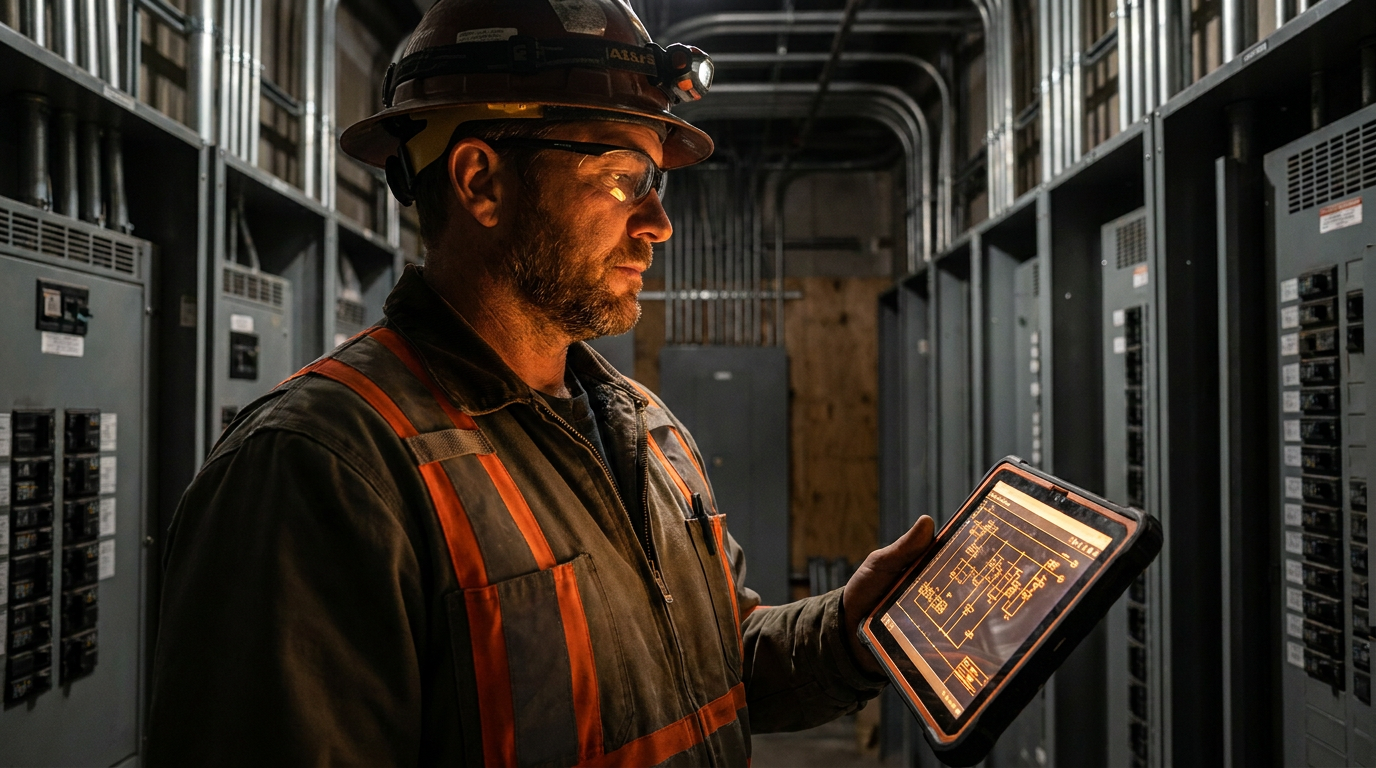
No, AI cannot fully perform an arc flash hazard analysis on its own. While AI tools can speed up data collection and calculations, a qualified electrical engineer must still supervise, interpret the results, and sign off on the final report to meet NFPA 70E standards and ensure worker safety.
Can AI Perform an Arc Flash Hazard Analysis?
Artificial intelligence is showing up everywhere, from the office to the job site. It can write emails, plan projects, and even help diagnose problems with complex equipment. So it's fair to ask: can AI handle one of the most critical safety tasks in our trade, the arc flash hazard analysis?
The short answer is no, not by itself. But it is changing the game.
AI is not a replacement for a qualified electrical engineer. It’s a powerful tool that can make the analysis process faster, more accurate, and more efficient. For electricians on the ground, understanding how AI helps is key to working smarter and safer.
What's an Arc Flash Analysis, Anyway?
Let's get on the same page. An arc flash hazard analysis is a study done to figure out the danger level of an arc flash in a specific piece of electrical equipment. An arc flash is a dangerous explosion of energy that happens when an electric current leaves its intended path and travels through the air.
This isn't just a good idea—it's required. OSHA regulations point to the National Fire Protection Association's standard, NFPA 70E, Standard for Electrical Safety in the Workplace. This standard says employers must perform an analysis to identify hazards, estimate the risk, and select the right personal protective equipment (PPE) for the job.
Traditionally, this analysis is a long process:
- Data Collection: An engineer or technician visits the site to gather tons of information about the electrical system. This means reading nameplates on every panel, transformer, and motor.
- System Modeling: All that data gets plugged into specialized software to create a digital model of the entire electrical system.
- Calculation & Analysis: The software runs calculations based on standards like IEEE 1584 to determine the incident energy (the amount of heat energy someone could be exposed to) at different points in the system.
- Reporting & Labeling: The engineer interprets the results, creates a report with recommendations, and produces labels for the equipment that show the hazard level, required PPE, and approach boundaries.
This whole process can take weeks or even months for a large facility. It's tedious and leaves room for human error during data entry. That’s where AI comes in.
Where AI Fits In (and Where It Doesn't)
Think of AI as the world’s best apprentice for an electrical engineer. It can do the grunt work with incredible speed and accuracy, but it still needs a master electrician to check the work and make the final calls.
What AI is Good At:
- Supercharged Data Collection: This is the biggest time-saver. Instead of a person writing down information from hundreds of nameplates, an AI-powered app can use a tablet's camera to 'read' the data. It can pull make, model, voltage, amperage, and trip settings in seconds, reducing manual entry errors.
- Running a Million Scenarios: Once the data is in the model, AI can run thousands of 'what-if' scenarios instantly. What happens if we use a different type of breaker? What if a motor is upgraded? AI can calculate the impact of these changes on arc flash energy across the entire system.
- Spotting Problems: AI excels at pattern recognition. It can scan a complex one-line diagram and flag missing information or inconsistencies that a human eye might miss. It can compare the collected data against a library of millions of components to spot potential issues.
Here are some prompts you can use to get a feel for how AI can help organize your thinking around these complex tasks.
I'm an electrician and need to explain the main steps of an arc flash hazard analysis to my team. Based on NFPA 70E, break down the process into simple, numbered steps. Explain what happens in each step, from data collection to labeling. Keep the language simple and direct.
Generate a simple checklist for an electrician gathering data for an arc flash study. The list should include key information needed from equipment like panelboards, switchgear, transformers, and motors. Group the items by equipment type and focus on the data needed for a study, like voltage, trip ratings, and conductor sizes.
What AI Can't Do:
- The Physical Inspection: AI can’t walk down a piece of equipment. It can't see if a panel is rusted, if connections are loose, or if a piece of gear is in a wet, hazardous location. That requires a trained human with boots on the ground.
- Make Judgment Calls: An arc flash study isn't just numbers. An engineer has to make judgments based on the age of the equipment, its maintenance history, and the specific conditions of the facility. AI doesn't have real-world experience; it only knows the data it's been given.
- Take Legal Responsibility: This is the big one. At the end of the day, an arc flash hazard analysis is a legal document. A qualified person, usually a licensed Professional Engineer (PE), must review, approve, and literally sign off on the report. That signature means they are taking professional and legal responsibility for the accuracy and conclusions of the study. An AI can't go to court.
For more on keeping your crew safe, check out our resources on jobsite safety.
The Human Expert Is Still King
Software companies like ETAP, SKM, and EasyPower—the big names in power system analysis—are all exploring and integrating AI into their platforms. They know that AI can make their powerful tools even better. But they also know that the final word must come from a human expert.
An arc flash study is more than a calculation. It's a professional opinion based on data. The AI can provide the data and run the numbers, but the opinion, the interpretation, and the recommendations come from the engineer.
Imagine a doctor using AI to analyze an MRI. The AI can flag potential spots of concern with incredible accuracy, but the doctor is the one who considers the patient's history, performs a physical exam, and ultimately makes the diagnosis and treatment plan. It's the same principle in our field.
Use this prompt to help you draft simple, clear safety messages for your team.
I'm a lead electrician. Write a short, 100-word toolbox talk for my crew about arc flash safety. The goal is to remind them why we have arc flash labels and the importance of wearing the correct PPE. Use simple, direct language. Mention that the labels are based on a detailed engineering study.
The Future of Arc Flash Analysis
The future is not about AI replacing electricians or engineers. It's about AI augmenting their abilities.
We will see more AI-powered tools that make data collection as simple as taking a video. We'll see systems that can monitor a building's electrical load in real time and update arc flash calculations on the fly. This could provide a live, dynamic risk assessment instead of the static snapshot we have today.
But even in that future, the need for skilled tradespeople and experienced engineers will be greater than ever. Someone has to install, maintain, and inspect the equipment. And someone has to understand the system as a whole and take responsibility for its safety.
So, can AI perform an arc flash hazard analysis? No. But it's becoming an essential tool that helps qualified people do it better, faster, and safer than ever before. Your job is to understand what the tool does so you can work with it, not against it.
Frequently asked questions
37 copy-paste prompts that save tradespeople 5+ hours a week. Plus one short email every Friday — no fluff.
More for electricians
AI for Electricians: A Field-Tested Guide
AI for Electricians comes down to using AI to do the slow stuff — quoting, paperwork, marketing, and customer follow-up — so you can stay on the tools. Bel
27 ChatGPT Prompts for Electricians (Copy & Paste)
27 ChatGPT Prompts for Electricians (Copy & Paste) comes down to using AI to do the slow stuff — quoting, paperwork, marketing, and customer follow-up — so

AI Electrical Load Calculator: How It Works & Free Prompt
AI Electrical Load Calculator comes down to using AI to do the slow stuff — quoting, paperwork, marketing, and customer follow-up — so you can stay on the