Can AI Read Electrical Blueprints? Here's the Real Answer
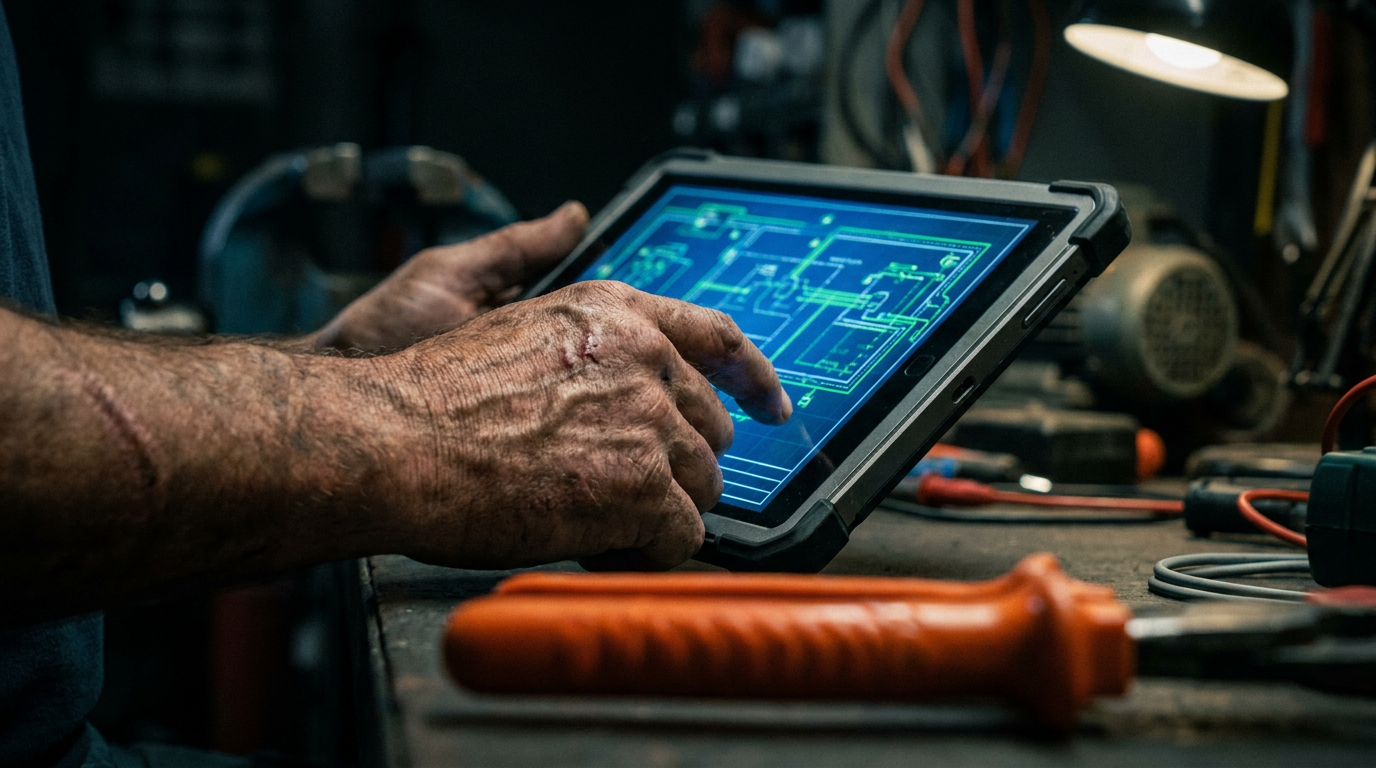
Yes, AI can read electrical blueprints, but not in the way a human does. AI tools use computer vision to identify symbols, lines, and text. This helps automate tasks like material takeoffs, circuit tracing, and checking for errors, but it still requires a skilled electrician to verify the results.
Can AI Read Electrical Blueprints? Here's the Real Answer
You've heard the talk. Artificial intelligence is changing everything. But can a computer program really understand the complex lines, symbols, and notes on an electrical blueprint? The short answer is yes, but it’s not magic. It’s a tool, and like any tool, you need to know how it works and where it fails.
Let's cut through the corporate fluff. This isn't about robots taking your job. This is about using smart technology to get the tedious parts of the job done faster. It’s about spending less time counting outlets on a print and more time planning the actual install. AI for blueprints is here, and the electricians who learn to use it will have an edge.
How AI "Reads" a Blueprint
When we say AI "reads" a blueprint, it isn't looking at it with understanding like you do. It's using a few key technologies to process the image:
Computer Vision: This is the "eyes" of the AI. It scans the drawing and identifies shapes. It's trained on thousands of blueprints to recognize a standard symbol for a duplex receptacle, a ceiling fan box, or a panelboard.
Optical Character Recognition (OCR): This part reads the text. It turns the letters and numbers in your notes, schedules, and specifications into digital text the computer can search and analyze.
Pattern Recognition: The AI puts it all together by looking for patterns. It learns that certain symbols are usually connected by lines (wires) and that those lines lead back to a panel. It's not thinking; it's just matching patterns it has seen before.
Think of it like a new apprentice who is great at counting but doesn't know what anything means yet. It can tell you there are 157 outlets, but it can't tell you the best way to run the home runs. That's still your job.
What AI Can Do For You Right Now
This isn't some future fantasy. There are tools on the market today that can help you work smarter. They are especially powerful for the pre-construction and planning phases.
Automated Material Takeoffs
This is the biggest and most obvious win. Manually counting every single switch, fixture, and junction box on a large commercial print is a headache. It's slow and it's easy to miss something, which can kill your bid.
AI software can scan a full set of plans in minutes and give you a complete list of materials. Some can even export it directly into a spreadsheet for quoting.
- Counts Symbols: Outlets, switches, lights, data ports, fire alarms.
- Measures Runs: Calculates linear footage for conduit and wire, though this is less precise and needs review.
- Reduces Errors: A computer doesn't get tired or lose its place on the page.
Circuit Tracing and Analysis
More advanced AI can start to trace circuits. By identifying which symbols are connected, it can help visualize load distribution. This is useful for:
- Preliminary Load Calculations: Getting a quick sense of the load on each circuit.
- Building Panel Schedules: Automating the first draft of a panel schedule based on the connections it sees.
- Identifying Unconnected Items: Flagging a light fixture that doesn't appear to be connected to a switch or circuit.
Clash Detection
A major headache on big jobs is when different trades get in each other's way. You go to run a 4-inch conduit and find a massive HVAC duct exactly where you planned to go. AI helps with this by overlaying blueprints from different trades.
The software can compare your electrical plan with the plumbing and HVAC plans and flag potential "clashes" where two systems are trying to occupy the same space. Finding this on a computer screen saves a ton of money compared to finding it in the field.
Prompts You Can Use Today
You don't always need expensive, specialized software. For smaller tasks, you can use general AI tools that have image analysis capabilities, like some versions of ChatGPT or Gemini. You just need to give them a good, clear prompt.
Here are a couple of copy-paste prompts to try. Upload a clear, high-resolution image of a section of your blueprint.
I've uploaded a section of an electrical blueprint. Act as an electrical estimator's assistant. Your task is to identify and count the following symbols: standard duplex outlets, GFCIs, single-pole switches, and overhead light fixtures. Present the results in a simple table with 'Symbol' and 'Count' columns. Ignore all other symbols and text for this task.
Review the attached image, which contains the 'General Electrical Notes' section of a blueprint. Extract and summarize the key specifications related to conductor types, conduit requirements, and panelboard standards. Present the summary in a clear, bulleted list. Focus only on the information provided in the text; do not make assumptions.
The Limits: Where AI Is Still Dumb
For all its power, AI is still just a machine. It has significant limitations, and if you trust it blindly, you'll get burned.
Messy and Old Plans: AI needs clean, digital-born (vector) PDFs or very high-resolution scans. It gets confused by faded lines, coffee stains, and creases on old paper plans. Handwritten notes are almost impossible for it to read accurately.
Lack of Context: An AI doesn't understand intent. It can't look at a weird symbol and guess that the engineer meant for it to be a special type of floor box. It doesn't know that the architect always puts the panel in a weird spot. That's field knowledge. That's your value.
Non-Standard Symbols: If an engineering firm uses its own custom symbols for things, the AI will either miss them or misidentify them unless it's been specifically trained on that firm's drawings.
It's Not a Licensed Electrician: The AI's output is a suggestion, not a final answer. It is not legally responsible for anything. The final responsibility for the accuracy of a bid and the safety of an installation always rests with the licensed professional. You are the final check on everything.
The Bottom Line
AI can and does read electrical blueprints. It's a powerful tool that automates the most repetitive and boring parts of planning and estimating. It can save you hours of work, reduce errors in your bids, and help you catch problems before they happen on the jobsite.
But it's not a replacement for a skilled electrician. It's a powerful assistant. The tradespeople who learn how to use these tools will be more efficient, more accurate, and more profitable. Don't be afraid of the technology. Learn it, master it, and use it to your advantage.
Frequently asked questions
37 copy-paste prompts that save tradespeople 5+ hours a week. Plus one short email every Friday — no fluff.
More for electricians
AI for Electricians: A Field-Tested Guide
AI for Electricians comes down to using AI to do the slow stuff — quoting, paperwork, marketing, and customer follow-up — so you can stay on the tools. Bel
27 ChatGPT Prompts for Electricians (Copy & Paste)
27 ChatGPT Prompts for Electricians (Copy & Paste) comes down to using AI to do the slow stuff — quoting, paperwork, marketing, and customer follow-up — so

AI Electrical Load Calculator: How It Works & Free Prompt
AI Electrical Load Calculator comes down to using AI to do the slow stuff — quoting, paperwork, marketing, and customer follow-up — so you can stay on the