ChatGPT Vision for Electrical Troubleshooting: We Tried It
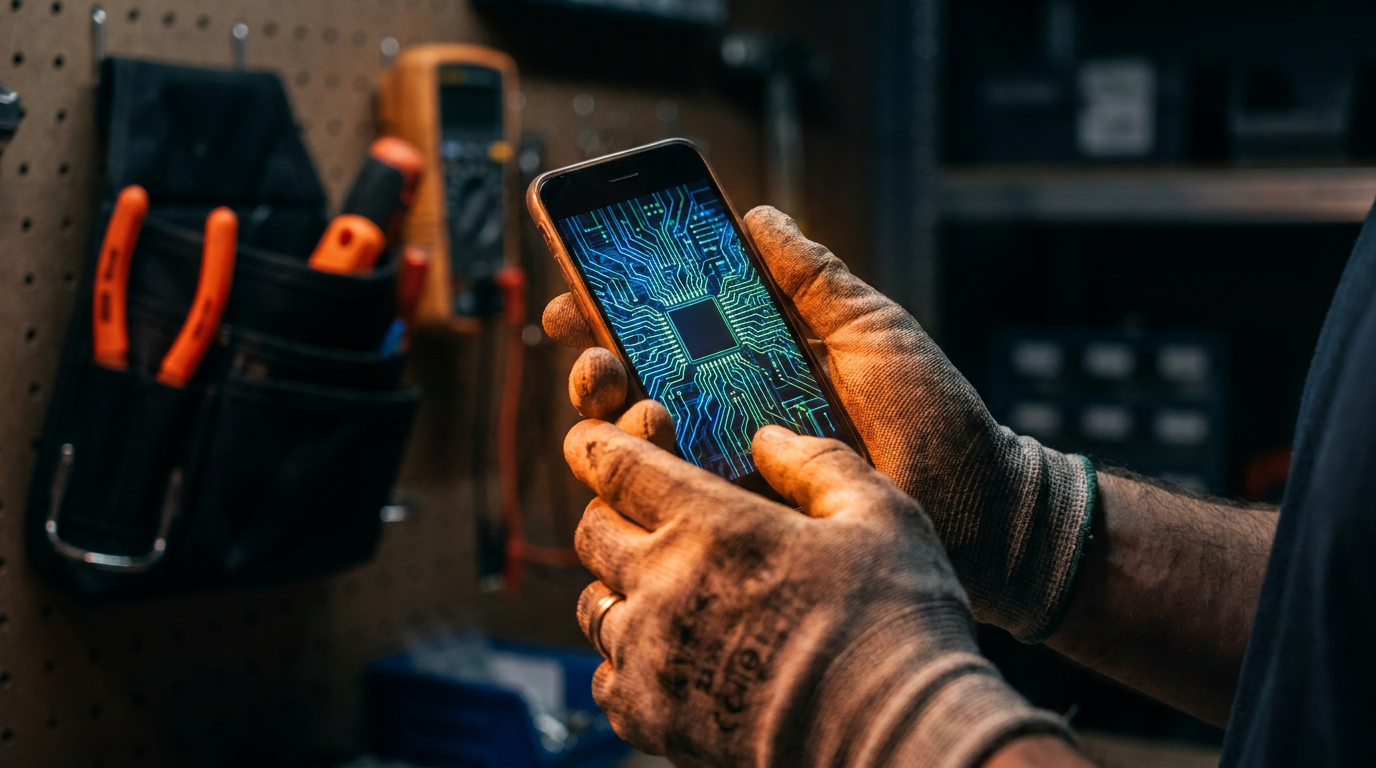
ChatGPT Vision can be a helpful tool for electrical troubleshooting, but with major limits. It's best used for identifying old components or deciphering faded diagrams. It should never be trusted for safety advice, code compliance, or final diagnosis, as it can provide incorrect or dangerous information.
We Tried It: Using ChatGPT Vision for Electrical Troubleshooting
Another day, another piece of tech that promises to change the game. This time, it's AI that can supposedly 'see' what you're working on. They call it ChatGPT Vision. The idea is simple: you take a picture of a panel, a motor, or a weird part you've never seen before, and the AI tells you what you're looking at.
As professional electricians, we're skeptical. Our job is built on experience, knowledge of the code, and trusting our meters. A computer program isn't going to replace that. But we don't dismiss new tools without a fair shake. So we took ChatGPT Vision out into the field to see if it's a useful addition to the truck or just a toy.
What is ChatGPT Vision?
Think of it like this: you have an apprentice who has read every electrical textbook and online forum in the world but has never actually touched a wire. That's ChatGPT Vision.
It's a feature of the popular AI chatbot that lets you upload images. The AI analyzes the picture and answers questions about it. You can show it:
- A photo of a circuit breaker panel.
- A snapshot of a burnt-out contactor.
- A picture of a faded wiring diagram on an old HVAC unit.
In theory, it can help you identify parts, understand connections, and even brainstorm problems. We wanted to see how that theory holds up on a real job site.
The Good: Where It Actually Helped
We were surprised to find a few situations where the AI was genuinely useful. It’s not a replacement for skill, but it can be a decent assistant for specific information-gathering tasks.
Identifying Obscure Parts
This is where Vision shined. We were in the basement of a 1960s commercial building looking at a panel full of old, unlabeled breakers. We snapped a photo of one particularly strange-looking Zinsco breaker. Asking a supply house employee would have resulted in a blank stare. A Google search for 'weird old square breaker' is a waste of time.
We gave the image to ChatGPT and asked it to identify the component. Within seconds, it correctly identified it as a Zinsco breaker and even mentioned their reputation for failing to trip and causing fires. It was faster than digging through old forum posts. For identifying old or foreign-made components, this is a legitimate time-saver.
I'm an electrician troubleshooting an old panel. I need help identifying this component. Based on the attached image, what is the likely manufacturer, model, and amperage rating of this fuse/breaker? Also, provide any common failure modes for this type of component and suggest modern, code-compliant replacements.
Deciphering Faded Schematics
On another job, we were servicing a rooftop air handler from the 90s. The wiring diagram glued to the inside of the service panel was faded and smudged. We could barely make out the terminal labels.
We took a clear, well-lit photo and asked the AI to transcribe the diagram. It did a surprisingly good job. It correctly identified the connections for the compressor, fan motor, and control wiring. It wasn't perfect—it missed one small label—but it gave us a solid starting point that we could then verify with our multimeters. It saved us twenty minutes of squinting and guessing.
The Bad: Where It Fails (and Why It's Dangerous)
For every time the AI was helpful, there was another time it was confidently wrong. This is the part that every tradesperson needs to understand. This tool has no real-world experience and no concept of safety.
It Doesn't Understand Electricity
ChatGPT is a language and pattern-matching model. It doesn't understand ohms, volts, or amps. It has memorized what a 20-amp breaker looks like, but it has no idea what one does. It cannot replace a multimeter or a Megger. It can't tell you if a circuit is live, if there's continuity, or if you have a ground fault. Relying on it for actual diagnosis is a gamble you should never take.
It Ignores the NEC
The AI's knowledge base is the internet, which is full of DIY forums and advice from other countries with different electrical codes. We asked it for a solution to add a subpanel, and it suggested a method that would violate at least two sections of the National Electrical Code (NEC) regarding grounding and bonding.
An inspector doesn't care if an AI told you to do it. You are the licensed professional, and you are responsible for any code violations or safety hazards. The AI carries zero liability.
This is a photo of a faded wiring diagram from an old motor controller. I'm having trouble reading it. Please transcribe the connections shown in the diagram. Identify the terminals for L1, L2, L3, and the connections to the motor windings (T1, T2, T3). Point out any control circuit connections like start/stop buttons or overload heaters.
It Can Be Confidently Wrong
This is the biggest danger. The AI will sometimes 'hallucinate' and make up an answer that sounds correct. We showed it a picture of a standard 3-phase motor and asked it to identify the wiring for a specific voltage. It gave us a wiring configuration that was completely wrong and would have let the magic smoke out of the motor.
It presents this false information with the same confident tone as when it's correct. If you don't have the experience to spot the error, you could cause serious damage or get hurt.
The Verdict: A Niche Tool, Not a Partner
So, is ChatGPT Vision useful for electrical troubleshooting? The answer is a qualified yes. It is not a partner, an expert, or a replacement for your brain. It is a very specific kind of tool.
Think of it as a searchable, visual encyclopedia. It's one of many tools in your arsenal.
- Use it for: Identifying parts, reading smudged text, and brainstorming a list of possible issues to investigate with your own skills and meters.
- Never use it for: Safety verification, code compliance questions, or as the final word on any diagnosis.
Your experience, your senses, and your trusted test equipment are still your primary assets. This AI is, at best, a helpful but unreliable research assistant.
I'm working on a residential circuit. The customer reports lights are flickering intermittently on multiple outlets. I've attached a photo of the main service panel. Based on standard electrical practice, provide a checklist of potential causes for this issue, starting from the most likely. Include things like loose neutral connections, failing breakers, or issues upstream from the panel.
Ultimately, the trades are about applied knowledge. No AI can replicate the feel of a loose connection as you tighten it, or the instinct that tells you to check one more thing before you call it a day. Use the tech, but don't ever let it replace your judgment.
Frequently asked questions
37 copy-paste prompts that save tradespeople 5+ hours a week. Plus one short email every Friday — no fluff.
More for electricians
AI for Electricians: A Field-Tested Guide
AI for Electricians comes down to using AI to do the slow stuff — quoting, paperwork, marketing, and customer follow-up — so you can stay on the tools. Bel
27 ChatGPT Prompts for Electricians (Copy & Paste)
27 ChatGPT Prompts for Electricians (Copy & Paste) comes down to using AI to do the slow stuff — quoting, paperwork, marketing, and customer follow-up — so

AI Electrical Load Calculator: How It Works & Free Prompt
AI Electrical Load Calculator comes down to using AI to do the slow stuff — quoting, paperwork, marketing, and customer follow-up — so you can stay on the