Jobsite AI Security Cams That Don't Break: A Real-World Test
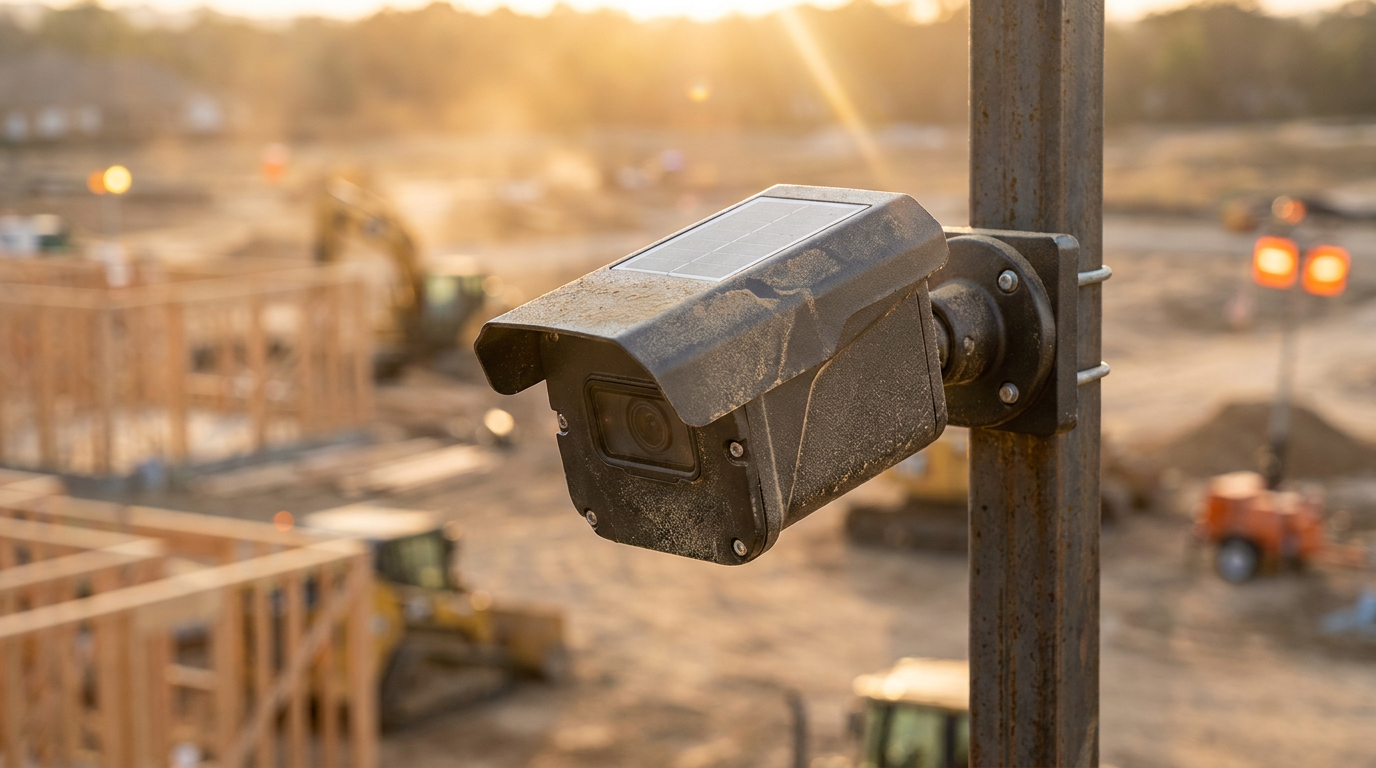
A durable AI camera for jobsite security is a solar-powered, 4G LTE unit with an IP66 rating or higher. This ensures it's weatherproof and operates without local Wi-Fi or power. AI features like person and vehicle detection are critical to reduce false alarms from wind or animals on site.
Your Jobsite Is Leaking Money
Every morning, you do a quick walk-through. You're checking progress, but you're also checking for what's missing. A generator gone. A pallet of lumber short. Copper wiring ripped out. According to the National Equipment Register, jobsite theft costs our industry up to $1 billion a year. That's real money walking off your site.
Standard security cameras won't cut it. They need power, they need Wi-Fi, and a bit of dust or rain can knock them out. This isn't about watching your front porch. This is about securing a tough, remote, and constantly changing environment. You need gear that's as tough as your crew.
Why Regular Cameras Fail on the Job
That cheap camera from the big box store is not built for a construction site. It's designed for a clean, stable, climate-controlled house. Here’s why they fail in the field:
- Dust and Debris: Concrete dust, sawdust, and dirt get into every crack. For a standard camera, this means a blurry lens at best, and a fried circuit board at worst.
- Water: Rain, snow, and morning dew are a constant. A camera that isn't properly sealed will short out fast. A pressure washer used for cleanup can kill a non-rated camera instantly.
- Impacts: Things get dropped, bumped, and vibrated on a jobsite. A flimsy plastic housing will crack, leaving the important parts exposed.
- No Power or Wi-Fi: Most sites, especially early on, don't have reliable power or internet. Your camera is a useless brick without a way to run and a way to send you alerts.
What Makes a Security Camera "Durable"?
When we talk about a durable camera, we're not just talking about a tough-looking case. We're talking about specific ratings and features that prove it can handle the work.
IP Ratings: Your Weather Shield
IP stands for Ingress Protection. It's a standard that tells you how well a device is sealed against dust and water. The rating has two numbers.
- First Number (Solids): This is for dust and dirt, on a scale of 0-6. You want a 6. This means it's completely dust-tight. No exceptions.
- Second Number (Liquids): This is for water, on a scale of 0-9. For a jobsite, you need at least a 6 (protects against powerful water jets) or a 7 (can be submerged in water up to 1 meter).
An IP66 or IP67 rating is the minimum for any real jobsite camera. It means the gear can handle dust storms and heavy rain without quitting.
Power and Connectivity: Cutting the Cords
The best solutions are self-sufficient.
- Solar Power: A small solar panel connected to a high-capacity internal battery is the gold standard. It charges all day and runs all night. Look for systems that can run for several cloudy days on a full charge.
- 4G LTE: Forget Wi-Fi. A camera with its own 4G LTE cellular connection works anywhere you can get a cell signal. You'll need a data plan (usually around $10-20 a month from a provider like T-Mobile or Verizon), but it's far more reliable for remote sites.
The "AI" Part: Smarter, Not Harder Security
AI, or artificial intelligence, makes these cameras more than just a recording device. It makes them an active security guard. Instead of getting hundreds of useless alerts because a tree branch moved, AI filters the noise.
Key AI features include:
- Person/Vehicle Detection: The camera knows the difference between a person, a car, and a stray cat. You only get alerted for what matters.
- License Plate Recognition (LPR): Some advanced models can read and log license plates of vehicles entering and leaving your site. This is powerful evidence if a theft occurs.
- Automated Deterrents: When the AI detects a person in a restricted area after hours, it can automatically trigger a bright strobe light or a loud siren. Often, this is enough to scare off a potential thief before they even touch anything.
Here is a prompt you can use to start your own research.
Act as a security consultant for a small construction company. I need to choose a durable AI camera for a jobsite that has no Wi-Fi or mains power. My key concerns are theft of lumber and small tools. Create a comparison table of features I should look for, including power source, connectivity, IP rating, AI features, and estimated monthly data cost.
Our Field Test: What Actually Works
We got our hands on three different types of durable AI cameras and put them on a dusty, active site for two weeks. We didn't baby them.
The All-in-One Solar PTZ (Pan-Tilt-Zoom): This was the biggest unit, with a large solar panel and a camera that could look around. Setup was simple: mount it to a pole, activate the SIM card, and it was online. The AI worked well, correctly identifying crew trucks versus a delivery van. After a week of dust, we hosed it down (simulating an IP66 test), and it kept running without a problem.
The Compact Magnetic Mount: This smaller, battery-only unit was great for temporary spots. We stuck it to an I-beam to watch over a tool lockup. The battery lasted about 10 days before needing a recharge. Its AI was simpler, mostly just person detection, but it did the job. It survived a 4-foot drop onto hard-packed dirt.
The Security Trailer System: This is the pro-level setup, usually rented. A trailer with a telescoping mast, multiple cameras, and massive solar/battery capacity. The AI on this system was top-notch, offering license plate reading and custom alert zones. It's more expensive, but for a large commercial project, it's the right call for improving your overall site security.
After the test, the clear winner for most general contractors is the all-in-one solar PTZ model. It offers the best balance of features, durability, and cost. It's a one-time purchase that pays for itself the first time it stops a thief.
Once you have a camera, you need a plan for your team.
My construction crew needs a clear protocol for responding to AI security camera alerts after hours. Write a simple, one-page standard operating procedure (SOP) that covers: 1. Who receives the alert (Primary and backup contacts). 2. How to verify if it's a real threat using the live feed. 3. Who to contact (and in what order, e.g., site foreman first, then law enforcement). 4. When to activate remote deterrents like sirens or lights.
The Bottom Line
Investing in a durable AI camera for jobsite security is no longer a luxury. It's a basic cost of doing business right. The technology is reliable, affordable, and built for the way we work. Stop letting thieves treat your jobsite like an open-air store. A single solar-powered, 4G camera can protect thousands of dollars in tools and materials, letting you focus on the real work: building.
Frequently asked questions
37 copy-paste prompts that save tradespeople 5+ hours a week. Plus one short email every Friday — no fluff.
More for jobsite ai
How Plumbers Use ChatGPT on the Jobsite (5 Ways)
How Plumbers Use ChatGPT on the Jobsite (5 Ways) comes down to using AI to do the slow stuff — quoting, paperwork, marketing, and customer follow-up — so y
How to Use ChatGPT on the Jobsite (Practical Guide)
How to Use ChatGPT on the Jobsite (Practical Guide) comes down to using AI to do the slow stuff — quoting, paperwork, marketing, and customer follow-up — s
AI Voice Notes to Job Report in 60 Seconds
AI Voice Notes to Job Report in 60 Seconds comes down to using AI to do the slow stuff — quoting, paperwork, marketing, and customer follow-up — so you can