Florida Roofers: AI Tools for HVHZ Code Headaches
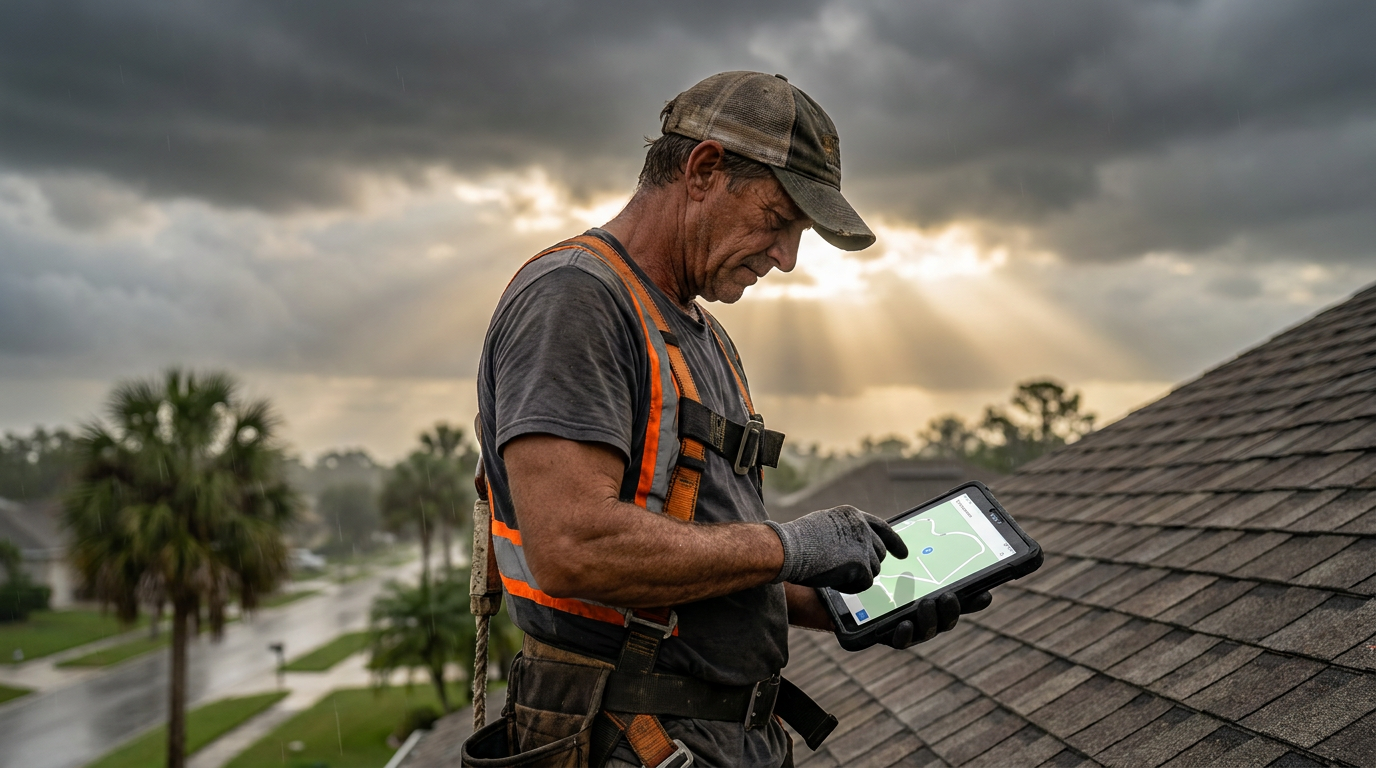
AI tools for Florida HVHZ roofing compliance help by automating document analysis, checking material specs against code, and generating permit applications. They cross-reference the Florida Building Code, ensuring your project plans, like Form 1802, meet the strict standards for wind load and water intrusion.
Florida Roofers: AI Tools That Make HVHZ Code Compliance Less of a Headache
If you're a roofer in South Florida, you know the letters HVHZ. High-Velocity Hurricane Zone. It means more rules, more paperwork, and more headaches. The code is there for a reason—to keep roofs on buildings when a hurricane hits. But staying compliant, especially in Miami-Dade and Broward counties, can feel like a full-time job.
The Florida Building Code is a thick book, and the product approval system is a maze. Every detail, from the nail pattern on a shingle to the uplift rating of a tile system, is under a microscope. For years, the only tools you had were experience, a sharp eye, and a lot of patience.
Now, there’s a new tool for your office: Artificial Intelligence. It won't replace your crew, but it can make the paperwork side of HVHZ compliance a whole lot easier to manage.
What is HVHZ and Why Is It Such a Pain?
Let's get straight to it. The HVHZ includes all of Miami-Dade and Broward counties, and parts of Palm Beach. These areas have the strictest building codes in the United States for wind resistance, and for good reason. After Hurricane Andrew in 1992, studies showed that massive roof failures made the storm's damage much worse.
The result was a complete overhaul of the building code. For roofers, this means:
- Strict Product Approvals: Every single component of your roof system, from the underlayment to the shingles, must have a Florida Product Approval or Miami-Dade NOA (Notice of Acceptance).
- Specific Installation Methods: You can't just nail it down. You have to follow the exact fastening patterns and techniques specified in the engineering documents for that specific wind zone.
- Endless Paperwork: The Uniform Roofing Permit Application (Form 1802) is just the start. You need to provide documentation for every material, proving it meets the code for that specific project.
Keeping track of it all is tough. A product that was approved last year might have its approval expire. A new edition of the FBC could change underlayment requirements. This is where the constant, tedious checking slows you down and opens you up to risk.
Where AI Fits in Your Workflow
Forget about robots nailing shingles. The real power of AI for roofers is in the back office. It’s about turning that mountain of documents and data into quick, useful answers. Think of it as the smartest assistant you've ever had.
Here’s how it works in the real world:
Document Analysis: Modern AI tools (like the paid versions of ChatGPT, Claude, or Gemini) can read PDFs and images. You can upload a 50-page Miami-Dade NOA and ask the AI to pull out the key information: wind uplift ratings, fastener specs, and deck requirements. No more hunting through pages of technical jargon.
Code Cross-Referencing: You can give an AI the relevant chapters of the Florida Building Code. Then, you can ask it questions in plain English. For example: "What is the required overlap for a self-adhered underlayment on a 4:12 pitch in the HVHZ?" The AI can find and cite the specific code section.
Permit Prep: AI can help you fill out permit applications faster. By feeding it your project details, it can populate fields on forms and create a checklist of required documents. This reduces errors and helps you get your permits approved on the first try, which is critical for accurate project quoting.
Material Selection: You can tell the AI your project's wind speed requirement and roof type. It can then scan a list of your preferred suppliers' HVHZ-approved products and suggest options that fit the job. This saves time and ensures you're only considering compliant materials.
Prompts You Can Use Today
Getting started is as simple as asking a question. Here are some prompts you can copy and paste into an AI chat tool that can handle document uploads.
You are an expert assistant for a Florida roofing contractor specializing in HVHZ compliance. I've uploaded the Product Approval document [PA #XXXXX]. Analyze it and create a summary table with these columns: Product Name, Manufacturer, Wind Uplift Pressure Rating (psf), Required Fastener Type, and Fastener Spacing for Zones 1, 2, and 3. My project is in Miami. Flag any specific limitations or installation instructions critical for HVHZ.
This next one helps you check your work against the official code.
Acting as a compliance checker against the Florida Building Code, 8th Edition (2023), review the following roof assembly plan for a single-family home in Broward County. [Paste plan details: roof pitch, deck type, underlayment, primary covering, fastener schedule]. Identify any potential conflicts with HVHZ requirements, specifically regarding TAS 100-A and TAS 110. List your findings as a simple bulleted list, citing the relevant FBC section if possible. Start with a disclaimer that you are not a licensed engineer.
These tools are just one part of building a modern jobsite technology stack. They work best when combined with good project management software and clear communication with your team.
The "Gotchas" - What AI Can't Do (Yet)
This technology is powerful, but it's not perfect. You are still the expert, and you are ultimately responsible for the work.
- Always Verify: AI can sometimes "hallucinate" or make mistakes, especially when interpreting dense technical documents. Always double-check the AI's output against the source document. The AI's answer is a guide, not gospel.
- Not a Legal Substitute: An AI is not a licensed engineer, an architect, or a building official. Its advice does not carry legal weight. You still need professional sign-offs where required.
- Garbage In, Garbage Out: The AI is only as good as the information you give it. If you upload a blurry photo of a document or ask a vague question, you'll get a bad answer.
- No On-the-Job Experience: AI can't tell you if a piece of decking feels soft. It can't look at a complex roofline and spot a potential water intrusion problem. Your hands-on experience is still your most valuable tool.
Getting Started: Simple Steps
You don't need a degree in computer science to use these tools. Here's a simple way to begin.
- Choose a Tool: Start with a mainstream AI that has document analysis capabilities. ChatGPT-4o, Claude 3 Sonnet, and Google Gemini Advanced are all strong starting points. The free versions are good for basic questions, but the paid tiers are necessary for reading PDFs.
- Build a Knowledge Base: Create a folder on your computer with key documents: the latest FBC roofing chapters, your most-used product NOAs, and local municipal amendments.
- Start Small: Pick a past project you've completed. Upload the permit package and see if you can use the AI to generate the same information you did manually. This is a low-risk way to learn how it works.
Integrating this into your workflow is a smart way to improve your company's business operations and reduce the time spent on administrative tasks.
Ultimately, AI is a tool to manage complexity. HVHZ compliance is complex. By letting the machine handle the tedious task of sifting through documents and codes, you free up your time to focus on what you do best: building strong, safe roofs that can stand up to a hurricane.
Frequently asked questions
37 copy-paste prompts that save tradespeople 5+ hours a week. Plus one short email every Friday — no fluff.
More for roofing

AI for Roofing Contractors: The Complete Guide
AI for Roofing Contractors comes down to using AI to do the slow stuff — quoting, paperwork, marketing, and customer follow-up — so you can stay on the too
AI Roof Measurement From a Photo: Apps That Work
AI Roof Measurement From a Photo comes down to using AI to do the slow stuff — quoting, paperwork, marketing, and customer follow-up — so you can stay on t