Smarter Builds: A GC's Guide to AI for Value Engineering
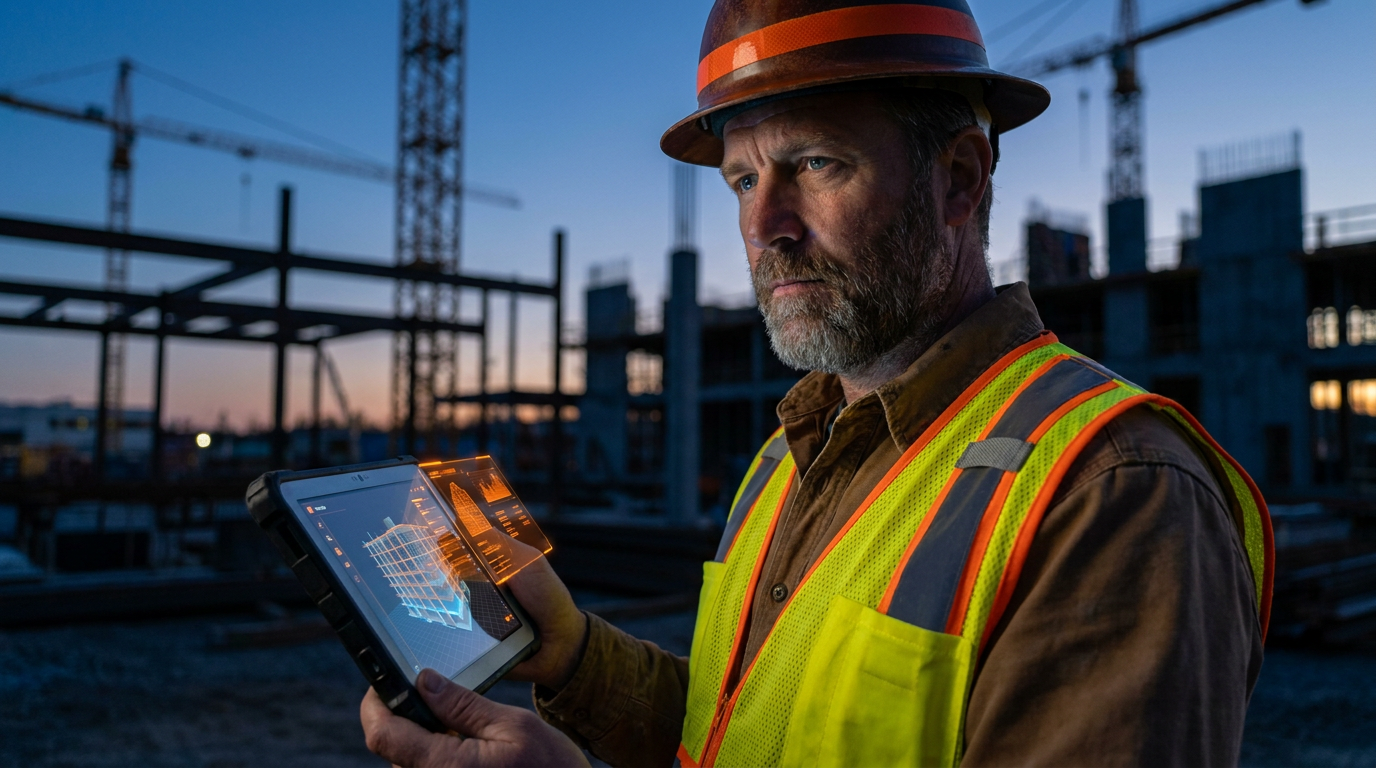
AI for construction value engineering helps GCs by analyzing plans, materials, and schedules to find cost savings. It quickly compares alternative materials, optimizes designs for efficiency, and identifies potential risks that could lead to budget overruns. This means smarter, more profitable builds without cutting corners on quality.
Smarter Builds: A GC's Guide to AI for Value Engineering
Margins are tight. Clients want more for less. And value engineering often feels like a race to the bottom, cutting costs by swapping materials for something cheaper that you hope holds up. For years, VE has been a manual, gut-driven process of thumbing through catalogs and making endless calls to suppliers. But that's changing.
Artificial intelligence is no longer just a buzzword for tech companies. It's a powerful tool that belongs in every general contractor's digital toolbelt. When applied to value engineering, AI can analyze possibilities at a scale and speed no human can match. It helps you find true value—better function for lower cost—instead of just finding the cheapest option.
This guide cuts through the hype. We'll show you how AI is changing the VE game and give you practical ways to start using it today to build smarter, protect your margins, and deliver better projects.
What is Value Engineering, Really?
Let's get on the same page. Value engineering isn't just about cutting costs. Proper VE is a systematic method to improve the "value" of goods or services by examining function. Value, in this case, is the ratio of function to cost. Value can be increased by either improving the function or reducing the cost.
Traditionally, this process involves:
- Information Gathering: Studying the original design, specs, and budget.
- Brainstorming: A team of architects, engineers, and contractors suggests alternatives.
- Analysis: Manually calculating the cost-benefit of each alternative.
- Presentation: Showing the owner the best options for approval.
This process is slow, relies heavily on individual experience, and is limited by how many options a team can realistically consider. You might compare two or three types of flooring or HVAC systems. You don't have time to compare twenty.
How AI Changes the Game for Value Engineering
AI acts like a super-powered analyst for your team. It can process massive amounts of data from your plans, schedules, and material libraries to find savings and efficiencies you'd never spot on your own.
Deep Material Analysis
Instead of just comparing the sticker price of two materials, AI can perform a lifecycle cost analysis in seconds. It can scan thousands of options and weigh factors like:
- Initial Cost: The price per unit.
- Installation Labor: Factoring in complexity and required man-hours.
- Lead Times: Identifying materials that could delay your schedule.
- Durability & Maintenance: Projecting long-term repair and replacement costs.
- Energy Performance: Comparing the R-value of different insulation types or the U-factor of windows.
Imagine you're specified to use a particular brand of composite siding. An AI tool could scan your BIM model or takeoffs and suggest three alternatives that meet or exceed performance specs but offer a 15% reduction in total installed cost due to lower material price and faster installation.
Proactive Design Optimization
Value engineering shouldn't start after the design is already done. AI allows for VE to happen during the design phase, where it has the most impact. By feeding BIM models or even 2D drawings into an AI platform, you can:
- Reduce Material Waste: The AI can analyze layouts and suggest minor adjustments to room dimensions or structural grids to better align with standard material sizes, reducing cuts and scrap.
- Simplify MEP Runs: AI can analyze mechanical, electrical, and plumbing plans to identify the most efficient routes. It can spot potential clashes before they happen on site, preventing costly rework and delays. This is a core part of improving your jobsite efficiency.
- Optimize Structural Systems: An AI can run dozens of simulations on a structural design, suggesting changes to beam spacing or column placement that maintain integrity while using less steel or concrete.
Getting Started: Practical AI Prompts for GCs
You don't need a million-dollar software suite to start. You can use accessible AI models like ChatGPT-4, Claude, or Gemini to help with analysis. The key is giving the AI a clear role and detailed data. Here are a couple of prompts you can adapt.
You are an expert construction cost estimator specializing in value engineering for mid-sized commercial projects. I am the General Contractor for a 3-story medical office building in Austin, Texas.

The current specification for exterior cladding is a premium fiber cement panel system costing $28 per square foot for material. Installation is estimated at 35 man-hours per 1000 sq ft.

Analyze this and propose three value engineering alternatives. For each alternative, provide:
1.  The material name and type.
2.  Estimated material cost per square foot.
3.  Estimated installation impact (increase or decrease in labor).
4.  Key durability and maintenance differences.
5.  Potential lead time issues.

Present the results in a simple table. Your goal is to find significant cost savings without sacrificing the modern aesthetic or 20-year durability target.
This prompt gives the AI all the context it needs to provide a useful, structured answer. It defines the role, project type, location, current spec, and what you need in the output.
You are a construction project manager with expertise in mechanical, electrical, and plumbing (MEP) coordination. I have a 10,000 sq ft single-story office tenant fit-out.

The preliminary plan shows a primary east-west HVAC trunk line running down the central corridor ceiling. The plumbing plan shows multiple north-south waste lines from restrooms that need to cross this corridor to reach the main stack.

Based on this description, please:
1.  Identify the primary coordination risk here.
2.  Suggest two alternative design strategies to mitigate this risk.
3.  For each strategy, explain the likely impact on material cost (ductwork, piping) and labor.

Focus on solutions that prevent ceiling height conflicts and minimize complex on-site fabrication.
Beyond the Hype: Real-World Considerations
AI is a powerful tool, but it's not magic. Keep these points in mind.
Garbage In, Garbage Out: The quality of AI's output depends entirely on the quality of your input. If your plans are incomplete or your material data is outdated, the suggestions will be worthless. Clean, well-structured data is essential.
It’s a Tool, Not a Replacement: AI suggests, you decide. The system might recommend a cheaper material, but your experience on the ground tells you it's a nightmare to install in your climate. AI provides data; the GC provides wisdom. Always apply your professional judgment.
Choosing the Right Software: General tools like ChatGPT are great for brainstorming and simple analysis. But for deep integration with your models and workflows, you'll want to look at construction-specific AI platforms. Companies like Alice Technologies, Procore's Construction Intelligence Cloud, and Buildots offer specialized tools that plug directly into your project data.
Ultimately, integrating AI into your value engineering process is about working smarter, not harder. It frees up your team from tedious manual comparisons to focus on what they do best: building relationships, solving complex problems on site, and delivering a quality project. Start small, test it on a single system in your next project, and see the value for yourself.
Frequently asked questions
37 copy-paste prompts that save tradespeople 5+ hours a week. Plus one short email every Friday — no fluff.
More for general contractors

AI for General Contractors: A Builder's Playbook
AI for General Contractors comes down to using AI to do the slow stuff — quoting, paperwork, marketing, and customer follow-up — so you can stay on the too
How to Use AI for Construction Project Management
How to Use AI for Construction Project Management comes down to using AI to do the slow stuff — quoting, paperwork, marketing, and customer follow-up — so