
PNW Landscaping: AI for Native Plant Selection
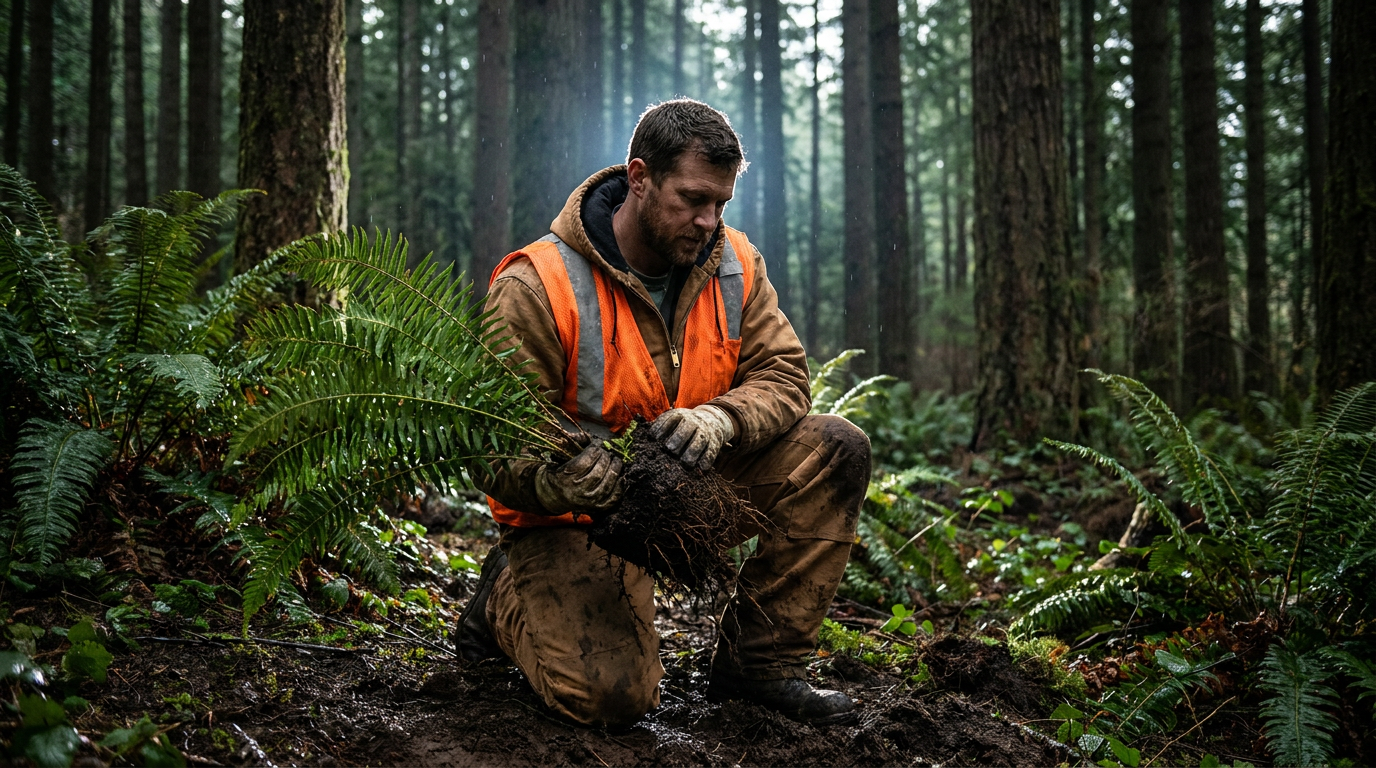
Landscaping contractors use AI for native plant selection Pacific Northwest jobs to match specific USDA zones, wet-winter soil drainage, and canopy shade. By feeding soil conditions, sun exposure, and city water rules into AI prompts, estimators get fast, accurate plant palettes that survive without callbacks or warranty re-planting.
Why PNW Soil and Rain Break Standard Plant Lists
The Pacific Northwest gives landscapers some of the toughest planting puzzles in the country. You can run a crew thirty miles east from Seattle to North Bend or from Portland to Sandy and watch your rainfall double. Cross the Cascades into Yakima or Bend and you hit high desert. Even within a single half-acre residential lot in Pierce County, you often deal with standing water in November and baked hardpan clay in August.
Most plant databases fail because they look only at hardiness zones. A zone 8b plant from Georgia will rot and die in an 8b yard in Olympia. The plant might survive the low winter temperatures, but it cannot handle five straight months of waterlogged roots followed by sixty days of zero rain.
When a crew installs the wrong species, the contractor eats the cost. Replacing five-gallon shrubs and two-inch caliper trees under a one-year warranty destroys your profit margin on a project. Using AI for native plant selection Pacific Northwest jobs cuts those dead-plant callbacks by matching hyper-local soil, moisture, and sun conditions in minutes.
How AI Solves the Pacific Northwest Microclimate Problem
Artificial intelligence tools do not replace your dirt time. They act as a digital field assistant that knows local ecology, municipal code, and plant habit. Instead of flipping through thick regional plant guides or searching slow state extension websites between bids, you give the AI your jobsite specs.
AI processes the variables that trip up apprentices and out-of-town designers:
- Winter saturation versus summer drought: Plants that tolerate wet feet in December without developing root rot, yet survive the dry summer drought cycle common west of the Cascades.
- Glacial till and heavy clay: Deep-rooting natives like ocean spray (Holodiscus discolor) and red-flowering currant (Ribes sanguineum) that can break through compacted hardpan left behind by homebuilders.
- Canopy competition: Groundcovers and understory shrubs that thrive in the deep shade and acidic needles beneath mature Douglas firs and western red cedars.
When you use AI, you do not just ask for good plants. You tell the model the exact jobsite constraints, the customer requirements, and the municipal canopy rules. You walk away with a spec sheet ready for your wholesale nursery order.
Prompt 1: Building a Sun-to-Shade Native Planting Palette
Use this prompt when bidding a residential yard overhaul with mixed lighting and typical maritime soil conditions. Copy this directly into your AI tool while sitting in your truck after the site walk:
Act as a Pacific Northwest commercial landscape designer. I need a native plant schedule for a project in [City/Zip Code, e.g., Puyallup, WA 98371].

Site Specs:
- USDA Hardiness Zone: [e.g., 8b]
- Soil: Compacted glacial till with poor winter drainage, dries to hardpack in July/August
- Exposure Area 1: Full sun, southwest facing, windswept (600 sq ft)
- Exposure Area 2: Deep shade under mature Douglas firs, dry needles (400 sq ft)

Requirements:
1. Recommend 3 shrub species and 2 groundcovers for Area 1 that require zero supplemental water after Year 2.
2. Recommend 3 understory species and 2 groundcovers for Area 2 that thrive in acidic, dry summer shade.
3. Include botanical names, common names, spacing on center, and mature height/spread.
4. Exclude high-maintenance species or aggressive spreaders that require constant pruning.
This prompt forces the system to consider real construction realities: compacted dirt, needle cover, and long-term watering needs. You get clean, organized data you can drop right into your bid software.
Wet Winter, Dry Summer Drainage Calculator
Bioswales, rain gardens, and retention ponds are standard requirements on commercial developments and new residential subdivisions across Washington and Oregon. Cities like Seattle and Portland offer stormwater fee discounts to commercial owners who install green stormwater infrastructure.
Rain gardens require three distinct planting zones:
- Zone 1 (Ponding area): Center bottom that stays underwater for up to 48 hours during heavy storm events.
- Zone 2 (Sloped sides): Fluctuates between wet and dry conditions.
- Zone 3 (Upper rim): Dry margins that rarely see standing water.
Pick the wrong sedge for the bottom of that swale, and the root system will suffocate or dry up by August. Use this prompt to spec native retention features that pass city inspection on the first walk.
I am building an engineered rain garden in [Location, e.g., Beaverton, OR] for a commercial client.

Project details:
- Basin depth: 18 inches
- Drawdown time: 24 to 36 hours after 2-inch storm event
- Soil mix: 60% sand, 40% compost mix over native clay subgrade
- Exposure: Partial sun to full sun

Provide a 3-zone native plant list:
- Zone 1 (Bottom/wet pool): 3 species of native rushes, sedges, or emergent shrubs
- Zone 2 (Slopes/transition): 3 native shrubs that tolerate fluctuating wet and dry cycles
- Zone 3 (Rim/dry): 3 drought-hardy native perennials or grasses

For each species, give the minimum container size for commercial install (e.g., 4-inch plug, 1-gallon, 5-gallon) and expected root depth to resist erosion.
This gives your landscaping estimating team an exact list to price at your regional wholesale grower, complete with recommended container sizes for fast root catch.
Slopes, Erosion Control, and City Codes
Erosion control work along the Puget Sound, Columbia River Gorge, or Willamette Valley hillsides carries high liability. If you drop heavy equipment on a steep bank or strip vegetation without a stabilization plan, you risk sliding the slope into a neighbor's property or paying steep environmental fines.
Critical area ordinances in King, Pierce, Snohomish, and Multnomah counties require specific native species mixes to hold soil on slopes over fifteen percent. Deep-taproot shrubs lock topsoil to deeper subsoils, while fibrous mat groundcovers protect the surface from winter sheet runoff.
Running native plant selection through AI lets you cross-reference slope angles with municipal critical area handbooks. It gives you a rock-solid defense if an inspector questions your plant choices on site.
I need an erosion control planting plan for a 25-degree residential slope in [City, State, e.g., Oregon City, OR].

Conditions:
- Soil: Unstable silt-clay loam, south-facing, high winter sheet runoff
- Access: Difficult walk-in access only; no heavy machinery on slope
- Goal: Fast soil stabilization and bank stabilization without irrigation

Generate:
1. 3 native colonizing shrubs with deep or fibrous root systems suited to steep banks.
2. 2 fast-spreading native groundcovers to suppress weeds and anchor surface soil.
3. Installation method recommendations (e.g., live staking, bare root, container size).
4. Specify which plants can be installed via live stakes during dormant winter months to cut client plant costs.
Live staking native species like Pacific ninebark (Physocarpus capitatus) or red osier dogwood (Cornus sericea) can save thousands of dollars compared to trucking five-gallon pots up a bank. The AI helps you spot these cost-saving installation methods early in the estimating cycle.
Turning Plant Lists into Estimating and Sales Wins
Winning native landscape bids comes down to educating the property owner while staying competitive on price. Many clients think native plants look messy, brown, or wild. They picture blackberries and nettles instead of well-mannered native beds.
Take the output from your AI plant selector and paste it into a customer-facing summary. Instruct the AI to write a three-paragraph explanation for the property owner. Ask it to highlight four-season visual interest, wildlife attraction (like hummingbirds and native bees), and long-term water savings.
When a commercial building manager or high-end homeowner reads a clear, professional explanation of why you selected kinnikinnick instead of English ivy or dwarf Oregon grape instead of imported barberry, they see a trade expert. They stop shopping you against cheap mow-and-blow crews.
Better plant data feeds directly into faster quoting. When estimators know the exact spacing, container size, and mortality expectations of native species, they price the labor right. They budget enough crew hours for digging in hard till and build realistic plant counts that fill the beds properly without overcrowding.
Stop Replacing Dead Plants on Warranty
Every dead plant you replace under warranty is pure loss. It eats crew hours, fuel, dump fees, and nursery cash. When you rely on national databases or generic big-box nursery recommendations, you gamble with your labor margin.
Pacific Northwest microclimates require local precision. AI gives you that precision in under two minutes while you sit in the truck at the jobsite curb.
Feed the model your exact sun, your exact dirt, and the city you are working in. Get a rock-solid native list, hand it to your nursery rep, and bid the job knowing those roots will take hold and stay alive.
Frequently asked questions
37 copy-paste prompts that save tradespeople 5+ hours a week. Plus one short email every Friday — no fluff.
More for landscaping
AI for Landscaping Business Owners: Real ROI
AI for Landscaping Business Owners comes down to using AI to do the slow stuff — quoting, paperwork, marketing, and customer follow-up — so you can stay on
ChatGPT Prompts for Lawn Care Business (20 Tested)
ChatGPT Prompts for Lawn Care Business (20 Tested) comes down to using AI to do the slow stuff — quoting, paperwork, marketing, and customer follow-up — so