Predictive Maintenance: Fix Stuff Before It Breaks with AI
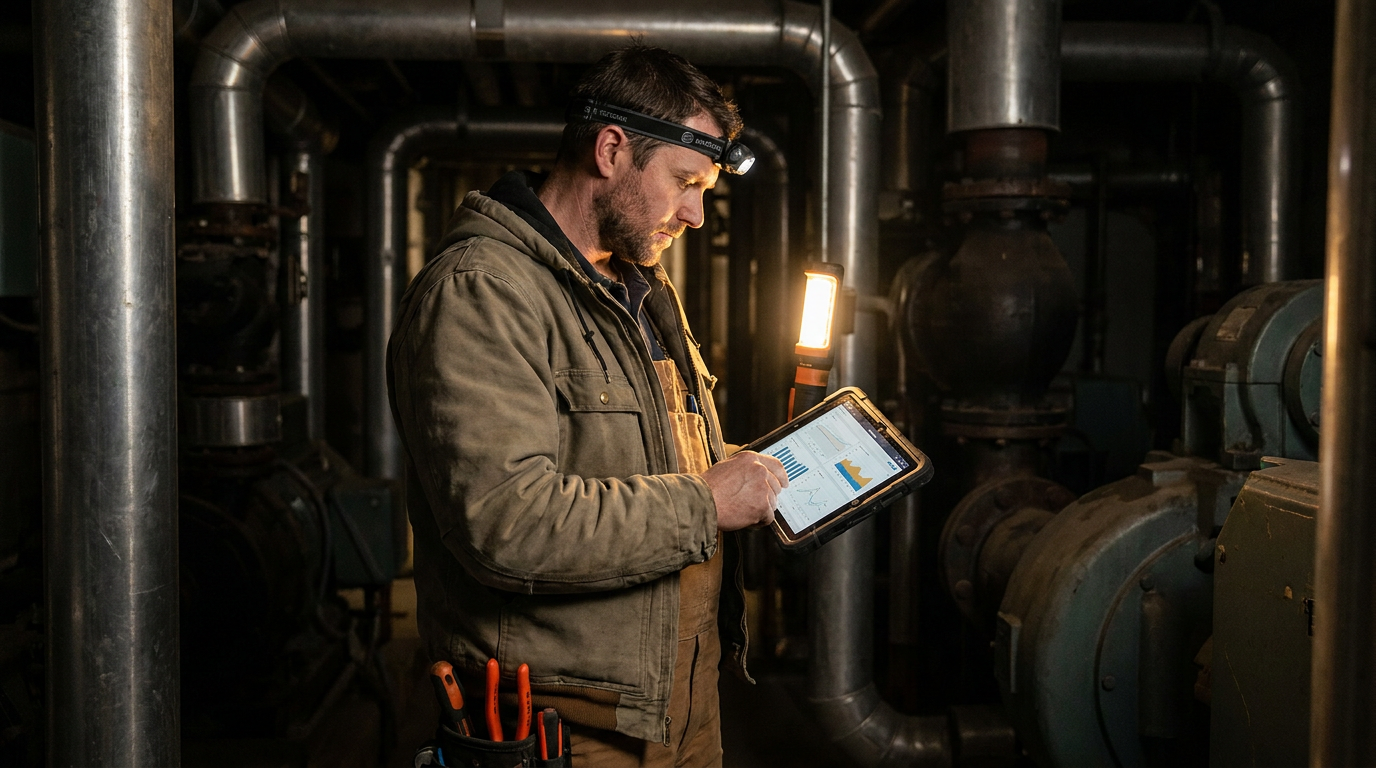
Predictive maintenance for contractors uses data and AI to forecast when equipment will fail. Instead of fixing things on a set schedule, you use sensors to monitor equipment health in real time. This lets you schedule repairs right before a breakdown happens, saving your clients time and money.
You Can't Afford Unexpected Breakdowns. Neither Can Your Clients.
Picture this. It’s the hottest week of the year, and the main AC unit for a commercial building goes down. Your phone rings. The client is losing money, tenants are angry, and you have to drop everything to handle the emergency. You get the job done, but it’s chaos.
This is reactive maintenance. Something breaks, you fix it. It’s the bread and butter of many trades, but it’s stressful and inefficient.
Then there’s preventive maintenance. You service that same AC unit every spring, whether it needs it or not. It’s better, but you might be doing work that isn’t necessary, or you might miss a problem that pops up in August.
Now, imagine a third way. You get an alert on your phone that the AC unit's compressor is vibrating more than usual and its energy use is spiking. The data suggests it has a 90% chance of failing in the next two weeks. You call the client, schedule a non-emergency repair for a slow Tuesday, and replace the part before it ever breaks down.
That’s predictive maintenance. It’s not magic. It’s just using data to work smarter.
What is Predictive Maintenance, Really?
Predictive maintenance (PdM) uses technology to monitor the condition of equipment in real-time. The goal is to predict failures before they happen. This allows you to perform maintenance only when it’s needed.
Think of it like the check engine light in your truck. It doesn’t just come on at 50,000 miles. A sensor detects a real problem and tells you to get it checked out before you end up stranded on the highway.
PdM takes that idea and applies it to everything from HVAC systems and industrial pumps to electrical panels and roofing materials.
Here’s the simple breakdown:
- Reactive Maintenance: Wait for it to break. Fix it. (Most expensive, most downtime.)
- Preventive Maintenance: Fix it on a regular schedule. (Better, but can be wasteful.)
- Predictive Maintenance: Use data to know when it's about to break. Fix it then. (Most efficient, least downtime.)
How It Works: Sensors, Data, and AI
This might sound like something for a big tech company, but the tools are getting cheaper and easier to use. The process breaks down into three main parts.
Data Collection: Small, wireless sensors (often called IoT, or “Internet of Things” sensors) are attached to the equipment. These sensors can track things like:
- Vibration
- Temperature
- Humidity
- Energy consumption
- Pressure
- Sound and acoustics
Data Analysis: The data from these sensors is sent to a software platform. This is where the AI comes in. The software looks for patterns and anomalies. It learns what “normal” looks like for that piece of equipment. When it detects readings that are outside of the normal range, it flags a potential problem.
Action: The system sends you an alert. It might say something like, “Pump B shows a 15% increase in vibration and a 10% increase in temperature over the last 72 hours. Failure probability in 30 days: 85%.” Now you have the information you need to act.
You don’t need to be a data scientist. You just need to be able to read the alert and use your trade skills to diagnose and fix the problem.
Why Contractors Should Care: More Than Just Repairs
Switching to a predictive model isn’t just about fixing things more efficiently. It’s a new way to run your business and serve your clients.
- Create New Revenue Streams: Instead of just billing for repairs, you can sell maintenance contracts based on this technology. You’re not selling hours; you’re selling uptime and peace of mind. This creates steady, predictable income.
- Become a Valued Partner: When you can tell a client about a problem before it happens, you’re not just a contractor anymore. You’re a strategic partner in their business. This builds incredible loyalty.
- Improve Your Ops: No more scrambling for emergency calls. You can schedule jobs when it’s convenient for you and the client. This means better planning, less overtime, and a less stressed-out team.
- Win Bigger Jobs: Offering predictive maintenance can set you apart from the competition when you’re quoting new commercial or industrial projects. It shows you’re forward-thinking and focused on long-term value for the client.
Getting Started with Predictive Maintenance
You don't need to overhaul your entire business overnight. You can start small.
First, identify the right opportunities. Think about your clients. Who has equipment where failure is a huge cost or a major headache? Think restaurants, hospitals, manufacturing plants, or large office buildings.
Next, talk to them. Use your expertise to explain the benefits. Frame it in terms of money saved and problems avoided.
Here are some prompts you can use with an AI tool to help you build out your new service offering.
I'm an HVAC contractor. I want to start offering predictive maintenance services to my commercial clients. My main clients are restaurants and small office buildings. Brainstorm three different service packages I could offer, from a basic starter package to a premium, full-service option. For each package, list the services included, the type of client it's best for, and a simple pricing model (e.g., per unit, per month).
Once you have a plan, you need to communicate it. You can use AI to help you draft a clear, professional email to introduce the idea to your best clients.
Write a short email (under 200 words) to one of my existing commercial clients. The goal is to introduce my new predictive maintenance service for their HVAC systems. Explain the benefit in simple terms (preventing downtime, saving money) and end with a clear call to action to schedule a brief 15-minute call to discuss it.
Finally, when you're on-site, you need a process. A simple checklist ensures you cover all the bases.
Create a simple predictive maintenance site visit checklist for an electrician. The focus is on a commercial building's main electrical panel. Include items for visual inspection, thermal imaging, and sensor data review. The checklist should be easy for a technician to follow on a tablet.
Real-World Examples for the Trades
This isn't just for HVAC techs. Predictive maintenance can be applied across all trades.
- Electricians: Use thermal imaging and power consumption sensors on electrical panels to predict breaker failure or overloaded circuits before they cause a fire or an outage.
- Plumbers: Install pressure sensors and acoustic sensors on water mains and pumps in a large facility to detect small, hidden leaks or predict pump failures before they cause major water damage.
- Roofers: Use moisture sensors embedded in commercial flat roofs to detect leaks long before they become visible inside the building, preventing structural damage and mold.
- General Contractors: For managing a large property, you can use a centralized system to monitor all critical assets, from boilers to elevators, coordinating with subcontractors to perform maintenance as needed.
Predictive maintenance is about moving from a reactive position to a proactive one. It’s about using your skills and experience, amplified by technology, to provide a higher level of service. The tools are here. It's time to put them to work.
Frequently asked questions
37 copy-paste prompts that save tradespeople 5+ hours a week. Plus one short email every Friday — no fluff.
More for explainers

What Is AI for Tradespeople? (Plain English Guide)
What Is AI for Tradespeople? (Plain English Guide) comes down to using AI to do the slow stuff — quoting, paperwork, marketing, and customer follow-up — so

Will AI Replace Electricians, Plumbers, and HVAC Techs?
Will AI Replace Electricians, Plumbers, and HVAC Techs? comes down to using AI to do the slow stuff — quoting, paperwork, marketing, and customer follow-up
How Much Does AI Cost for a Small Contractor?
How Much Does AI Cost for a Small Contractor? comes down to using AI to do the slow stuff — quoting, paperwork, marketing, and customer follow-up — so you