Procore vs. Autodesk: Which Safety AI is Best for Your Jobsite?
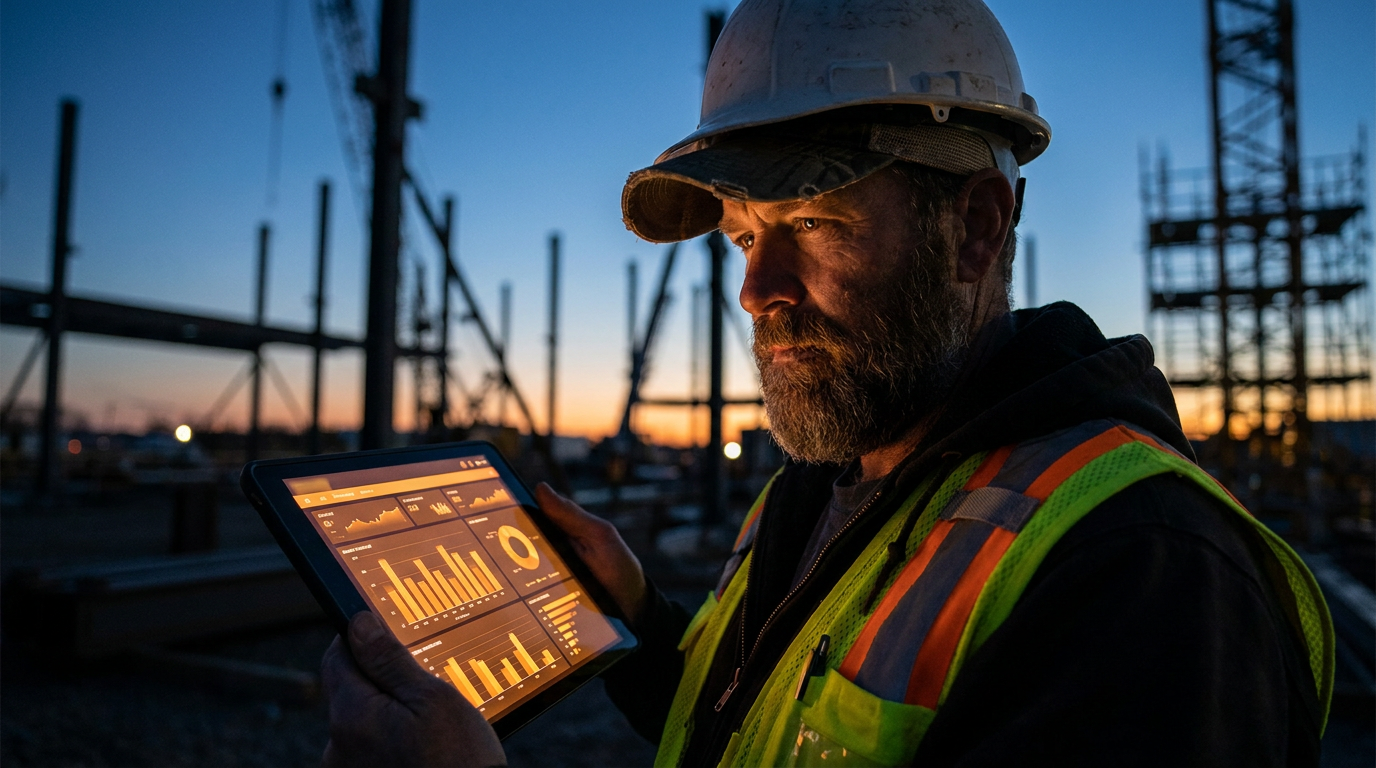
Procore's Safety AI excels at analyzing project data you already have, like photos and observations, to identify immediate risks. Autodesk's Safety AI takes a broader view, analyzing risk across the entire project lifecycle, from design to closeout. Procore is best for teams deep in its ecosystem, while Autodesk suits GCs managing complex, enterprise-level risk.
Procore vs. Autodesk: Which Safety AI Actually Works on a Real Jobsite?
Safety is everything. A single incident can shut down a job, wreck a reputation, and, worst of all, send a crew member to the hospital. For years, we’ve relied on paper forms, binders, and the sharp eyes of a good safety manager. Now, tech companies are telling us Artificial Intelligence can do it better.
Two of the biggest names in construction software, Procore and Autodesk, are pushing their AI-powered safety platforms hard. They promise to predict and prevent incidents before they happen. But does the reality on the jobsite match the sales pitch? Let's cut through the corporate talk and see which one, Procore Safety AI or Autodesk Safety AI, is the right tool for the job.
What is Safety AI, Anyway?
First, let's get one thing straight. This isn't about robots in hard hats walking the site. Safety AI is software that acts like a super-smart assistant for your safety team. It digs through the mountains of data your project already creates—photos, daily logs, observation reports, schedules, and even BIM models—to find hidden patterns and risks.
Instead of you manually looking at 500 site photos to spot a guy without his safety glasses, the AI can scan them in minutes and flag the problem images. It connects the dots that a human might miss. For example, it might notice that a certain subcontractor consistently has minor safety issues on Fridays, flagging them as a higher risk before a major incident occurs.
It’s about turning data into action. The goal is to help your team focus on the biggest dangers instead of getting buried in paperwork.
Procore Safety AI: The Field-First Approach
Procore has built its reputation on being user-friendly, especially for teams in the field. Their approach to AI, which they call Procore Construction Intelligence, follows that same playbook. It’s designed to work seamlessly within the Procore platform that many GCs and subs already use every day.
Key Features:
- AI-Powered Photo Analysis: This is a big one. Your team uploads site photos to Procore, and the AI automatically scans them for things like missing PPE (hard hats, glasses, vests) or potential hazards. It tags these images so your safety manager can quickly review them without looking at every single photo.
- Observation & Incident Correlation: The AI analyzes all the safety observations your team logs. It identifies trends, like a recurring issue with unsecured ladders or a spike in near-misses on a specific floor. This helps you see systemic problems, not just one-off mistakes.
- Search & Reporting: It makes finding information easier. You can search for abstract concepts like “fall hazard evidence” and the AI will pull up relevant photos, observations, and reports, even if they don't use those exact words.
The Bottom Line on Procore: If your company lives and breathes Procore, their Safety AI is a natural extension. It enhances the tools your team already uses. The main strength is its tight integration and focus on field-generated data.
Autodesk Safety AI: The Big Picture View
Autodesk comes at the problem from a different angle. As the company behind AutoCAD, Revit, and Navisworks, they have a deep bench of tools that cover the entire project lifecycle. Their AI, part of Autodesk Construction Cloud (ACC) and powered by an engine called Construction IQ, leverages this wide range of data.
Key Features:
- Project-Level Risk Assessment: Construction IQ doesn’t just look at safety observations. It analyzes RFIs, submittals, design issues from BIM models, and project schedules to create a daily risk profile. It might flag a project as high-risk because of an unusual number of design changes combined with a compressed schedule.
- Subcontractor Risk Management: The AI can analyze the performance of your subcontractors across all your projects. It helps identify which partners are a safety asset and which ones might need more oversight based on their historical data.
- Unified Data Platform: Because Autodesk's tools are interconnected, the AI can spot risks that cross different phases. For example, it could flag a complex installation detailed in a BIM model that is scheduled to happen during a period of high site traffic, suggesting a potential safety bottleneck.
The Bottom Line on Autodesk: Autodesk's AI is built for general contractors and owners who need an enterprise-level view of risk across their entire portfolio. Its power comes from connecting data from the office, the design team, and the field. This level of analysis is crucial for your overall business operations.
Head-to-Head: The Jobsite Test
| Feature | Procore Safety AI | Autodesk Safety AI |
|---|---|---|
| Best For | Teams already heavily invested in the Procore platform. | Large GCs managing multiple complex projects. |
| Data Source | Primarily field data: photos, observations, incident reports. | All project data: design, RFIs, submittals, field data. |
| Key Strength | Easy to use for field teams; excellent photo analysis. | Holistic, enterprise-level risk prediction. |
| Weakness | Value is limited if you don't use Procore for everything. | Can be complex; requires a lot of data to be effective. |
Prompts to Evaluate Safety AI Platforms
Don't just watch a sales demo. Use these prompts to get real answers about how these tools will work for your company.
For Your Vendor Call
I am the Safety Director for a commercial GC with 150 field employees. We are evaluating Procore Safety AI and Autodesk Safety AI. Our top 3 safety concerns are falls from height, material handling incidents, and subcontractor compliance. Can you provide a demo focused specifically on how your AI addresses these issues using real, anonymized jobsite data? We are less interested in a general overview and more interested in the practical application for our field teams and the specific reports it generates.
For Your Internal Team Meeting
Team, we are considering adopting a new safety AI platform. Let's brainstorm the 'dumb work' our safety team does now that could be automated. Think about time spent manually tagging photos, reviewing daily reports for keywords, or compiling weekly safety summaries from different spreadsheets. List the top 5 tasks you'd want an AI to take over that would free you up to spend more time in the field.
The Final Verdict
There is no single “best” safety AI. The right choice depends entirely on your company’s existing tech stack and your biggest safety challenges.
Choose Procore Safety AI if your company is already all-in on the Procore platform. It’s a powerful upgrade that makes your existing data work harder for you, with a clear focus on what’s happening in the field today.
Choose Autodesk Safety AI if you’re a large GC or owner who needs to manage risk across a large portfolio of complex projects. Its strength is in connecting the dots between design, planning, and execution to see trouble coming from miles away.
Either way, the future of jobsite safety isn't just about wearing a hard hat. It's about using the data at your fingertips to build smarter and safer.
Frequently asked questions
37 copy-paste prompts that save tradespeople 5+ hours a week. Plus one short email every Friday — no fluff.
More for jobsite ai
How Plumbers Use ChatGPT on the Jobsite (5 Ways)
How Plumbers Use ChatGPT on the Jobsite (5 Ways) comes down to using AI to do the slow stuff — quoting, paperwork, marketing, and customer follow-up — so y
How to Use ChatGPT on the Jobsite (Practical Guide)
How to Use ChatGPT on the Jobsite (Practical Guide) comes down to using AI to do the slow stuff — quoting, paperwork, marketing, and customer follow-up — s
AI Voice Notes to Job Report in 60 Seconds
AI Voice Notes to Job Report in 60 Seconds comes down to using AI to do the slow stuff — quoting, paperwork, marketing, and customer follow-up — so you can