Smarter Watering: AI Irrigation for the Southwest
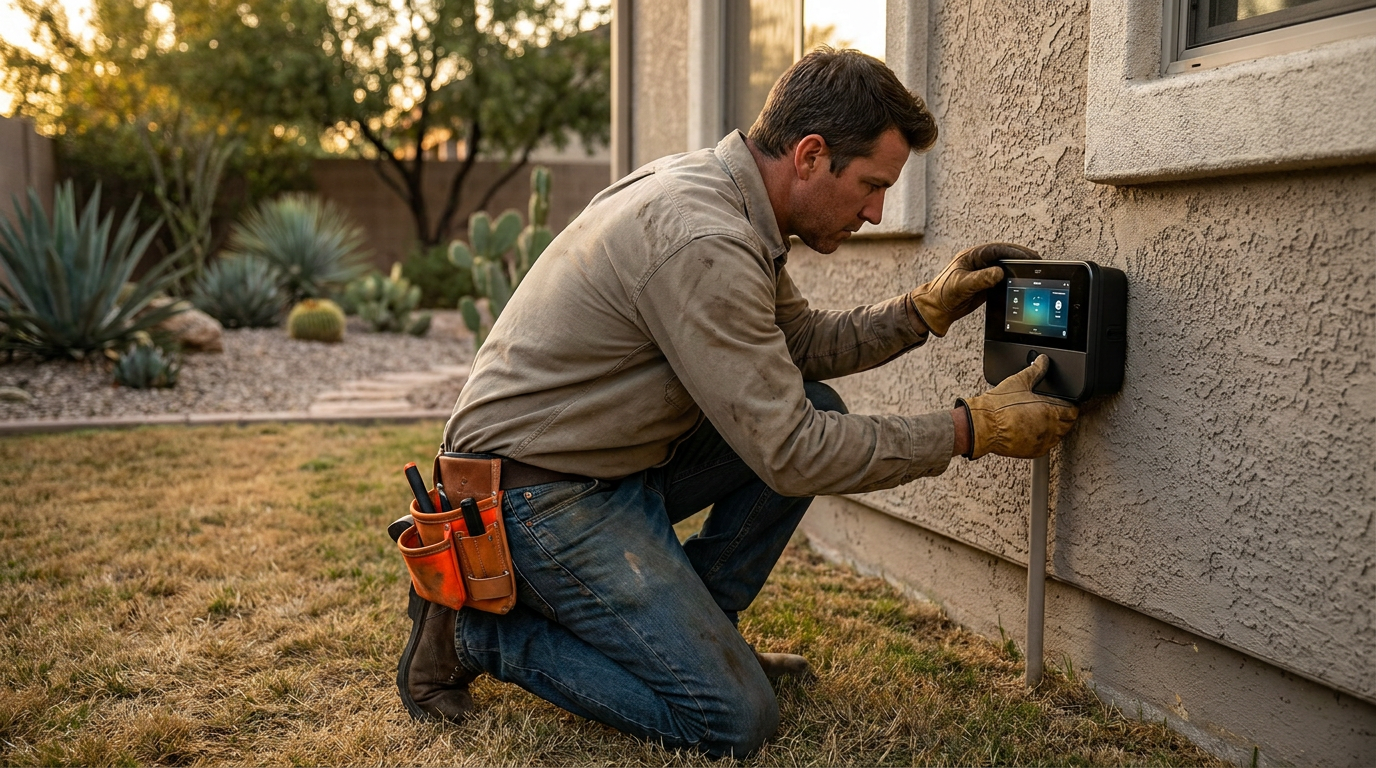
AI irrigation controllers are smart devices that automatically adjust your watering schedules based on real-time local weather data, soil conditions, and plant types. For landscapers in the arid Southwest, they are essential tools for conserving water, lowering client utility bills, and maintaining healthier landscapes despite drought conditions.
Smarter Watering for the Southwest: A Guide to AI Irrigation Controllers
Water is gold in the Southwest. If you're running a landscaping business in states like Arizona, Nevada, or Southern California, you know the drill. Droughts, water restrictions, and sky-high water bills are part of the job. Your clients want green lawns, but nobody wants to pay for wasted water. This is where you come in.
Old-school irrigation timers are dumb. They run on a fixed schedule, rain or shine. That's like throwing money down the drain. AI irrigation controllers are the answer. They're smart, they adapt, and they make you look like a hero to your clients. Let's dig into why this tech is a must-have for your business.
What Are AI Irrigation Controllers?
Think of a standard sprinkler timer. Now, give it a brain. That's an AI irrigation controller. Instead of just turning on and off at set times, these smart controllers connect to the internet. They pull in hyperlocal weather data—temperature, rainfall, humidity, and wind—to decide if your client's lawn actually needs water.
Most systems work like this:
- Connects to Wi-Fi: The controller gets online to access weather forecasts.
- Uses Real Data: It knows if it rained yesterday or if a heatwave is coming tomorrow.
- Adjusts Automatically: Based on the data, it will skip a watering cycle, shorten it, or lengthen it. No manual changes are needed.
- Zone Control: You can set up different zones for grass, flower beds, and trees, each with its own specific watering needs.
This isn't just a fancy gadget. It's a powerful tool for water management. For a pro, it means less time driving to sites to adjust timers and more time getting new business.
Why They're a Game-Changer in the Southwest
In a region defined by its lack of water, efficiency isn't optional. AI controllers are built for the challenges of the Southwest.
Massive Water Savings: The U.S. Environmental Protection Agency (EPA) reports that homeowners can save nearly 7,600 gallons of water per year by switching to a WaterSense-labeled smart controller. In a place like Phoenix or Las Vegas, that's a huge selling point.
Lower Bills, Happier Clients: When you save that much water, the utility bills drop. A client who sees a 30-50% reduction in their water bill is a client for life. They'll tell their neighbors, and that's the best marketing you can get.
Healthier Plants: The biggest mistake in Southwest landscaping is overwatering. It leads to root rot, fungus, and weak plants. AI controllers deliver the right amount of water at the right time, creating stronger, more drought-resistant landscapes.
Remote Management: You can manage dozens of client properties right from your phone or tablet. Stuck in traffic? See a storm rolling in? Adjust a client's watering schedule from anywhere. This level of control makes your operation more efficient and profitable. You can find more tips on running a lean business in our landscaping section.
Using AI to Pitch and Manage Smart Systems
This technology doesn't just help you manage water. You can use other AI tools to sell the service and train your team. Here are a few prompts you can use with a chatbot like ChatGPT to get started.
Use this first prompt to create a convincing email to a potential client. It focuses on local benefits.
Act as a landscaping business owner in Phoenix, Arizona. Write a short, persuasive email to a potential client named Mrs. Garcia. Explain the benefits of upgrading her old sprinkler timer to a new AI-powered smart irrigation controller. Focus on three key points: saving money on her city water bill, conserving water during Arizona's drought, and creating a healthier, more resilient yard. Keep the tone professional but straightforward. Mention that the upgrade often pays for itself in under two years.
Once you sell the job, you need your crew to understand the tech. Use this prompt to create a simple training document.
Create a one-page training guide for a new landscaping technician. The topic is 'How to Explain a Smart Irrigation Controller to a Homeowner.' Use simple language. The guide should include:
1. A simple 3-sentence explanation of what it is.
2. Three main benefits (saves water, saves money, easy app control).
3. Answers to two common questions: 'Does it really work?' and 'Is it hard to use?'
Key Features to Look For
Not all smart controllers are created equal. When you're choosing a model for your clients, look for these features:
- EPA WaterSense Label: This is a non-negotiable. The WaterSense label certifies that the controller has been independently tested to meet water-efficiency standards. Many local water districts offer rebates for these models.
- Hyperlocal Weather Data: The controller should pull from multiple weather sources, not just a single airport station miles away. This ensures it knows what's happening right in your client's neighborhood.
- Easy-to-Use App: The app is your command center. It should be intuitive for both you and the homeowner. Look for features like manual run buttons, water usage reports, and push notifications.
- Soil Moisture Sensor Compatibility: For maximum efficiency, pair the controller with in-ground soil moisture sensors. This tells the system exactly how wet or dry the ground is, taking all the guesswork out of watering.
- Flexible Zone Customization: You need to be able to program each zone based on sprinkler head type, soil type (like clay or sand), sun exposure, and plant type. The more detailed, the better.
Making the Sale and Getting it Done
Leading with the savings is your best bet. Show clients the math. A $300 controller that saves $20 a month on water pays for itself in just over a year. Add in a potential $100 rebate from the local water authority, and the deal gets even sweeter.
Installation is usually straightforward. For most properties, it's a simple swap: unplug the old timer, disconnect the zone wires, and hook them up to the new controller. The whole process often takes less than 30 minutes. Setting up the app and programming the zones takes a bit longer, but it's a one-time setup.
This is a perfect upsell for your existing maintenance clients and a great foot in the door for new ones. By positioning yourself as a water management expert, not just a lawn mower, you build trust and add a valuable, high-margin service to your marketing toolkit.
In the Southwest, water is everything. The landscapers who understand and use technology to manage it are the ones who will lead the pack. Don't let your business get left behind.
Frequently asked questions
37 copy-paste prompts that save tradespeople 5+ hours a week. Plus one short email every Friday — no fluff.
More for landscaping
AI for Landscaping Business Owners: Real ROI
AI for Landscaping Business Owners comes down to using AI to do the slow stuff — quoting, paperwork, marketing, and customer follow-up — so you can stay on
ChatGPT Prompts for Lawn Care Business (20 Tested)
ChatGPT Prompts for Lawn Care Business (20 Tested) comes down to using AI to do the slow stuff — quoting, paperwork, marketing, and customer follow-up — so