What is AI Dispatching? A Plain-English Guide for Contractors
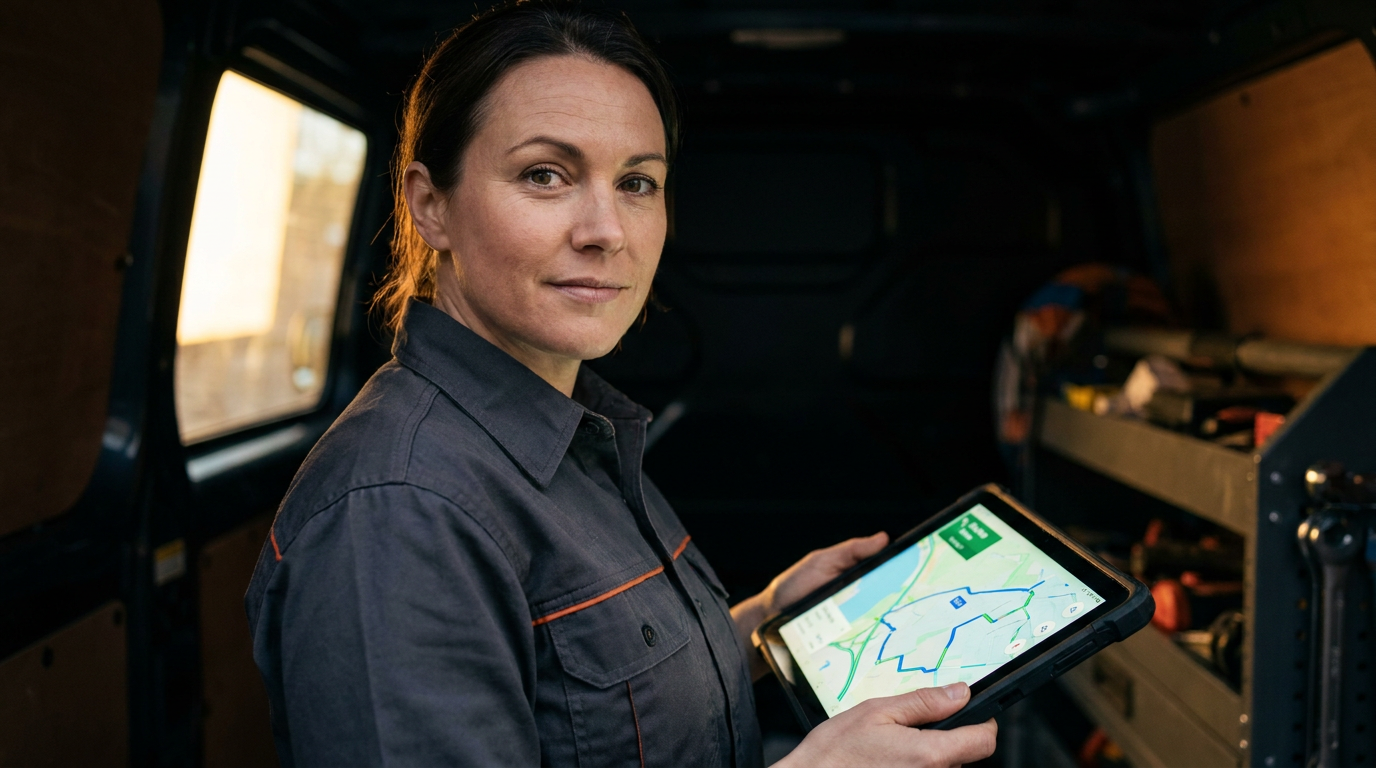
AI dispatching for trades uses smart software to automatically assign the best technician to the right job. It considers factors like tech skills, location, job priority, and even traffic to create the most efficient schedule possible. This saves fuel, reduces downtime, and gets your team to customers faster.
Your dispatcher is a hero. They juggle calls, texts, and last-minute emergencies, trying to move your techs around town like chess pieces. But even the best dispatcher can't see traffic patterns in real-time or calculate a dozen different route options in seconds. That's where AI dispatching comes in.
It’s not about robots taking over. It's about giving your team a smarter tool to eliminate guesswork and wasted time. Think of it as a super-powered assistant for your dispatcher, one that does all the heavy computational lifting so your team can focus on what they do best: managing people and solving problems.
So, What is AI Dispatching, Really?
AI dispatching is software that thinks. Unlike a simple digital calendar or whiteboard, it uses artificial intelligence to make decisions. You feed it information, and it gives you the best possible plan.
Here’s what it looks at:
- Technician Location: It knows where every truck is in real-time.
- Technician Skills: It knows who is certified for boiler work and who is your best diagnostic electrician.
- Job Priority: It can tell the difference between a routine maintenance call and an emergency water heater failure.
- Real-Time Traffic: It watches traffic data to avoid sending your tech into a jam.
- Parts on Hand: Some advanced systems even track truck inventory to make sure the tech has the right parts before they go.
- Customer History: It can factor in if a customer has a specific preference for a tech or has an active service agreement.
Based on all this data, the AI engine runs thousands of calculations to create the most efficient schedule. It automatically assigns the right tech to the right job, in the right order, with the best possible route. It's about turning chaos into a clean, optimized plan.
How It's Different From Your Current Dispatch Software
Maybe you're already using software to manage your jobs. That's great. But most field service management (FSM) tools use basic dispatch boards. Your dispatcher still has to manually drag and drop jobs, guess at drive times, and react to problems as they happen.
- Standard Dispatch: You look at a map and a list of jobs. You make your best guess. It’s reactive.
- AI Dispatch: The system analyzes all data points and presents an optimized schedule. It tells you the why behind its choices. It’s proactive.
Imagine an emergency call comes in. A restaurant's walk-in freezer is down. With a standard system, your dispatcher scrambles. They call techs, figure out who is closest, and see if they can move another job. With an AI system, the dispatcher enters the emergency job. The AI instantly re-shuffles the entire day's schedule for the whole team, finds the best tech to divert, and automatically sends new ETAs to the affected customers. The problem is solved in seconds, not 20 minutes of phone calls.
This is a core part of streamlining your business operations.
Putting AI Dispatching to Work: Prompt Examples
While most AI dispatching happens inside dedicated software, you can use general AI tools to simulate dispatching problems. This helps you understand the logic. Try copying these prompts into a tool like ChatGPT to see how it thinks.
Act as an expert AI dispatching system for an HVAC company. Your goal is to create the most efficient schedule possible.

Here is the situation:
- Tech 1 (John): Senior tech, expert in commercial rooftop units. Currently in downtown Austin. Truck has standard parts.
- Tech 2 (Maria): Mid-level tech, skilled in residential AC repair. Currently in south Austin.
- Tech 3 (Dave): Junior tech, best for maintenance calls. Currently in north Austin.

Here are the jobs:
1. Emergency Repair: Commercial rooftop unit at a restaurant downtown. High priority.
2. Residential AC Not Cooling: Home in far south Austin. Medium priority.
3. Scheduled Maintenance: Office building in north Austin, near Dave's location. Low priority.

Create the optimal dispatch plan. Assign each job to the best tech, explain your reasoning, and estimate an efficient order for the jobs.
This next prompt shows how AI can analyze past performance to find hidden costs.
Act as a business operations analyst. Analyze the following dispatch data from last Tuesday for my plumbing company and identify the top 3 areas of inefficiency. For each inefficiency, suggest a practical solution.

Data:
- Job 1: Tech A, Travel Time: 45 min, Job Duration: 60 min, Task: Leaky faucet.
- Job 2: Tech B, Travel Time: 20 min, Job Duration: 90 min, Task: Water heater install.
- Job 3: Tech A, Travel Time: 55 min, Job Duration: 30 min, Task: Clogged drain. Tech A had to drive across town from Job 1.
- Job 4: Tech C, Travel Time: 15 min, Job Duration: 120 min, Task: Repipe estimate.
- Job 5: Tech B, Travel Time: 40 min, Job Duration: 45 min, Task: Toilet repair. High traffic noted.
The Real-World Benefits for Your Trade Business
This all sounds cool, but what does it mean for your bottom line? A lot.
- Slash Fuel Costs: Shorter, smarter routes mean less gas burned. According to data from a fleet management company, optimizing routes can cut fuel consumption by up to 20%. For a crew of five trucks, that can add up to thousands of dollars a year.
- Fit More Jobs In: Less time staring through a windshield means more time turning a wrench. Even saving 30-45 minutes of drive time per tech, per day, can open up enough room to add another high-value job to the schedule.
- Happier Customers: AI provides more accurate ETAs. When a customer gets a text saying their plumber will arrive between 10:00 and 10:15, and the plumber actually shows up, that builds trust. Fast responses to emergencies also create loyal customers.
- Less Stress on Your Dispatcher: Let the machine handle the 500 small decisions. This frees up your dispatcher to handle the human elements—calming an anxious customer, coaching a tech through a tough problem, or planning for the next day.
- Smarter Growth: AI dispatching platforms generate a ton of data. You can see which techs are most efficient, which jobs are most profitable, and where you're losing time. This helps you make better decisions as you grow your business.
Is AI Dispatching Right for My Business?
You don't need to be a giant corporation to benefit from AI dispatching. It's becoming more accessible for small and medium-sized trade businesses. It might be time to consider it if you recognize these signs:
- You run three or more trucks.
- Your fuel bill feels out of control.
- Your dispatcher seems constantly overwhelmed.
- You frequently get complaints about arrival times.
- You feel like your techs are spending too much time driving and not enough time working.
Making the switch is an investment. But when you weigh the cost against the savings in fuel, labor, and the revenue from extra jobs, the math often works out. It's a tool for building a more resilient, efficient, and profitable business.
Frequently asked questions
37 copy-paste prompts that save tradespeople 5+ hours a week. Plus one short email every Friday — no fluff.
More for explainers

What Is AI for Tradespeople? (Plain English Guide)
What Is AI for Tradespeople? (Plain English Guide) comes down to using AI to do the slow stuff — quoting, paperwork, marketing, and customer follow-up — so

Will AI Replace Electricians, Plumbers, and HVAC Techs?
Will AI Replace Electricians, Plumbers, and HVAC Techs? comes down to using AI to do the slow stuff — quoting, paperwork, marketing, and customer follow-up
How Much Does AI Cost for a Small Contractor?
How Much Does AI Cost for a Small Contractor? comes down to using AI to do the slow stuff — quoting, paperwork, marketing, and customer follow-up — so you