What the Hell Is an AI-Powered Takeoff Tool?
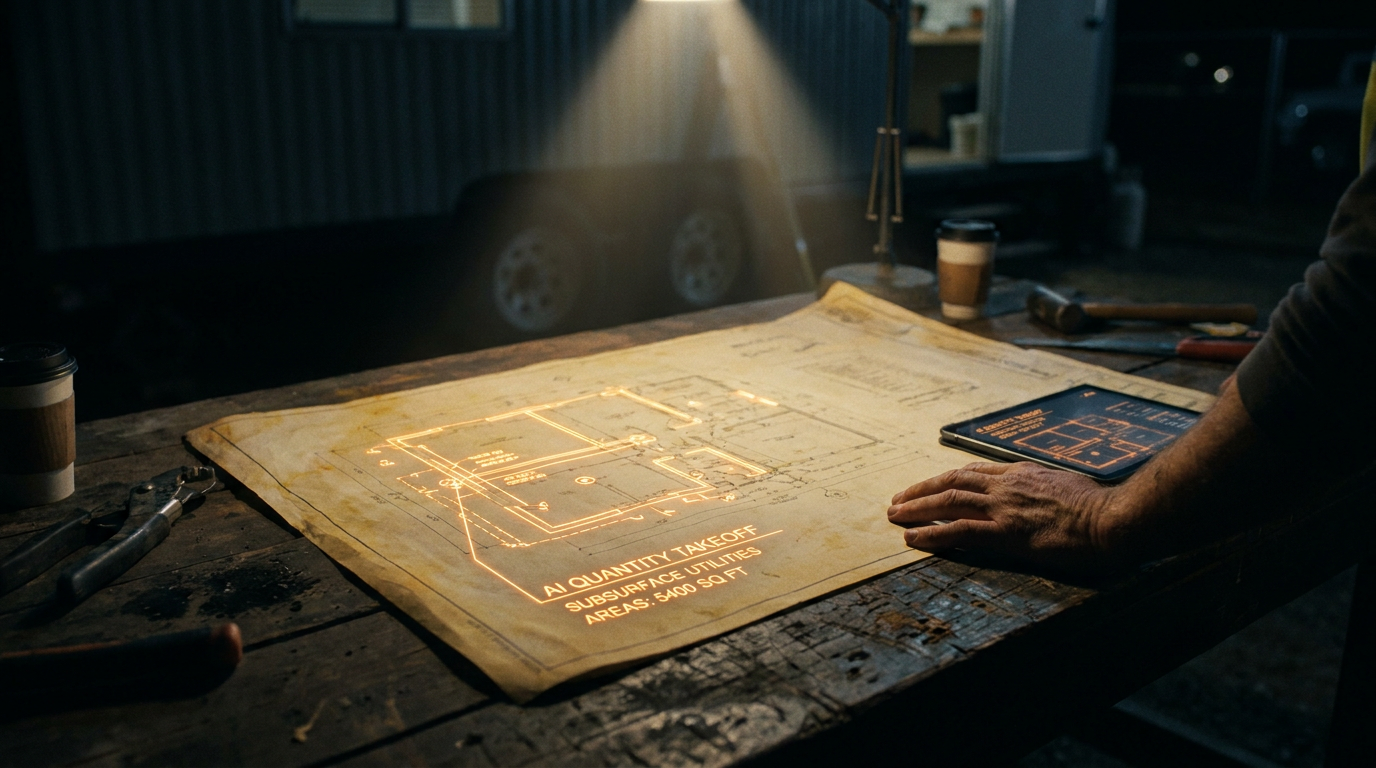
An AI-powered takeoff tool is software that uses artificial intelligence to automatically read construction blueprints. It identifies, counts, and measures items like outlets, pipes, or square footage directly from a PDF plan. This technology drastically speeds up the estimation process, reduces human error, and helps you create accurate bids faster.
You're Burning Money on Manual Takeoffs
Let's be honest. You've spent too many nights hunched over a set of plans with a highlighter, a scale ruler, and a pot of stale coffee. You're clicking and counting, trying not to lose your place. One interruption from a phone call or a kid asking for homework help, and you have to start the count all over again.
This isn't just annoying. It's expensive. Every hour you spend doing a manual takeoff is an hour you aren't spending finding new work, managing your crew, or being anywhere else but chained to your desk. Mistakes happen. You miss a circuit, undercount fixtures, or miscalculate the linear feet of pipe. Those small errors add up, eating your profit margin or causing you to lose the bid entirely.
According to a report by FMI, rework caused by bad data costs the construction industry billions each year. Your takeoff is the first set of data for any project. If it's wrong, the whole job starts on the wrong foot.
A Look Under the Hood of AI Takeoff Tools
An AI-powered takeoff tool is not magic. It's just smart software designed to do the most tedious part of your job for you. Think of it as a tireless assistant who can read blueprints faster and more accurately than any human.
You upload a digital blueprint, usually a PDF file. The AI scans the entire document in seconds. Using technology called computer vision, it recognizes symbols and lines based on what it's been trained to see.
- For an electrician: It finds and counts every outlet, switch, light fixture, and panel.
- For a plumber: It traces supply lines, waste lines, and vents, calculating the linear footage and counting every fitting.
- For a drywaller or painter: It calculates the square footage of walls and ceilings, automatically subtracting doors and windows.
The software presents this information in a clean, organized list. You get a complete material count and measurement summary in a fraction of the time it would take to do by hand. Most of these tools are cloud-based, so you can access them from your office, your truck, or the job site.
Real-World Benefits for Your Trade
This isn't just about being fancy. This is about putting more money in your pocket.
Blazing Speed: A takeoff that takes you six hours manually can often be completed in under 30 minutes with an AI tool. This means you can bid on more projects. Instead of bidding on two jobs a week, maybe you can bid on ten. It's a numbers game, and this lets you play it better.
Ironclad Accuracy: An AI doesn't get tired, bored, or distracted. It counts every single symbol, every single time. This protects you from underbidding and looking unprofessional when you have to submit a change order for materials you forgot.
Total Consistency: If you have multiple people doing estimates, you know that John and Dave might measure things slightly differently. An AI tool enforces a single standard. Every takeoff is done the exact same way, giving you reliable data you can trust.
Better Bids, Not Just More: With all the time you save, you can focus on what really matters: strategy. You can analyze the job, spot potential challenges, and fine-tune your labor and equipment costs. Your bids become more competitive because they are built on better data and more thought.
Prompts to Get You Started
You can use AI assistants right now to help you think through adopting this technology. Here are a couple of prompts you can copy and paste into a tool like ChatGPT.
Act as a senior construction estimator for a commercial electrical contractor. I'm considering buying an AI takeoff tool called 'SOFTWARE NAME'. Based on their website, create a list of 10 critical questions I should ask their sales rep. Focus on accuracy guarantees, integration with my QuickBooks accounting software, the training process for a team of 3, and how it handles handwritten revisions on PDF plans.
My plumbing business just bought an AI takeoff tool. Create a 4-week onboarding plan for my two project managers. The goal is for them to be 100% independent with the tool by the end of the month. Include weekly goals, specific plans to practice on (e.g., a small residential job, a multi-story commercial job), and a short review for the end of each week to check their understanding.
Is an AI Takeoff Tool Right for You?
If you do more than one or two estimates a month, the answer is likely yes. The more complex and frequent your takeoffs are, the more value you'll get from an AI tool.
General contractors, electricians, plumbers, HVAC techs, drywallers, and roofers are all prime candidates. These tools have come a long way and now have pre-built settings and symbol libraries for almost every trade.
Of course, there's a cost. Most are sold as a subscription, often priced per user per month. You have to weigh that cost against the hours you'll save and the mistakes you'll avoid. For most busy contractors, the return on investment is a no-brainer.
This technology is a core part of building a modern, efficient quoting system. It's the first step to automating your workflow so you can focus on building, not paperwork.
The Bottom Line
An AI-powered takeoff tool isn't here to take your job. It's here to make your job better. It handles the boring, repetitive work so you can use your experience where it counts: winning the job and getting it done right.
Doing takeoffs by hand is like digging a trench with a shovel when an excavator is parked right there. The tools are available, they work, and your competition is starting to use them. Don't get left behind in the dust.
Frequently asked questions
37 copy-paste prompts that save tradespeople 5+ hours a week. Plus one short email every Friday — no fluff.
More for explainers
What Is AI for Tradespeople? (Plain English Guide)
What Is AI for Tradespeople? (Plain English Guide) comes down to using AI to do the slow stuff — quoting, paperwork, marketing, and customer follow-up — so

Will AI Replace Electricians, Plumbers, and HVAC Techs?
Will AI Replace Electricians, Plumbers, and HVAC Techs? comes down to using AI to do the slow stuff — quoting, paperwork, marketing, and customer follow-up
How Much Does AI Cost for a Small Contractor?
How Much Does AI Cost for a Small Contractor? comes down to using AI to do the slow stuff — quoting, paperwork, marketing, and customer follow-up — so you