What's a Digital Twin & Why Should Contractors Care?
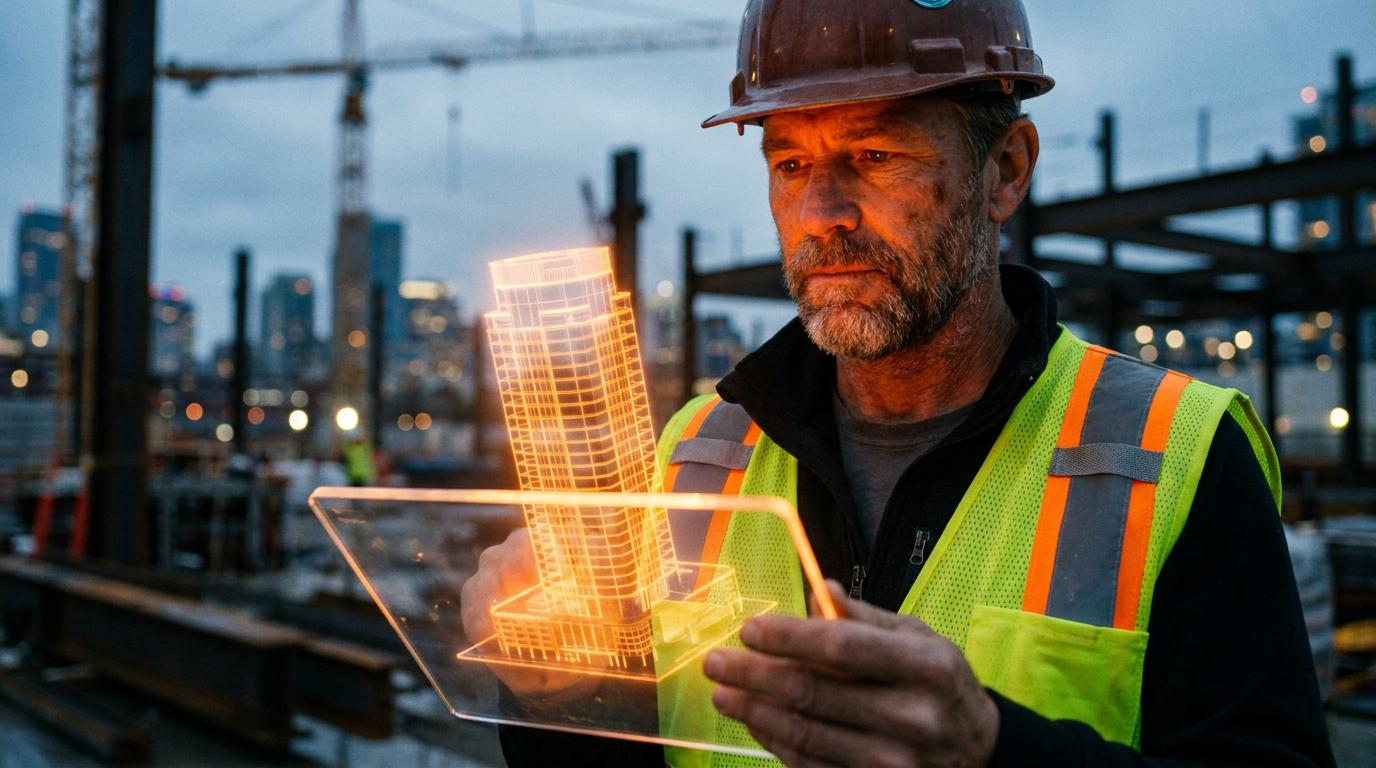
A digital twin is a virtual model of a physical object, system, or building, updated in real time with data from sensors. Contractors should care because it helps spot clashes before they happen, track progress accurately, and make smarter decisions on the job, saving serious time and money.
Ask AI: What the Hell Is a 'Digital Twin' and Why Should I Care?
Let's cut the crap. You hear words like 'digital twin,' 'IoT,' and 'synergy' thrown around by tech guys in clean shoes, and your eyes probably glaze over. You're busy running a crew, bidding jobs, and making sure the damn thing gets built right. You don't have time for buzzwords.
But this one—'digital twin'—is different. It's not just another piece of software you'll use for a week and forget. It's a fundamental shift in how big, complex projects are managed. And the GCs who get it first are going to leave everyone else in the dust. So, what is it? A digital twin is a live, virtual copy of a real-world building or jobsite. Think of it as a 3D model with a pulse, fed by real-time data from the field.
More Than Just a Fancy 3D Model
You've probably used BIM (Building Information Modeling) or looked at CAD drawings. You might think a digital twin is just a new name for the same thing. It's not.
A BIM model is a static plan. It's the blueprint, the 'what we intend to build.' It's incredibly useful for planning, but once construction starts, it quickly becomes outdated. The real world is messy. Change orders happen. A sub busts a pipe. An inspector wants a wall moved six inches.
A digital twin, on the other hand, is a living document. It starts with a BIM or 3D scan as its skeleton. Then it adds the muscle and nerves: data. This comes from sensors on the jobsite, drone footage, 360-degree cameras, and manual inputs from your team.
It reflects the 'as-built' reality, not just the 'as-designed' dream. It tells you what's happening right now.
Why a Contractor Should Actually Care
Okay, so it's a live 3D model. So what? Here's where the rubber meets the road. Using a digital twin isn't about looking cool; it's about making more money and having fewer headaches.
Spot Clashes Before They Cost You: The model can show you that the plumber's new pipes are scheduled to go right through the HVAC team's main duct line. You see this on a screen, not after the drywall is up. This 'clash detection' alone can save tens of thousands of dollars in rework.
Track Progress for Real: The owner wants a progress update. Instead of walking the site and taking notes, you pull up the twin. It's color-coded to show what's complete, what's in progress, and what's behind schedule, backed by photo and sensor data. It ends arguments before they start.
Improve Safety and Logistics: Where are your materials staged? Is there a clear path for the crane tomorrow morning? Is an area safe to enter? The twin can model site logistics and flag potential safety hazards, helping you run a tighter, safer job.
Smarter Handover to the Client: When the job is done, you don't just hand over a binder of manuals. You hand over the digital twin. Now, the building's facility manager can click on an air handler in the model and instantly see its make, model, service history, and filter size. This is a massive value-add that makes you look like a pro.
This level of planning is what separates good GCs from great ones. For more on running a tight ship, check out our articles for General Contractors.
How to Get Started (Without Breaking the Bank)
This sounds expensive, and for a full-blown, sensor-integrated twin on a massive project, it can be. But you don't have to go from zero to one hundred.
Start small. The first step is getting good at documenting your jobsite visually. Services like StructionSite or OpenSpace use 360-degree cameras to let you create a virtual walk-through of your site, mapping photos to your floor plans. This is a 'Level 1' digital twin, and it's already a huge step up from a folder of random photos.
From there, you can explore platforms that integrate your BIM models with this visual data. As you tackle bigger projects, you can start looking at adding sensors for tracking equipment, monitoring concrete curing temperatures, or measuring air quality.
Thinking about how to pitch this to a client or even just explain it to your team? Use AI to help you frame it.
Act as a construction project manager. Write a simple, one-paragraph explanation of a 'digital twin' for a building owner who is not tech-savvy. Focus on the benefits for them, specifically how it reduces risk, improves communication, and provides long-term value for managing their new building after we hand it over.
Finding the Right Tools
The market for this tech is growing. Big names like Autodesk and Trimble are major players, but there are many others. The right fit depends on the size of your company and the complexity of your jobs. Don't be afraid to ask for demos and run a small pilot project.
I am a general contractor running a mid-sized firm that handles commercial projects between $5 million and $25 million. List 5 to 7 software platforms or services that can help my company start implementing digital twin technology. For each one, briefly describe what it does and who it's best for (e.g., reality capture, BIM integration, full lifecycle management).
Ready to take the first real step? You'll need to talk to the experts. Use this prompt to get the ball rolling.
Draft a professional but direct email to a VDC (Virtual Design and Construction) consultant. I am a GC interested in running a pilot project using digital twin technology on an upcoming 50,000-square-foot office buildout. Ask about their process, the typical cost for a pilot project of this scale, and what information they would need from me to provide a preliminary quote.
The Future Is Already Here
Look, you can keep running your business with spreadsheets and rolled-up plans. It works. But the margins are getting tighter and the projects are getting more complex. Technology like digital twins isn't a threat; it's a tool. It's a power tool that helps you see the future, fix problems before they exist, and deliver a better product to your client.
The contractors who learn to use these new tools will be the ones building the world in the next decade. The others will be wondering where the work went.
Frequently asked questions
37 copy-paste prompts that save tradespeople 5+ hours a week. Plus one short email every Friday — no fluff.
More for explainers
What Is AI for Tradespeople? (Plain English Guide)
What Is AI for Tradespeople? (Plain English Guide) comes down to using AI to do the slow stuff — quoting, paperwork, marketing, and customer follow-up — so
Will AI Replace Electricians, Plumbers, and HVAC Techs?
Will AI Replace Electricians, Plumbers, and HVAC Techs? comes down to using AI to do the slow stuff — quoting, paperwork, marketing, and customer follow-up
How Much Does AI Cost for a Small Contractor?
How Much Does AI Cost for a Small Contractor? comes down to using AI to do the slow stuff — quoting, paperwork, marketing, and customer follow-up — so you